
Land of Gardens | 园艺之国
Written by: Zou Wanqiao | 邹宛桥
Translated by: Laura Giulia Bonsaver
Editor’s Note:
This article is excerpted from Haha! Britain — a charitable bilingual publication co-produced by The Mothers’ Bridge of Love (MBL) and River Cam Breeze. The book is a lively collaboration between 42 Chinese authors living in the UK and 36 university-based volunteer translators. With wit and warmth, the stories capture the everyday realities of Chinese communities in Britain, offering an honest look at the cultural clashes, humour, and adaptation that arise in the space between Chinese and British ways of life. Haha! Britain has been warmly endorsed by several well-known figures in UK-China relations, including Stephen Perry (former Chairman of the 48 Group Club), Luise Schäfer OBE (former British diplomat and Chamber of Commerce chair), Professor Hugo De Burgh (former BBC editor and academic), and British scholar Martin Jacques. The book’s title was handwritten by celebrated British-Chinese artist Qu Leilei, its cover illustrated by bestselling Chinese author and poet Feng Tang, and the postscript contributed by Xue Mo, a prominent voice in contemporary Chinese literature.
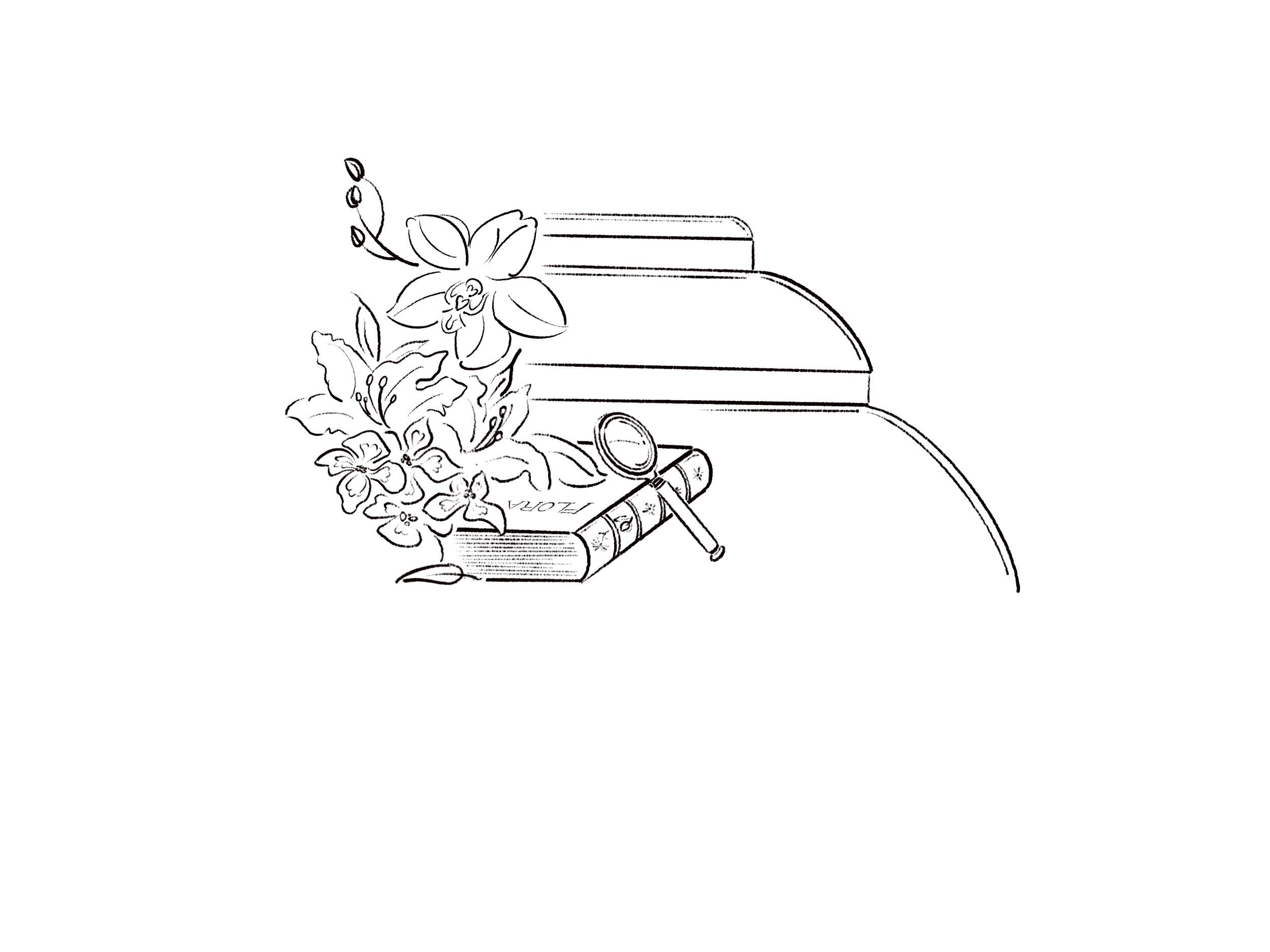
Illustrated by Tian Tian
Garden flowers are ubiquitous in the UK. Everywhere you look, you will see a bright burst of colours. Even window ledges are filled with flowers in bloom. It seems that no single flower claims the season’s crown, and seasons are not defined by one colour, but by hundreds. Flowers blossom all around you: the ever-changing fuchsias, the sublime wild rose mallows, the elegant irises, the spritely spider flowers… Coming here brings back memories from my long- bygone childhood, and of a time when my mother brought home the DVD of her favourite cartoon from her own childhood, Floral Fairies. Each night before bed, she would put on an episode for us to watch. As a small child, I was naturally curious, and I eagerly engaged with the programme, waving at each of the floral fairies.
Around 2014 when I first landed in London, I marvelled at the stunning display of flowers everywhere. Filled with curiosity, I opened my map and spotted a gigantic park. To my surprise, it was not Disneyland or any kind of amusement park; it was simply a park named Kew Gardens. And so, I went. Arriving in this beautiful garden, I was struck by the vibrant colours of the season’s hydrangeas. Somehow, the roses looked so different from any I’d seen in flower shops. I walked along the Treetop Walkway where visitors can stroll past the uppermost branches of the giant sequoias, and only children dare to skip freely along the path at such heights. Before coming to London, I hadn’t heard anything about this wonderful park.
While living in London later as a graduate student, whenever a flower- themed exhibition took place at Kew Gardens or new flowers came into bloom, I’d be back there in a flash.
The first time I visited Kew Gardens, it was during the Black Friday Christmas light show, and I had a close brush with danger. While my friends stayed back on Oxford Street, I decided to head out early with another classmate. On the bus, a fellow Asian passenger struck up a conversation and, upon hearing my destination, widened his eyes in disbelief. “So late and so far?” he said.
As I waited in the garden café next to Kew Gardens, I checked my social media and saw that chaos had erupted on Oxford Street shortly after I left. Apparently, someone had yelled “run”, and everyone started to panic, thinking it was a life-threatening situation. People believed they were facing a disaster, only to later find out it was a false alarm.
This incident underscored the constant worry that follows us in a foreign land, where every day can bring unforeseen challenges.
Later, during the Christmas season, I had another surprise – this one a bit more amusing. I didn’t expect mistletoe to leave such an impression on me. In Kew Gardens, these mysterious flowers had been arranged into beautiful bouquets and hung upside down all around the site. At first, I thought the staff had hung the flowers to dry, just like they do in our tea houses at home, and I assumed that these flowery decorations were simply there for tourists to take photos. But later, I realised this was not the case.
Before I came to the UK, I thought Christmas was just like our Lunar New Year, a holiday reserved solely for family gatherings. But looking around at the mistletoe hanging in dimly lit restaurants filled with young couples, I couldn’t help but wonder why the atmosphere felt so romantic. It felt so different from anything I had seen in films and on TV. I started to feel a little embarrassed around mistletoe and would move awkwardly away from it if I came across it with my classmates. Back at home, Qixi Festival, a national festival that originally did not have romantic connotations, has evolved into Chinese Lovers’ Day. Had this happened to Christmas too? I discovered later that this wasn’t the case at all. It turns out there is a custom of kissing under the mistletoe, something I only discovered by chance while watching The Ancient Magus’ Bride anime.
Standing at the ticket entrance of Kew Gardens, I met a young American man who spoke Chinese and was interning at the gardens. Eager to practise his Mandarin, we chatted for a bit. I felt envious of him for having the chance to work at Kew Gardens. Looking a little fed up, he said wryly, “Well, maybe if you saw all the sweeping and pruning that I have to do, you wouldn’t be so envious!”
In the spring, I attended an orchid exhibition. I thought there would be no better place to see orchids than in China, since we have adored these flowers for thousands of years. But I never dreamt that elegant white orchids with such long, flowing petals could be grown in England. Through the misty steam of the Kew Garden greenhouse, they reminded me of Xiaolongnü, a character from a Chinese novel. It looked as if her figure, as white as snow, was emerging from the depths of the pool. That day, I happened to attend a talk on “Seed Banks” led by a British PhD student who had recently graduated from Chiang Mai University. She spoke about various methods of seed preservation, especially for seeds grown in tropical climates that can easily rot. She also discussed certain plants that appear nearly identical yet possess entirely distinct DNA. It’s funny. Despite having no trace of botanical expertise on my CV, I still vividly recall much of what I learnt. Deep down, I truly admired this young woman. She travelled thousands of miles in pursuit of her passion; to study the subject she loves at a university unknown to most. To her, it did not matter that the subject might seem obscure to many people. She followed her heart and ultimately found her place.
In April, I brought along two of my friends to see the azalea exhibition. On arrival, we saw a couple of staff members giving a lecture. They were very professional. It felt as though we were sitting in a university lecture. Walking through the exhibition afterwards, we were captivated by the brilliant colours of a watercolour painting. A local lady took an interest in me and asked if I was studying horticulture. That day, I happened to be wearing a dark blue floral dress. Perhaps it was this dress that had caught the attention of the lady, a fellow flower lover. We began chatting. At some point in the conversation, she mentioned wisteria being from Japan, but I quickly corrected her. Japan imported many plants from China in the past. She returned with a question, asking if China had yellow wisteria. Indeed, I had never seen yellow wisteria in China, and come to think of it, I had seen more colours of wisteria in Japanese travel advertisements…but that didn’t necessarily mean wisteria originated in Japan, right? Changing the subject, I told her that I was surprised not to see any peonies in Kew Gardens, considering its incredibly diverse collection of flowers. Keen to show us that the gardens did have peonies, the lady led us to a secluded flowerbed with some single-petal varieties in bloom. Later, my classmate insisted that she was “pretty sure those weren’t peonies.” At that time, I wasn’t very knowledgeable myself about peony varieties, so l let it drop.
It wasn’t until 2023, when I happened to win a book titled The Plant Collectors through a competition on the social media app Weibo, that I discovered the many fascinating tales behind the plants in this garden. I learnt that it is thanks to the adventurous plant hunters that Kew Gardens possesses such a vibrant array of flowers from around the world. Interestingly, some of the flowers that plant hunters brought home were not necessarily collected from their native habitats. The plant hunters may have found the seeds in a particular place, but those seeds might have already travelled across multiple countries or continents.
The newly restored glass palace at Kew was unveiled just in time for the azalea exhibition. It had been under renovation for years, and we had waited so long to see it. When I had first visited the gardens, it had been closed to the public. Now, nearly six years later, I was able to see it. Like a good “Floral Fairy”, I plan to return to Kew for many years to come.
About the author
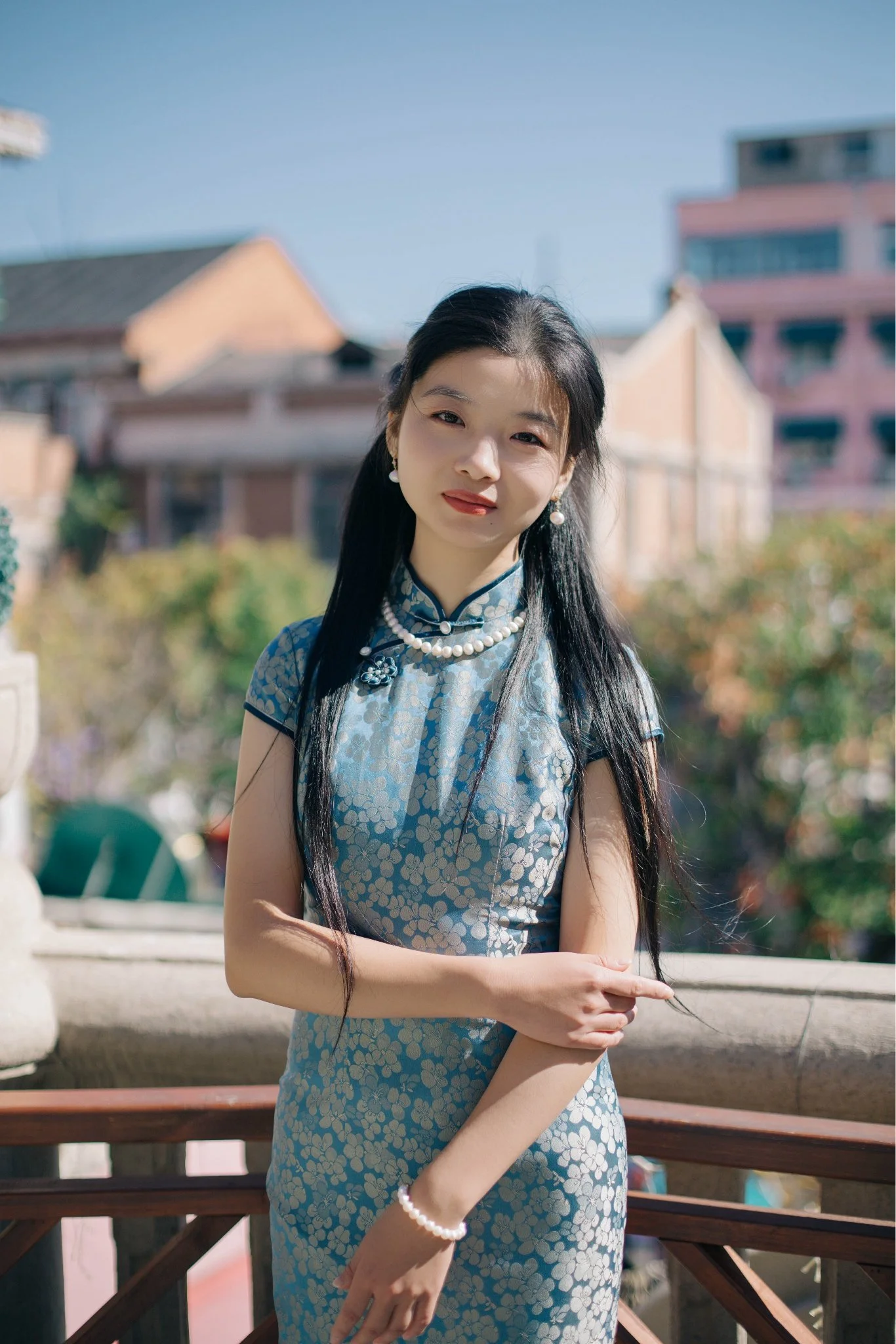
Zou Wanqiao has a master’s in Accounting and Finance from the University of Southampton and is a member of both the Tianjin Poetry Society and the Nankai University Poetry and Couplet Society. Wanqiao has published more than 30 poems in journals such as Poetry Monthly and Poetry Newspaper and is the author of Translation and Annotation of Tanghu Xunpu.
英国处处有园艺。环顾四周,街边的花坛,远处的公园,总是一片五彩斑斓;抬眼望去,房子每一层的窗沿下竟然也都开满了花。这里似乎并没有将某一种花来作为某个季节的主色调,到处都是百花争妍:多变的倒挂金钟,文艺的野棉花,优雅的鸢尾花,清新的醉蝶花……来到这里,仿佛与小时候的记忆重合——那时妈妈买来了她童年最爱的动画片《花仙子》的光碟,每天睡前播放一集。作为一枚标准的好奇宝宝,我忙不迭地用识花软件与每一位花仙子打招呼,同时也情不自禁地感叹:这里的人为什么如此热爱植物呢?
大概是 2014 年,我初来伦敦,看到这花团锦簇的景象,便带着疑问打开了地图,发现了一个巨大的公园——这里不是迪士尼,也不是任何其他游乐园,而是一个叫做邱园(Kew Garden)的地方。当季的七彩渐变绣球花环给我留下了深刻的印象,除此之外就是和花店迥然不同的玫瑰花了。穿行在巨杉的树梢之间,只有孩童敢在颤颤巍巍的铁架上蹦跳自如。然而,在我来伦敦之前,从未听过任何关于这个公园的介绍。
后来到英国读研,就专门赶在花期或者有主题花展的时候来参观。
头一回,是赶“黑色星期五”的时候来看圣诞灯展,发生了一次与危险擦肩而过的经历。那时其他同伴留在牛津街,我和别的同学约好,提前离开去了邱园。上了公交,邻座亚裔和我聊天,知道我的目的地,立马瞪大了眼睛。是啊,这么晚去这么远的地方。在邱园旁边的花园咖啡厅等候时,我从朋友圈知道了在我离开不久后,牛津街出现了一场混乱,据说是“虚惊一场”:一个人在街上喊:“Run!(快跑!)”然后所有人开始乱跑。在场的人当时都以为自己要没命了,以为那是一场劫难。这就是在异国他乡的我们,每一天都在担心的事。
之后的事更是尴尬,我未曾料到,“槲寄生”的名字将给我留下深刻的印象。以前我以为,圣诞节相当于我们过年,是合家团聚的日子。邱园也在这个节日充分展示它的特长,现场布置了很多倒挂花束的圆环。一开始,我以为他们在晾晒干花(就像国内某些花艺茶餐厅一样),这个地方是供游客拍照的。后来发觉异样:这氛围怎么如此“花前月下”,和我以前从影视资料里了解的不太一样呢?于是,每当看到槲寄生环,预料即将发生些什么,我总是仓皇逃跑,也没有跟随行的同学多解释。国内的一些节日,比如本应乞巧的“七夕”,都变成了“情人节”,难道圣诞节也在国外变成情人节了?其实并不是的。圣诞节有槲寄生枝叶下接吻的习俗,我也是后来通过动漫《魔法使的新娘》才有所了解。
在门口检票时遇上了一位会讲中文的美国人,他在这里短期实习,正好拿我来练中文。我很羡慕他,能有在邱园工作的机会。
他充满厌烦地说:“那是因为你没有干过洒扫庭除、修剪枝条这些新人要做的累活儿。”
初春的兰花展,我一个人去参加了。本以为不会有超过国内的地方,毕竟咱们爱了兰花几千年。但没想到在现代植物学严格分类的体系下,也能种出衣袂飘飘的白色兰花。在氤氲的温室蒸汽中,它们仿佛深潭中复生的小龙女。那天正赶上主题为“种子银行”的讲座,主讲人是一位毕业于清迈大学的博士生,她是英国本土人。她讲了不同种子的保存方法,尤其是关于生长在热带很容易腐败的种子,以及外观很相似但 DNA 完全不同的植物。我不知道为什么,到现在我还能清楚地记得这些知识,即便我目前的工作履历看不出一点和植物学的交集。在我内心中,确实充满了对这个女生的羡慕:她为了热爱的专业,不远万里去了一所在世界排名并不具有优势的学校,学的科目或许在很多人的眼里也是没有前途的……但这并不妨碍她坚持自己的梦想,并且最终也找到了属于自己的位置。
4 月,我带两个女生来看杜鹃展。正好有工作人员在做讲解。他们非常专业,给人的感觉就像在大学中听讲座一样。绚烂的色 彩瞬间把人拉进了水彩画里。其中有一位本地女人也对我很感兴趣,问我是否是学 planting(种植学)的。那天我穿了一身深蓝色碎花布连衣裙,楼下的华人超市老板说这衣服很像他记忆中的 “布拉吉”。我猜是这身衣服吸引了同样爱花之人,于是和她聊了起来。她认为紫藤来自日本,我说不是的,日本从中国引进了很多植物。她又说,那么中国有黄色的藤萝吗?我确实没有在国内见过黄色的藤萝,也确实在日本的旅游广告看到过更多颜色的藤花,但这也不能说明藤萝就是日本原产的呀。之后我问她,邱园如此包罗万象,我来过几次都没有看到牡丹花,这里是否有呢?于是,她带我们到一处偏僻的花坛,里面开着一些单瓣的品种。随行的同学坚称:“这绝对不是牡丹!”我当时对牡丹的品种不是很有研究,不过也知道有 Peony(芍药),Peony tree 才是牡丹的说法。
直到 2023 年初,在微博抽中了《植物猎人的收藏》一书,我才了解到这个园子的植物故事。这园内来自世界各地的花卉,乃至整个英国的绚烂多姿,都是植物猎人们的功劳。有些花卉的采集未必是在原产地,只是恰巧植物猎人从那里把它带回来,种在这里而已。
记得杜鹃展的时候,修缮多年的玻璃宫殿重见天日。记得我第一次来的时候它就已经不对外开放了。我们当时约定五年后再来此地重聚,今年是第六年的尾声了。
作者介绍
邹宛桥,英国南安普顿大学会计金融硕士,天津诗词学会会员,南开大学诗词楹联学会会员,有 30 余首诗词发表于《诗词月刊》《诗词报》等期刊,著有《棠湖埙谱译注》。
Both the Chinese and English editions of Haha! Britain can be purchased at the following platforms:
Daunt Books Marylebone: 84 Marylebone High Street, London W1U 4QW