
Written by: Gu Yu | 谷雨
Translated by: Tong Pan
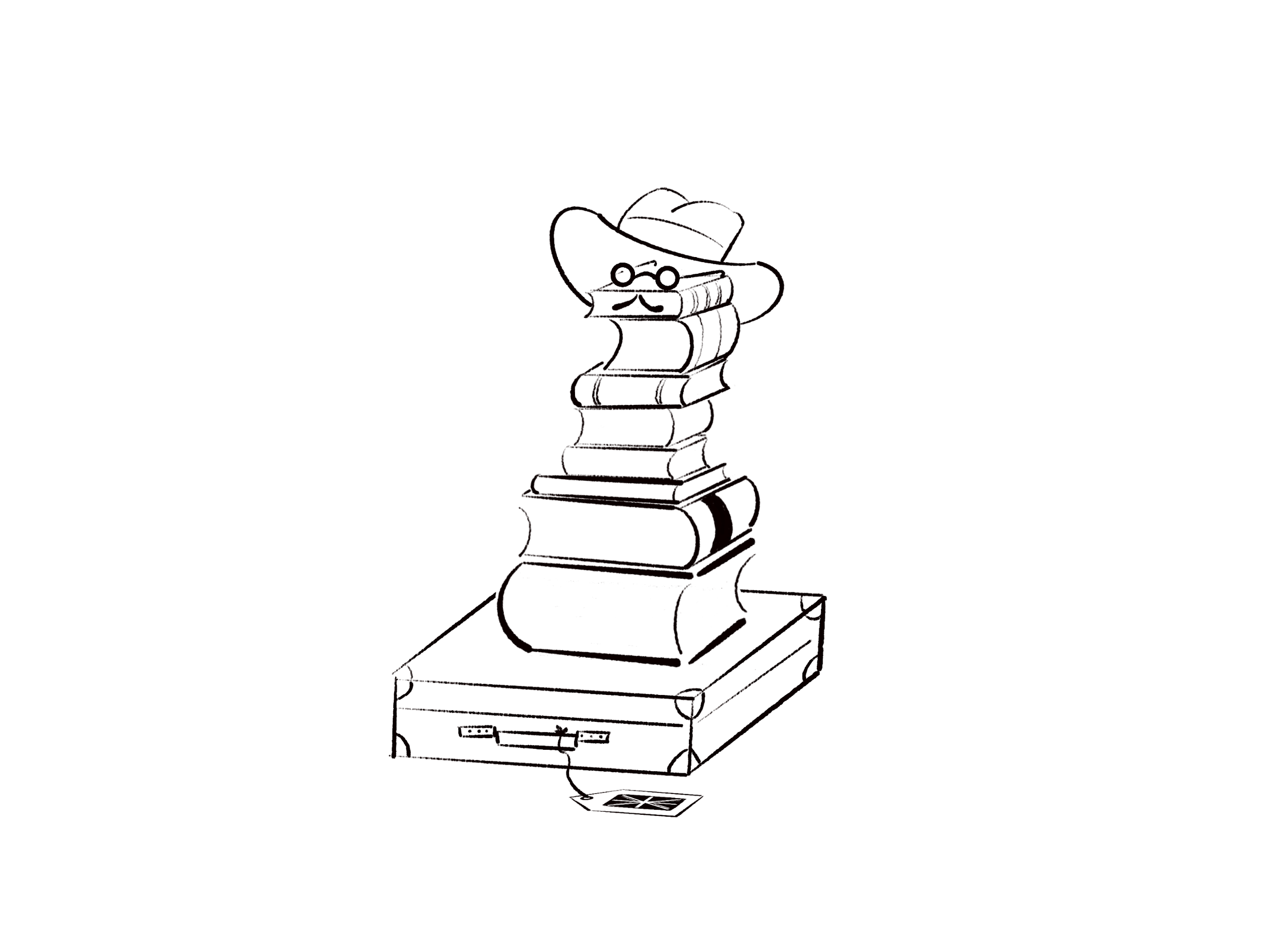
Illustrated by Tian Tian
Anyone who has travelled extensively is likely to have their own unique narrative. In this distinctive story, you might assume the role of the protagonist, with the ground beneath your feet and the place names in your memory serving as crucial elements. I have just edited the Chinese version of England to Me by Emily Hahn. Thus, inspired by this great work, I shall tell my own story.
When I was 20, I didn’t understand or enjoy my English and American Literature course in university because the lecturer, who had a PhD degree, used a lot of jargon. I can only recall how “Araby”, a short story by James Joyce, filled the air with dullness. Fortunately, at this time, a lovely young guy entered my life for the first time. He was enrolled in a Sino-British joint education programme and, as planned, advanced to the British partner institution. Shortly after, he chose to end our relationship without any explanation. Since then, a seed was sown in my heart to “study in the UK”. For a long time, the unnamed youngster in “Araby”, tortured by his studies and eager to go to the market, lingered in my thoughts. I tried to console him with the phrase, “Good things come to those who wait.”
It was after this that I discovered James Joyce was not English, as I had assumed, but Irish, and that his early experiences had a profound influence on his writing. As I delved deeper into psychology and education, I learned about the “Zeigarnik effect”, and eventually, I found myself standing on the platform, lecturing as a professor. No matter how much I read, my favourite short story remained “Araby”.
Faced with many cohorts of students, I consistently performed three key tasks. First, I guided students through an analysis of the boy’s character, encouraging them to consider what kind of person would choose a book solely based on its colour. Secondly, I shared the writer Ge Fei’s commentary on the story and invited students to connect it to their own life experiences. Lastly, I urged students to pick up their brushes and sketch images inspired by the most striking section of the text.
Rather than me simply teaching them how to read attentively, it often felt more like a group of young friends helping me create a shared sanctuary through literature.
My true understanding of England beyond literature began eight years ago when I met an English instructor named J. A colleague had warned me that working with foreign instructors could be challenging, not to mention the cultural differences and certain peculiar temperaments of some foreigners.
But how could I resist the allure of “Araby”? Against the odds, J and I, both new instructors fresh out of school, decided to give it a try. Surprisingly, this challenge led to a close friendship. J was honest and dedicated to teaching. One year, the whole school voted him “The Most Popular Teacher”. Although his degree was in physics, he had a deep interest in language and literature, and I often sought his advice on these subjects. His guidance has been invaluable to all my translation projects so far. He was like my British Doraemon, with exceptional translation skills and a talent for explaining cultural differences. Of course, I also helped him a great deal. I purchased numerous primary school Chinese textbooks and organised volunteers to teach him Chinese, laying the foundation for his future studies.
J also experienced a significant event at our school. A fire broke out in a garage just beneath our office building. Fortunately, there were no casualties. While my Chinese colleagues and I assumed it was simply bad luck and trusted the school to handle the situation, J and another British teacher demanded a thorough explanation. As a result, a meeting was held between the foreign instructors and several school administrators to address the issue. Naturally, as J’s collaborating teacher, I took on the role of interpreter. After quickly familiarising myself with basic fire-related vocabulary, I attended the meeting, which covered the school’s recent fire safety procedures. J expressed his satisfaction after reviewing all the information. It was as if the school leaders were hosting a real press conference!
At first, I was puzzled by J’s reaction, as he wasn’t even in the office when the fire occurred. But as I gained more experience, I came to understand him fully. During IELTS (an English proficiency test for non-native English speakers) invigilation, I grew accustomed to giving clear instructions on where candidates should evacuate. Every time I visited the British Library, I noticed that not only did the reading rooms have ordinary carrels, but there were also special small rooms for disabled readers. And each time I finished shopping at the supermarket, the cashier and the customer behind me would patiently wait for me to pack all my items before serving the next customer…
The arrival of English instructor A introduced me to new Sino-British friendships. Unlike J, A had a humanities background and was about 12 years my senior. But these differences didn’t matter. In reality, A was well-versed in various computer applications and mobile apps, and she had a knack for winning people over.
Due to work commitments, A and I were required to co-host an online English summer course in August, which was scheduled to run for a month. Initially, I wasn’t sure if I’d get along with her as well as I did with J. To my surprise, A was highly dedicated, even offering to teach language and culture classes to students in the morning, China time, despite the inconvenience it caused her in the UK. We ended our collaboration on a cheerful note, having made a good impression on the students.
Shortly before the new term began, A arrived in China and quickly became a favourite on campus. Wherever she went, she greeted people warmly and naturally, and many international students were drawn to her, often approaching her for a chat. Who says the British are reserved? Who says they only like to talk about the weather? A had been teaching in the UK for nearly 20 years and had educated a large number of Chinese students, many of whom had gone on to earn master’s and doctoral degrees. However, this was her first visit to the homeland of her former students, and she couldn’t hide her excitement.
I could hardly contain my happiness when, three years ago, I finally realised my dream of studying in the UK. I often think back on the enjoyable and exhilarating time I spent as a visiting scholar at the University of Cambridge.
My joy stemmed from the inspiring words of the poet Xu Zhimo, while the adventure came from navigating the many challenges posed by the pandemic. When facing new challenges, I sometimes quietly ask myself if they are as difficult as my experiences during the pandemic in the UK.
Fortunately, I changed jobs this year to work at a Sino-foreign cooperative education institution, which partners with a school in the UK. My workplace embraced my idea for a decorative design, and every time I enter my office, I pass by a crimson couch and a picture of willow leaves on the wall. The vibrancy of the couch reminds me of the cosy embrace of the lazy seat beside the floor-to-ceiling windows in the English Department Library at Cambridge, while the graceful pattern of the willow leaves evokes the sense of optimism William Morris hoped to inspire in future generations. I hope my students will appreciate them as much as I do.
Youth may fade, wrinkles will appear, and not all global issues will have clear solutions. Yet, what matters most is that I can say the river of my life carries with it waves from England. These waves carry Peter Rabbit’s sweat and tears from his adventures in the vegetable garden; they once dove into the River Cam to play with the punts; and now they flow into the Thames, quietly watching Tower Bridge open and close. Thanks to these wonderful – if not always fearsome – tales of England, my horizons have been broadened.
About the author
Gu Yu is an English instructor with PhD in Literature. The author of The Anxiety of the Guardian: A Study on the Growth Patterns in Pearl Buck’s Works, and the first translator of Stories and Poems for Smart Kids.
每个去过远方的人,都可以讲述自己的故事。在这独一无二的叙事中,可以把自己设定成主角,而脚下的那片土地,以及脑海中的那个地名,都是不可替代的要素。我手头刚好校对完《我的英国》的中译本,那我就借用这美丽的灵感来讲讲我的故事吧。
20 岁的时候,我听不太懂也不太喜欢上“英美文学”课,因为那位顶着博士头衔的教员讲了一堆术语,只记得课本里收录的那篇《阿拉比》让空气充斥着枯燥与窒息。也就是那一年,头一回有一个可爱的大男孩走进我的世界。他当时就读的专业属于中英合作办学项目,根据学业规划,他如期升入了英方合作院校。不久,他在没有说明任何理由的情况下,决定与我分别。从此,我内心埋下了一颗“负笈英伦”的种子。有很长一段时间,小说中那个被功课折磨得不行的无名小男孩,还有他那颗要去集市的焦心,经常浮现在我眼前,我真想用“好饭不怕晚”去安慰他。
后来,我惊讶地发现,詹姆斯·乔伊斯根本不是我想象中的英国人,而是来自一个叫做爱尔兰的地方,早年经历对他的创作产生了深远影响。再后来,我掌握了心理学和教育学知识,了解了“蔡格尼克记忆效应”是怎么一回事,接着便轮到我站上讲台阐释一堆术语。我发现自己最喜欢的短篇还是《阿拉比》。而且面对很多届学生,我都会完成三个必做事项。其一是引导学生分析小男孩的形象,尤其让他们思考,什么样的人才会仅仅因为书页的颜色而对一本书产生好感?其二是分享作家格非的读后感,然后让学生联系自己的生活体验。其三是鼓励学生拿起画笔,将印象最深刻的一段文本进行绘画创作。与其说我是在教他们如何细读文本,不如说是一群不大不小的朋友在陪伴我搭建避难所。
真正从书本中跳脱出来认识英国,得从八年前结识英籍教师J 说起。当时有同事提醒我,与外教合作教学并不见得是好差事,撇开文化冲突不说,有的外国人脾气甚是古怪。但是,我怎么可能逃得过“阿拉比”的魔咒呢?管它三七二十一,反正 J 和我一样都是刚出校门的新教师,而且我还比他略大几岁,那就先就试试看吧。没想到这一试,竟然让我俩成了好朋友。J 为人真诚,教学认真,有一年全校学生投票,他赢得了“最受欢迎的教师”称号。他虽然大学读的是理科专业,但对语言文字很感兴趣,但凡我遇到这方面的困惑,都会第一时间去请教他。迄今为止我在翻译领域做出的所有尝试,都离不开他的答疑解惑。可以说,他简直就是我的英国版哆啦 A 梦,尤其擅长英译和文化解说。当然,我也帮了他不少忙,我曾买过好几本小学语文课本,组织志愿者轮流给他上中文课,这也给他后来的学历提升打下了一定的语言基础。J 在我们学校还经历过一件很有意义的事情。有回一处车库突发火灾,地点正好就在我们办公室的楼底下,幸好没有造成任何人员伤亡。我们几个中国同事虽然心有余悸,但总觉得这已是不幸中的万幸,相信学校会妥善处理。但那几天,J 突然收起一贯的灿烂笑容,他与另一位英籍教师坚持要求学校给出明确说法。于是某个下午,外教们和学校相关部门的几位领导竟真的坐下来商讨此事。而我作为合作教师,口译的任务自然落到了我的头上,在匆忙看了一眼火灾方面的词汇后,我也跟着进入了会议议程:一是细致梳理火灾发生的前后经过;二是严肃探讨学校近期在消防方面的各项安排。当 J 弄清楚了所有细节后,终于露出了满意的表情。好家伙!这架势,我感觉领导们认认真真地开了一场答记者问!一开始我不太能够理解 J的做法,因为事发当时他根本不在办公室,甚至离火灾还远着呢,何必这样一本正经地“掺和”其中?不过随着阅历的增加,我是彻底想明白了:在监考雅思时,我习惯了每次都要口齿清晰地告诉考生逃生通道在哪里;我还注意到,大英图书馆的阅读室里不仅有普通的“carrel(研习间)”,还有几个特别为残障读者设计的小单间;每次在超市结完账,营业员和后面的顾客都会耐心地等待我收拾完所有商品,然后他们才开始接待下一位顾客……
英籍教师A 的出现让我了解了更多中英情谊。与J 不同的是,她是一位文科出身、年龄比我大了将近一轮的外教。但是,这些标签并不代表什么。事实上,A 不仅熟悉各种电脑软件、手机小程序,而且在人际交往过程中,她自带一种魔力。由于工作需要,今年 8 月我和从未谋面的她必须联合开展为期一个月的线上英语夏令营活动。一开始我心里没有底,因为不知道自己是否还有那份认识 J 的好运气。但惊喜的是,A 特别敬业,主动提出自己能够克服时差,坚持在北京时间的上午给学生们讲授语言文化课程。
就这样,我们非常愉快地完成了合作,并给学生们留下了极其深刻的印象。开学前夕,A 如期来到中国,她几乎很快就成了校园里的一道风景线,因为无论走到哪里,她总是自然大方地与人打招呼,许多留学生更像是着了魔一样经常找她攀谈。谁说英国人拘谨来着?谁说英国人一开口就是爱说天气?天哪,我认识的这个英国人简直就是一枚“社牛”。很快我搞清楚了一些缘由,原来 A 在英国本土从教 20 多年,教过了无数个中国学生,其中很多都已硕博上岸,但这是她第一次踏上老朋友们的故土,如何按捺得住自己激动的心情?
我也按捺不住自己的心情,因为我终于在三年前圆了“负笈英伦”的美梦。现在时常回想那时候在剑桥大学度过的愉悦而冒险的访学时光。愉悦是因为徐志摩的召唤确实灵光,冒险是因为百年不遇的疫情带来的各种麻烦。回国后,我会开始留意三明治,最近终于在澳门的一家便利店吃到了类似 M&S 货架上的味道,是那种匆匆吃完跑回去继续开挂的自我效能感。每次面对奇形怪状的压力,我都静静问自己,这还能和疫情期间的英国故事相提并论?再次幸运的是,今年我调至非独立法人中外合作办学机构工作,对接的院校同样在英国,单位采纳了我的装修设计方案。每当我进入办公室,就会路过一款红色沙发和一幅柳叶挂画。前者的热情洋溢,与剑桥大学英文系图书室落地窗边懒人沙发送出的拥抱如出一辙,而后者的繁而不乱,则是威廉·莫里斯努力让后人看见的希望,但愿我的学生都能喜欢。青春会消逝,细纹会攀爬,人世间不是所有的问题都会有确切的答案。重要的是,我自己能够确定,我的生命河流里流淌着来自英国的浪花,它们是彼得兔在菜园冒险时流下的汗与泪,它们也曾一猛子扎进剑河里与长篙嬉戏玩耍,它们又汇入泰晤士河中静静观赏塔桥的开开合合……感谢那些美好的,抑或是吓不倒我的英国故事,带我奔向更广阔的地方。
作者介绍
谷雨,文学博士,英语教师。著有《“监护人”的焦虑:赛珍珠作品中的成长模式研究》,译有《给聪明孩子的故事与诗》(第一译者)。
Both the Chinese and English editions of Haha! Britain can be purchased at the following platforms:
Daunt Books Marylebone: 84 Marylebone High Street, London W1U 4QW