
Buying Books: Rediscovering Trust in the UK | 买书,在英国重拾信任
Written by: Li Xinsheng | 李昕升
Translated by: Wang Hanyu and Xinyao
Editor’s Note:
This article is excerpted from Haha! Britain — a charitable bilingual publication co-produced by The Mothers’ Bridge of Love (MBL) and River Cam Breeze. The book is a lively collaboration between 42 Chinese authors living in the UK and 36 university-based volunteer translators. With wit and warmth, the stories capture the everyday realities of Chinese communities in Britain, offering an honest look at the cultural clashes, humour, and adaptation that arise in the space between Chinese and British ways of life. Haha! Britain has been warmly endorsed by several well-known figures in UK-China relations, including Stephen Perry (former Chairman of the 48 Group Club), Luise Schäfer OBE (former British diplomat and Chamber of Commerce chair), Professor Hugo De Burgh (former BBC editor and academic), and British scholar Martin Jacques. The book’s title was handwritten by celebrated British-Chinese artist Qu Leilei, its cover illustrated by bestselling Chinese author and poet Feng Tang, and the postscript contributed by Xue Mo, a prominent voice in contemporary Chinese literature.
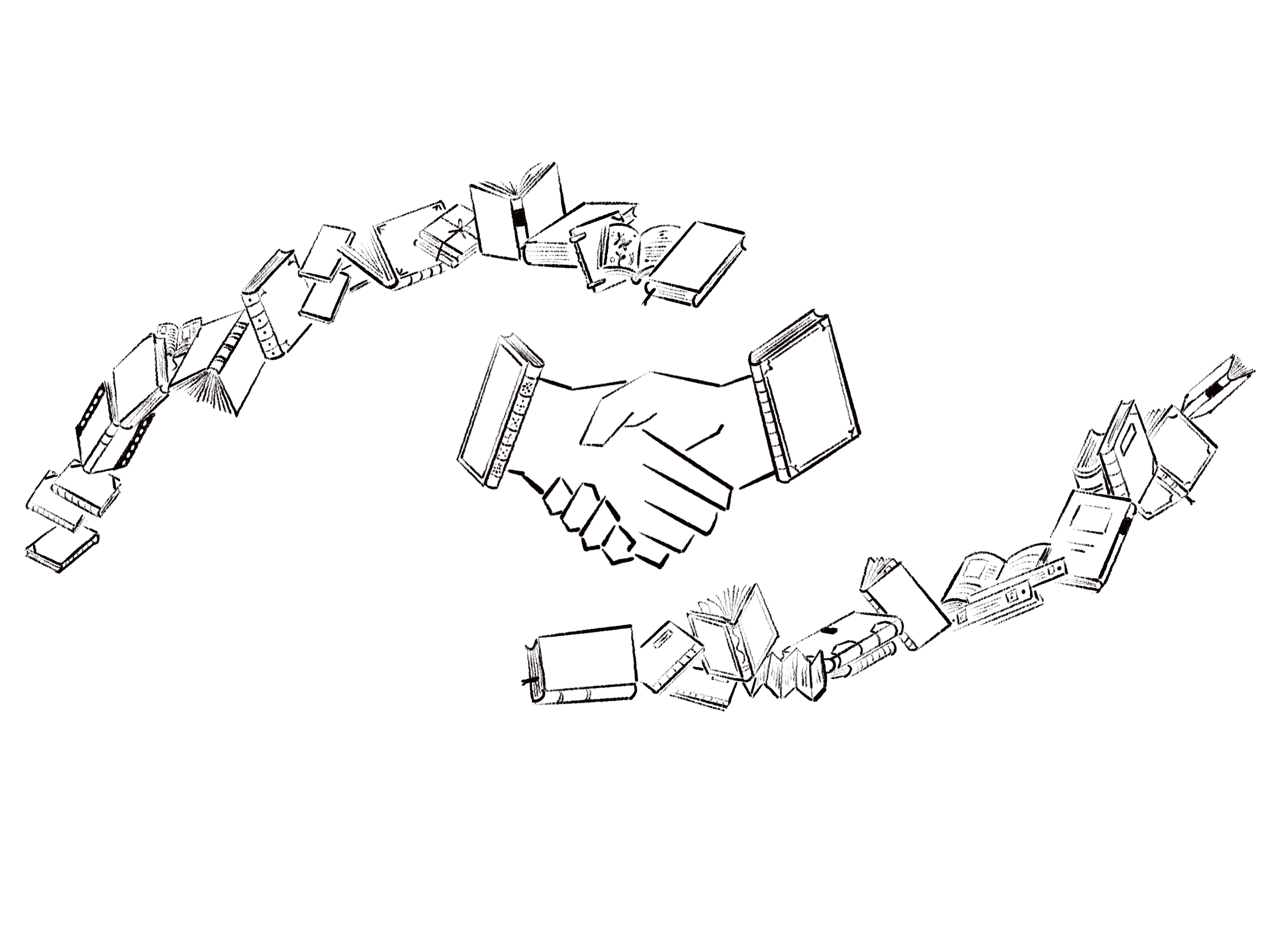
Illustrated by Tian Tian
British people have a profound love for buying and reading books. The book market is an indispensable part of every Briton’s life, which is why the UK’s per capita book ownership, reading volume and number of bookstores are among the highest in the world.
Almost every British town boasts its own historic bookshop. Many Britons living in small towns cherish the serene charm of the countryside, finding it far from mundane or repetitive. These towns are well-connected by transport, self-sufficient, and still bustling with life. The story behind the rise of the small town of Hay-on-Wye would seem almost unimaginable to many in China. In recent years, the UK has witnessed a “reverse migration” of bookshops, exemplified by establishments like the Francis Edwards antiquarian bookshop, once thriving in London’s West End before finding a new home in this charming small town. Moreover, large cities and university towns such as London, Edinburgh, Cambridge and Oxford are home to countless bookshops that serve not only as retail outlets for new books and textbooks but also as havens for rare and second-hand literary treasures. These bookshops cater not just to the general public but also fulfill crucial roles in library acquisitions and government subscriptions.
Having spent nearly half a year in the UK, I’ve had the opportunity to explore second-hand bookshops not only in London, Cambridge and Oxford but also further afield in Hay-on-Wye, known as the “Kingdom of Antique Books”. My journey has also led me through a variety of book markets, including the Market Square Book Market and the Book Sale at St Botolph’s Church – both in Cambridge – and the South Bank Book Market in London. In addition, I’ve enjoyed attending the regular antiquarian book fairs organised by the Provincial Booksellers Fairs Association (PBFA).
When I visited the London Autumn Book Fair, for instance, the fair was bustling with activity, yet there were only a handful of Chinese attendees and young people. As I lingered by the stall of a British bookseller, he warmly remarked, “Don’t be put off by the prices on the books. If you’re interested, we can always negotiate.”
After the fair, I searched online for some books that caught my eye, such as The Flowers of Shakespeare and The Classes and Orders of the Linnaean System of Botany, but found no sellers from the UK. This shows that many British bookshops have not yet entered the international market through second-hand trading platforms. A prime example is the well-known Cambridge bookshop, G. David Bookseller. It firmly refuses to open an online store. The owners claim that this is to maintain direct contact with customers and preserve the joy of discovery for readers.
This kind of old-fashioned approach is not uncommon in the UK. Plurabelle Books in Cambridge, the shop I visit the most frequently, is another example. Due to the sheer volume of their collection, many books are unpriced, leaving ample room for on-the-spot bargaining. The shop also houses a considerable number of non-English books that the owner often has no idea how to price, frequently asking me for advice on their value.
I have found numerous hidden gems from Plurabelle Books, including Chinese books from the collection of Professor David McMullen, a renowned Sinologist, mentor to the famous author Jin Yong, and a lifetime fellow at St. John’s College, Cambridge, and Director of the Chinese Studies Centre. Among the finds were also illustrated books from the Meiji period.
The bookstore operates solely through its physical store and its own online shop. In the shop description, they clearly state:
“We cannot compete with mega sellers who pretend to be charities, sell books for pennies and in the process destroy the marketplace for second-hand books. We will not compete with information brokerage like digital copies and print on demand. But we continue to give you a serious and dedicated service which is focused on the individuality of each single book: its condition, its origin, sometimes even its smell. You come to us for real books, not just instances of ISBNs.”
Despite my appreciation for this type of service, I simply don’t have the time or energy to visit all the major second-hand bookstores across the UK. For the most part, I have to rely on large second-hand book trading platforms to guide me in my search, such as my longtime favourite, Mike Park Books. It was through a bookseller’s suggestion that I began selecting books from their website and establishing direct contact for purchases.
Compared to private websites run by individual sellers, international second-hand book trading platforms typically charge higher fees of often around 10% to 15% of the book’s price. In such cases, opting for private transactions directly with sellers can create a win-win situation. The platforms are generally open and accommodating in this regard, and bypassing the platform is tacitly accepted. That said, not everyone is comfortable with private transactions due to the inherent risks.
The first time I contacted a seller directly, I discovered that a book priced over a hundred pounds could be bought with a 10% discount if purchased directly from the seller, which was very tempting. There are typically five methods for private transactions: direct bank transfer, PayPal, receiving a payment invoice from the seller, placing an order on the seller’s private website, and in-person transactions. The first method is the most commonly used, while in-person transactions can sometimes yield even greater discounts. Initially, I was hesitant about a direct bank transfer and sought advice from several Chinese individuals who had lived and worked in the UK for years. One tutor admitted he had never tried this method and refrained from commenting on it. A postdoctoral researcher advised caution, as bad people exist everywhere. However, a driver with over two decades of experience in the UK thought it was no big deal, as he believed that British people are inclined to avoid trouble and wouldn’t risk conflict over a small amount of money.
Ultimately, lured by the potential of a bargain, I made the payment and, with some anxiety, waited a few days. To my relief, the book arrived as promised. The seller had been trustworthy and turned me into a compulsive online second-hand book shopper.
In total, I did more than twenty private transactions, with amounts ranging from £50 to £2,000, and I have purchased books from as far away as the Netherlands and Germany. To be honest, if I were defrauded within the UK, I might still have a chance to visit the seller in person to resolve the issue. For the European sellers, without a Schengen visa and unwilling to spend a fortune on a trip to Europe, if the books didn’t arrive, I would have to accept it and consider it a charitable donation. Yet, without exception so far, I have received all the books.
That’s not to say I have never been worried. For my largest purchase – three volumes of Curtis’s Botanical Magazine costing over £2,000 – I felt particularly anxious. After paying on Thursday, I sent follow-up emails on Friday and Saturday, but received no response. I was on the verge of contacting the police but was concerned that my broken English would make it difficult for me to explain the situation clearly. Visiting the seller was also out of the question, as the address provided was too vague and imprecise to locate. This left me in a state of distress. Then, on Sunday, I suddenly received an email from the seller explaining the delay: the owner was away on a business trip, and the wife of the owner was on crutches. Thus, the bookseller had only just managed to respond. Reading this, I breathed a sigh of relief.
Later, I spoke with Mr. Wang, a tutor and fellow enthusiast of Western antiquarian books. He reassured me that there was absolutely no need to worry. Although based in China, he had purchased books from all over the world, placing hundreds of orders without ever being scammed. He believed that international booksellers were highly reputable. His only close call was with an Australian bookseller who was rather slow in dispatching the order. After waiting for over a week, Mr. Wang mustered the courage to send an email, expressing that this had been his worst global shopping experience. The bookseller immediately arranged for shipment, sincerely apologised, and explained that he had been overwhelmed with work.
Isn’t this how people should interact? Keeping promises and acting with integrity. Trust should be established not only among acquaintances but also strangers. Of course, this is not to say that there are no swindlers in the UK, but the honest practices of British booksellers have greatly enhanced my impression of the British people. Perhaps this integrity is one reason why British bookstores, many of which have been around for fifty or even a hundred years, continue to thrive. Running a bookstore has thus become a highly respected profession. British bookstores represent far more than a means of making money; they embody a sense of social responsibility. The decades, even centuries, of reputation and influence that a bookstore cultivates are preserved and passed down. Therefore, it is difficult for British booksellers to fall into moral disrepute.
Richard Booth, the “King of Hay-on-Wye”, dedicated his life to the development of this small town, ultimately transforming it into a global destination for book lovers. The town is also home to the Hay Festival, a well- known literary festival that attracts celebrities, philanthropists and volunteers. Yuean Fu, a senior editor from Taiwan once said, “A bookstore is inherently a service industry with the mission of cultural dissemination. If you lack social awareness, you should pursue another line of work.”
I am also reminded of a conversation from Nicholas Barker on Book Collecting (Shanghai Review of Books, 2 August 2020). The interviewer asked, “In recent years, the prices of artworks have soared. One reason is that they have become part of the investment portfolios of the wealthy. Many buyers don’t necessarily love art, but they buy pieces and then store them in bank vaults without ever looking at them. Do you think there is a similar trend in the investment of rare books?”
Barker candidly replied, “Thank God, this is extremely rare in book collecting. Book collectors are, first and foremost, book lovers. Few people collect books purely for investment. If someone hopes to get rich from book collecting, they’ve chosen the wrong way to make money; they should pursue something else.”
This sentiment echoes the reality that running a bookstore is not a path to wealth. In fact, whether in the East or the West, opening a bookstore has never been a shortcut to riches. While it can provide a livelihood, it’s seldom a lucrative venture. This explains why most bookstore owners and attendees at large book fairs in the UK are elderly. Young people, both financially and temperamentally, are unlikely to see running a bookstore as a solid career choice. The typical owner of a bookstore I encountered was often an elderly individual deeply immersed in literature. British booksellers, in particular, are usually well-educated and active in community service, often playing the role of local community leaders.
For instance, George Marrin, the owner of Marrin’s Bookshop, is a true expert on local history. He and his wife Doris, a teacher, are cherished members of their community. Every time George discovers a rare gem, he is filled with excitement, often saying to his son during auctions or valuations, “This is better than work, isn’t it?”
About the author

Li Xinsheng, Associate Professor in the Department of History at the School of Humanities, Southeast University in China; Director of the Center for the History of Science and Technology at Southeast University; Member of The Writers Association of Jiangsu Province; Member of the China Science Writers Association.
英国人爱买书、爱读书。书市是每个英国人生活中不可或缺的一部分,是故英国人均书籍占有量、人均读书量、人均书店量在全球都是名列前茅。几乎每一个英国小镇都有自己历史悠久的书店。很多英国人也比较青睐田园牧歌式的乡村生活。居住在小镇并不感觉枯燥、单调。小镇交通便捷、设施俱全,依然拥有较多的人口。海伊小镇(Hay-on-Wye)的发家史在国人看来简直不可思议。英国近年甚至出现了书店的“反向流动”,如海伊小镇的 Francis Edwards 古董书店,始创于伦敦西区,后来才搬迁至此小镇。此外,诸如伦敦、爱丁堡、剑桥、牛津这样的大城市、大学城,书店则不可胜数。这里的书店并不仅仅是新书店、教材书店,更多是包罗万象的二手书店,即旧书店。它们不仅服务于普通大众,还在图书馆采购、政府征订等活动中发挥了重要作用。
笔者来英国已近半年,除了在伦敦、剑桥、牛津二手书店访书之外,也在“旧书王国”海伊小镇留下了足迹,更参与了大大小小不同的书市,如剑桥集市广场(Market Square)图书市集、圣博托尔夫(St Botolph)教堂图书集市、伦敦南岸书市(South Bank Book Market)等,还参加过英国地方古书展协会(Provincial Booksellers’ Fairs Association,简称 PBFA)定期举办的旧书交流会。
以伦敦秋季书展(London Autumn Book Fair)为例。那里热闹非凡,但中国人、年轻人寥寥无几。当笔者在一位英国书商摊位前驻足时,他热心地说道:“不要被书上的标价吓到,如果有兴趣,价格好商量。”在网上检索“书展”中我有兴趣的一些书,如 The Flowers of Shakespeare(《莎翁著作中的花卉》)、The Classes and Orders of the Linnaean System of Botany(《林奈植物学体系的分类与排序》),却发现卖家不在英国。可见相当数量的英国书店确实没有通过二手交易平台链接到全球市场。诚如剑桥知名书店 G. 大卫书店(G. David Bookseller),就坚持不开网店,自言为了和客户保持直接接触的传统和让读者体会发现的乐趣。这种“老派”(Old fashion)在英国数见不鲜。
再以笔者最常去的剑桥布鲁尔贝里书店(Plurabelle Books)为例,因为藏书太多,很多图书没有标价,完全可以现场讨价还价。更遑论其中的大量非英文类书籍,老板完全不知如何售卖,经常问我该卖多少钱。笔者从布鲁尔贝里书店淘到大量著名汉学家、金庸的导师、剑桥大学圣约翰学院终身院士、中国研究中心主任麦大维(David McMullen)教授收藏的中文图书,以及明治时期的绘本等。布鲁尔贝里书店是一个仅经营实体店与自己网上书店的书商。在其书店介绍中也清楚地写明:“我们无法与那些图书批发大户竞争:这些商家乔装成慈善机构、以便士计价出售书籍,并由此摧毁了二手书市场;我们不会与从事数字拷贝和按需刊印等业务的信息经纪公司竞争。但我们将继续为您提供谨严且忠实的服务,专注于每本书的特点:其品相、其源流,乃至其气味。您惠顾我家,是为了能买到真正的书,而不是些徒有 ISBN的物什。”
虽说如此,笔者毕竟没有精力走遍英国主要二手书店,多数还是要根据大型二手书交易平台按图索骥,如笔者作为老主顾的迈克尔·帕克书店(Mike Park Books),便是书商建议我可以在其自建网站上选书而建立私下联系的。国际二手图书交易平台一般手续费更高,可达书价的 10%— 15% 左右,但如果选择私下交易,便可打开一个双赢的局面。这也是国际二手图书交易平台的开放与包容之处:绕过平台的行为完全是默许的。但毕竟不是每个人都愿意私下交易,因为这样做有一定风险。
笔者第一次与卖家私下联系,得知一本一百多英镑的书,如果直接从卖家购买可以有 10% 的折扣,便十分心动。私下交易一般有五种方式:第一种直接银行转账,第二种通过 Paypal,第三种是对方直接发送付款账单,第四种是在对方的私人网站上下单,第五种就是现场交易。一般以第一种最为常用。现场交易则可能取得更大的折扣。
第一次采取这种方式,笔者也是颇为犹豫,毕竟之前吃过亏。为此征询了很多在英长期生活、工作的国人的意见。一位老师表示,他没这么干过,不好评价;一位博士后认为,还是慎重,坏人不分国界;一位在英二十余年的司机倒是觉得无所谓,英国人怕麻烦,不值得为了这点钱引起纠纷。笔者在利益的诱惑下,还是付款了,心情忐忑地等待了几天之后,果然收到了书。对方没有辜负我的信任,一种满足的心绪油然而生。
从此,笔者一发而不可收,开始还与对方暄几句,并表示希望日后去对方的实体店参观,小心思是想给对方压力,后来发现完全没有这个必要。采取私下交易的方式买书二十余单,金额从 50 英镑到 2000 英镑不等。最远之处买到了荷兰,也有与德国的书商完成的交易。老实说,如果在英国境内,对方骗了我,我还可能去上门讨个说法,欧盟地区因我没有申根签,又不可能斥巨资来一趟欧洲行,如果他们不发货,只能当做善事了。但是无一例外,全部收到书。其中也不是完全没有担心过。如最大的一笔消费,付了两千多英镑购买三本柯蒂斯《植物学杂志》,因金额过大,着实心里没底。周四付款之后,周五、周六连续两封邮件询问都没有回音,都有点想报警了,但是又担心蹩脚的英语无法表达清楚;想去上门索书,但对方提供的地址不详细、无法精准定位,于是陷入苦恼之中。结果周日突然收到了邮件,解释说因为老板出差了,他老婆又拄拐了,所以刚刚回复,我顿时哑然。
后来笔者与西文古籍爱好者王老师沟通,王老师表示完全没有必要担心。他身处中国、买遍全球,下单百八十单,从来没有被骗过,他认为老外书商都是十分讲究的。唯一一次有惊无险的经历,是和一位澳大利亚书商交易,此人办事比较拖沓,前后一周多都没有发货,王老师硬着头皮发邮件质问,表示这是他全球购物体验最差的一次,澳洲书商马上安排发货,并表示自己太忙疏忽了,真诚道歉。
人与人之间不就应该这样么?言出必行、说一不二,不仅熟人之间,陌生人之间更应该建立这样信任的桥梁。我当然不是说英国人里就没有骗子,但是英国书商的诚信经营真的令我对英国人的印象加分很多,这也许就是英国书店动辄五十上百年而屹立不倒的原因之一吧。
基于此,经营书店成了一个非常受尊敬的行业。英国书店代表的远远不仅是赚钱,而更是社会责任感。一家书店几十甚至几百年的口碑与影响也因此得到了传承;基于此,英国书商很难处在道德洼地。海伊小镇之王理查德·布斯(Richard Booth)终其一生都在为小镇的发展奋斗,终于打造出世界第一书镇。按理说,作为牛津大学高材生的他根本不会为工作发愁;海伊文学节的组织工作、名人捧场等活动其实也多是自发、公益的。台湾资深编辑人傅月庵曾说:“书店本来就是服务行业,而且有文化传播的意义,没有社会意识,你就去做别的嘛。”
我又想起了《尼古拉斯·巴克谈书籍收藏》(《上海书评》 2020 年 8 月 2 日)中的一段访谈对话。问:近年来,艺术品的价格大幅上升,原因之一是它们成了富有者投资资产配置的一部分,许多买家并不一定热爱艺术,买下后就放进银行的保险柜里,看都不看一眼。您觉得在珍本书的世界中有这样的趋势么?巴克坦言:“谢天谢地,藏书界这种情况非常非常少。藏书家首先是爱书人,很少有人会为了投资而藏书。如果想靠藏书发财,那是选错赚钱的方法了,他应该去做别的。”他们都道出了开书店是不会发财的。
实际上,无论中外,开书店都不是赚钱的捷径,糊口虽然问题不大,但是很难发财,这就能够解释英国书店老板、参加大型书市的顾客多为上了岁数的人,年轻人在经济上、心性上都很难将开书店视为第一志愿。笔者常见到书店老板的形象就是读书的老者,英国的书商多是富有学识、热心公益事业的代表,扮演了地方社会头面人物的角色。比如马林(Marrin)书店的主人,俨然是位研究本地历史的巨擘了。他和教师多丽丝(乔治·马林的妻子)都是他们社区中深受爱戴的成员。每发现一件珍宝都会让乔治激动不已,他经常在拍卖或估价时对儿子说:“这比工作好,不是吗?”
作者介绍
李昕升,东南大学人文学院历史学系副教授、东南大学科学技术史研究中心主任、江苏省作家协会会员、中国科普作家协会会员。
Both the Chinese and English editions of Haha! Britain can be purchased at the following platforms:
Daunt Books Marylebone: 84 Marylebone High Street, London W1U 4QW