
Collecting Second-hand Goods in the UK | 我在英国收旧货
Written by: Chen Zhihao | 陈志浩
Translated by: Yukun Peng
Editor’s Note:
This article is excerpted from Haha! Britain — a charitable bilingual publication co-produced by The Mothers’ Bridge of Love (MBL) and River Cam Breeze. The book is a lively collaboration between 42 Chinese authors living in the UK and 36 university-based volunteer translators. With wit and warmth, the stories capture the everyday realities of Chinese communities in Britain, offering an honest look at the cultural clashes, humour, and adaptation that arise in the space between Chinese and British ways of life. Haha! Britain has been warmly endorsed by several well-known figures in UK-China relations, including Stephen Perry (former Chairman of the 48 Group Club), Luise Schäfer OBE (former British diplomat and Chamber of Commerce chair), Professor Hugo De Burgh (former BBC editor and academic), and British scholar Martin Jacques. The book’s title was handwritten by celebrated British-Chinese artist Qu Leilei, its cover illustrated by bestselling Chinese author and poet Feng Tang, and the postscript contributed by Xue Mo, a prominent voice in contemporary Chinese literature.
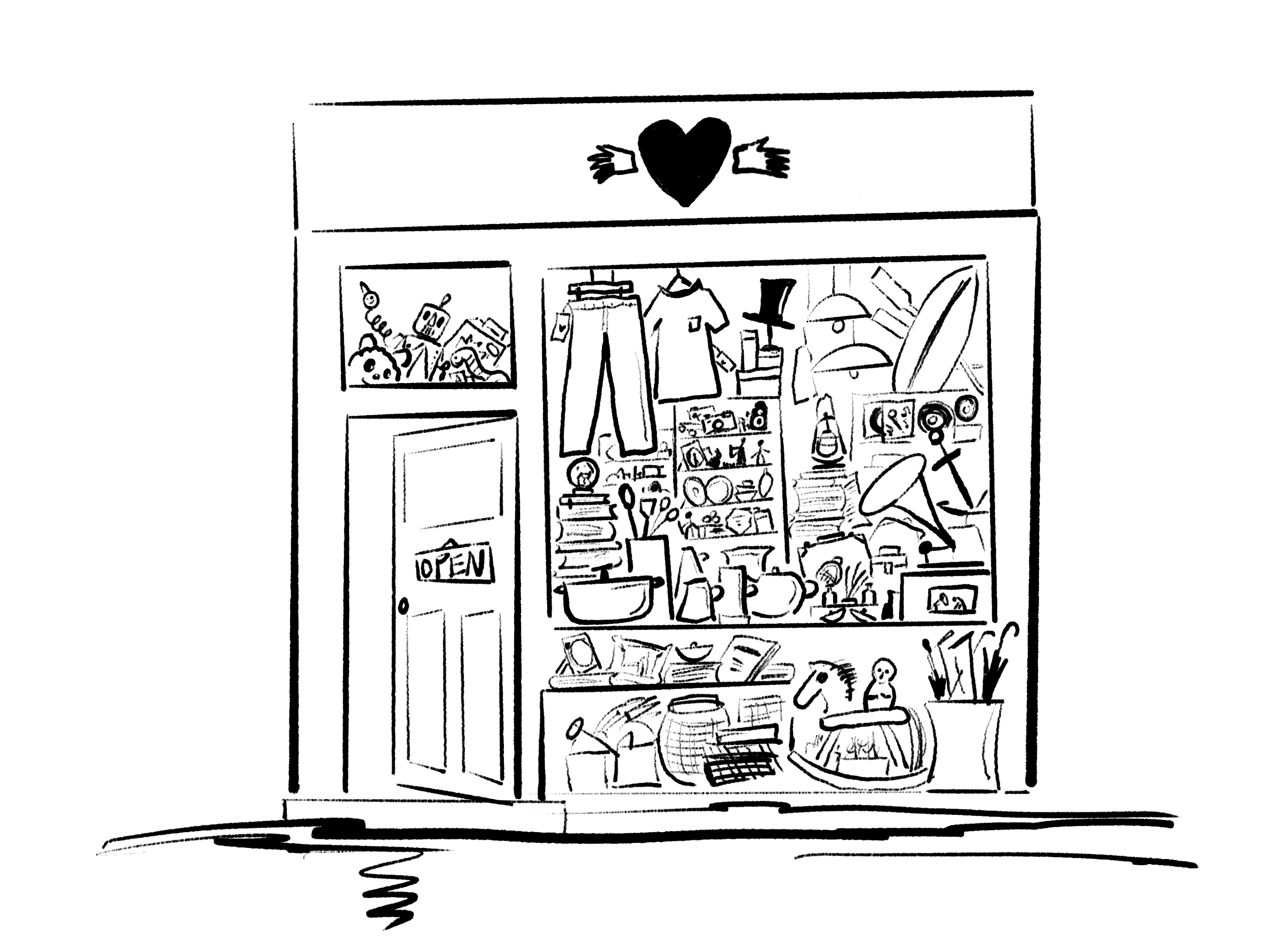
Illustrated by Tian Tian
When you think of the UK, what comes to mind? Is it the ancient castles and stately homes, the magnificent royal palaces, or perhaps the great literary figures like Shakespeare and Dickens? Maybe it’s the infamous weather or the well-known dish: fish and chips? For me, after nine years in the UK, I’ve developed a fascination for collecting various second-hand goods from charity shops.
Charity shops are a unique and charming aspect of British communities. Whether in bustling cities or quaint villages, you’ll find them lining the high streets. These shops not only serve a charitable purpose but also embody community spirit and environmental consciousness. Typically run by charitable organizations, they sell donated second-hand items such as clothes, books, furniture, electronics, toys and more. Common charity shops include Oxfam, the British Heart Foundation, Cancer Research UK, Traid, which focuses on improving the textile industry and reducing clothing waste, and Age UK, which supports the elderly, among many others.
From my observations, these shops are usually small but very well- organised. Clothes and shoes are neatly sorted by style, colour and season, making it rare to find two identical pieces of clothing in the same shop, as everything is donated by local residents. Shopping in a second-hand store feels a bit like opening a mystery box – you never know what treasures await. Personally, I enjoy buying various second-hand plates and hunting for interesting little items in these shops. However, the quality of goods can vary depending on the area and a bit of luck.
I also love exploring the British countryside, where delightful surprises can often be found in the most unexpected corners. After finishing my master’s thesis in 2017, I joined a local Chinese tour group for a three-day trip to the Scottish Highlands. Listening to the chatty tourists felt like being back in China. During a stop in the small town of Pitlochry, I wandered into a charity shop and was immediately drawn to a beautiful porcelain plate hidden in the corner. It had intricate patterns and designs that seemed to whisper stories from a bygone era.
As I squatted to examine it closely, an elderly lady with a Scottish accent approached me. “It’s a lovely day today, isn’t it? Interested in that plate?” she asked, smiling. I replied, “Yes, I’m quite taken by these plates. They seem to be at least fifty or sixty years old.” The lady smiled and said, “These are indeed special, from the early 20th century. They belonged to an old gentleman from the area who passed away, and his family donated his belongings to our shop.” Hearing this story made me even more captivated by the plates. They were priced modestly at £5. I decided to buy one, not just for its beauty but also for its history and the stories it carried, making it truly unique. For me, it was like owning a small luxury item. A fellow Chinese tourist, initially dismissive of second-hand goods, found a lovely tea set in the same shop and was thrilled. This kind of experience has happened to me many times. Over the years, I’ve visited at least a hundred charity shops across the UK, collecting everything from tableware, small appliances and books to records and trinkets. The shopping process always brings a sense of warmth and goodwill from these shops.
You might think, with such a variety of old clothes and shoes at such low prices, only people from low-income backgrounds shop there. But you’d be mistaken. Charity shop customers are very diverse. Many local British influencers shop in these stores and share tips on styling. Fashion is often a cycle, and many young people and university students shop in these stores to embrace the vintage trend.
Some might wonder how the habit of shopping for second-hand goods became so ingrained in British households. The UK has a long history of charity work, and the development of charity shops dates back to the 19th century. They originated from the initiatives of charitable organisations that sought to raise funds for their causes and provide employment opportunities for disadvantaged groups. During the early to mid-20th century, the two World Wars made charity shops increasingly important. They supplied much-needed goods to war-affected areas. During World War II, with clothing rationed, charity shops became essential sources of clothing. The modern concept of Oxfam’s charity shops began after World War II, in 1947, with the opening of their first store in Oxford to aid Greece’s post-war recovery. Following a call for donations, people from all over contributed, and part of the profits from the sold goods went to Greece.
Since then, the number of second-hand retail stores has grown. According to recent statistics, there are approximately 11,250 charity shops across the UK. They raise about £270 million annually to support causes like poverty alleviation, medical research, improving the lives of underprivileged children, and enhancing the quality of life for the elderly. These shops employ around 26,800 people and have 186,800 volunteers, including retirees and young people.
Charity shops have created a sustainable business model that balances people, the environment, and profits. For many elderly volunteers, especially those living alone, working in these shops significantly improves their mental health, helping them combat loneliness and fostering a sense of community involvement and achievement. If you ever visit the UK, make sure to explore the local charity shops.
About the author

Chen Zhihao is an Assistant Professor of Business Management at Oxford Brookes University. His research focuses on the spatial behaviours of tourists and the mining of big data in tourism.
说到英国,你的第一反应是什么?是古老悠久的城堡和庄园,还是富丽堂皇的王室宫殿?是伟大的文学巨匠,如莎士比亚和狄更斯,还是糟糕的天气和“大名鼎鼎”的国菜——炸鱼和薯条?而我在到英国的第九年,却痴迷上在英国的慈善商店里收各种“旧货”。
英国的慈善商店是英国社区中一道独特的风景线,无论在都市还是乡村小镇,它们都遍布在高街(high street)两侧。它们既是慈善事业的一种形式,也是社区互助和环保的一种体现。这些慈善商店通常由慈善组织经营,以销售捐赠的二手商品为主,包括服装、书籍、家具、家电、玩具等各种物品。在英国比较常见的实体商店的慈善机构有乐施会(Oxfam),英国心脏基金会(British Heart Foundation),募款支持癌症研究的英国癌症研究会(Cancer Research UK),致力于改善纺织行业并减少衣物浪费的特拉伊德(Traid),还有帮助老年群体的英国长者会(Age UK)等等。
据我观察,这些商店的面积通常不大,但里面的布局井然有序。通常会把衣服、鞋子根据款式、颜色和季节分门别类进行摆放。在同一个商店中,很少能找出两件一模一样的衣服。因为这些衣物的来源都是附近居民的捐赠。所以你到一家二手店去淘旧货,就像是在拆盲盒。我最感兴趣的是在这些商店里买各种二手的盘子,寻找有趣的小物件。不过并不是每家慈善商店都会有质量上乘的物品,这个还需要分地区和碰运气。
我喜欢逛英国的乡村,在一些“犄角旮旯”的地方,反而会给你不一样的惊喜。2017 年我写完硕士毕业论文后,也懒得做攻略,就在爱丁堡当地报了一个华人的旅行社的跟团游,去苏格兰高地玩了三天。一路上听着大叔大妈们聊天吹水,顿觉一秒回国。途经皮特洛赫里小镇,我就下车逛慈善商店。当时被一个精美的瓷盘吸引住了,这个盘子摆放在一个角落的橱窗里,上面绘有精致的花纹和图饰,看起来像是来自过去的某个时代。我蹲下身子仔细打量,似乎感受到这个盘子散发出来的历史气息和韵味。慈善商店的老奶奶走过来和我打招呼,带着苏格兰口音的英语格外上头。她对我说,“今天的天气挺不错,你对这个盘子感兴趣吗?它们都是我们店里最近收到的捐赠物品呢。”我回答说:“是的,我对这些盘子非常感兴趣,它们看起来有五六十年了吧?”老奶奶笑着告诉我,“这些盘子确实非常特别,是 20 世纪早期的,据说是一位附近的老爷爷家里的,他过世后,家人将他的这些物品捐赠给了我们的慈善商店。”
我听了店员老奶奶的解释,更加被这些盘子吸引了,看了一下价格并不贵,5 英镑(约合 45 人民币)。我决定购买,不仅因为它漂亮,更因为它经历了时间的洗礼,承载着很多人的故事,更显得独特。对我来说,这就是一个小小的奢侈品。一位同行的中国阿姨,之前不屑购买二手货,但在这家店里淘到了一套心仪的下午茶餐具。类似的经历我遇到过很多次,在英国的这些年,我逛过不下百家慈善商店,淘过的旧货包括餐具、小电器、书籍、唱片、小摆件等等,而购物的过程总能感受到这些商店传递出来的温暖和善意。
如果你觉得,既然这些旧衣服,旧鞋子种类这么多,价格又这么便宜,应该都是些低端人群去购买吧?很不幸,你猜错了。慈善商店的消费人群很广泛,很多英国本地网红都会去慈善商店购物,在网上教人如何穿搭。时尚有时候是一种轮回,很多当下的年轻人、大学生也会去这种商店买衣服,走复古潮流风。
也许有人会有疑问,这种二手商品购物习惯是如何走进英国的千家万户的呢?英国的慈善事业有相当悠久的历史,而慈善商店的发展历史可以追溯到 19 世纪,它们起源于慈善组织和慈善机构的倡议,旨在筹集资金支持慈善事业,并提供就业机会给弱势群体。在 20 世纪初期至中期,两次世界大战的爆发使得慈善商店变得更加重要。在战争期间,慈善商店提供了大量的物资给战争受灾地区的人们。在第二次世界大战期间,英国实行了严格的衣物配给制度,慈善商店成为了人们获取衣物的重要途径。我们现在所熟悉的 Oxfam,就是在二战以后,于 1947 年在牛津开设了第一家现代慈善商店,当时是为了援助希腊战后重建。援助号召发出以后,民众的捐赠从四面八方涌来,出售商品的一部分利润捐赠给了希腊。
在这之后,像这样的二手零售店越来越多,据最新统计英国本地有 11250 家慈善商店,每年可以为解决贫困问题、支持医疗研究、改善贫困儿童生活、提升老年生活质量等公益事业筹集到大约 2.7 亿英镑。而在这些店铺里,大约有 26800 名雇员和186800 名志愿者,这些志愿者有退休老人,青少年等等。
慈善商店的存在,为英国社会提供了很好的商业模型,也就是人、环境和利润都兼顾到的可持续发展商业模式,也为 25000多人提供了就业机会。而对于很多老年志愿者,通常是独居老人来说,店里的志愿工作,能给他们的心理健康带来极大的帮助,帮助他们克服孤独以及增加参与社区工作、服务社会的责任感和成就感。如果你有机会来英国,一定要找机会去逛逛慈善商店。
作者介绍
陈志浩,牛津布鲁克斯大学商业管理助理教授,研究方向为旅游者空间行为、旅游大数据挖掘等。
Both the Chinese and English editions of Haha! Britain can be purchased at the following platforms:
Daunt Books Marylebone: 84 Marylebone High Street, London W1U 4QW