
Flower-planting in a Park Sparks Some Thoughts | 在公园里种花
Written by: Shao Jie | 邵捷
Translated by: Andrew Jin
Editor’s Note:
This article is excerpted from Haha! Britain — a charitable bilingual publication co-produced by The Mothers’ Bridge of Love (MBL) and River Cam Breeze. The book is a lively collaboration between 42 Chinese authors living in the UK and 36 university-based volunteer translators. With wit and warmth, the stories capture the everyday realities of Chinese communities in Britain, offering an honest look at the cultural clashes, humour, and adaptation that arise in the space between Chinese and British ways of life. Haha! Britain has been warmly endorsed by several well-known figures in UK-China relations, including Stephen Perry (former Chairman of the 48 Group Club), Luise Schäfer OBE (former British diplomat and Chamber of Commerce chair), Professor Hugo De Burgh (former BBC editor and academic), and British scholar Martin Jacques. The book’s title was handwritten by celebrated British-Chinese artist Qu Leilei, its cover illustrated by bestselling Chinese author and poet Feng Tang, and the postscript contributed by Xue Mo, a prominent voice in contemporary Chinese literature.
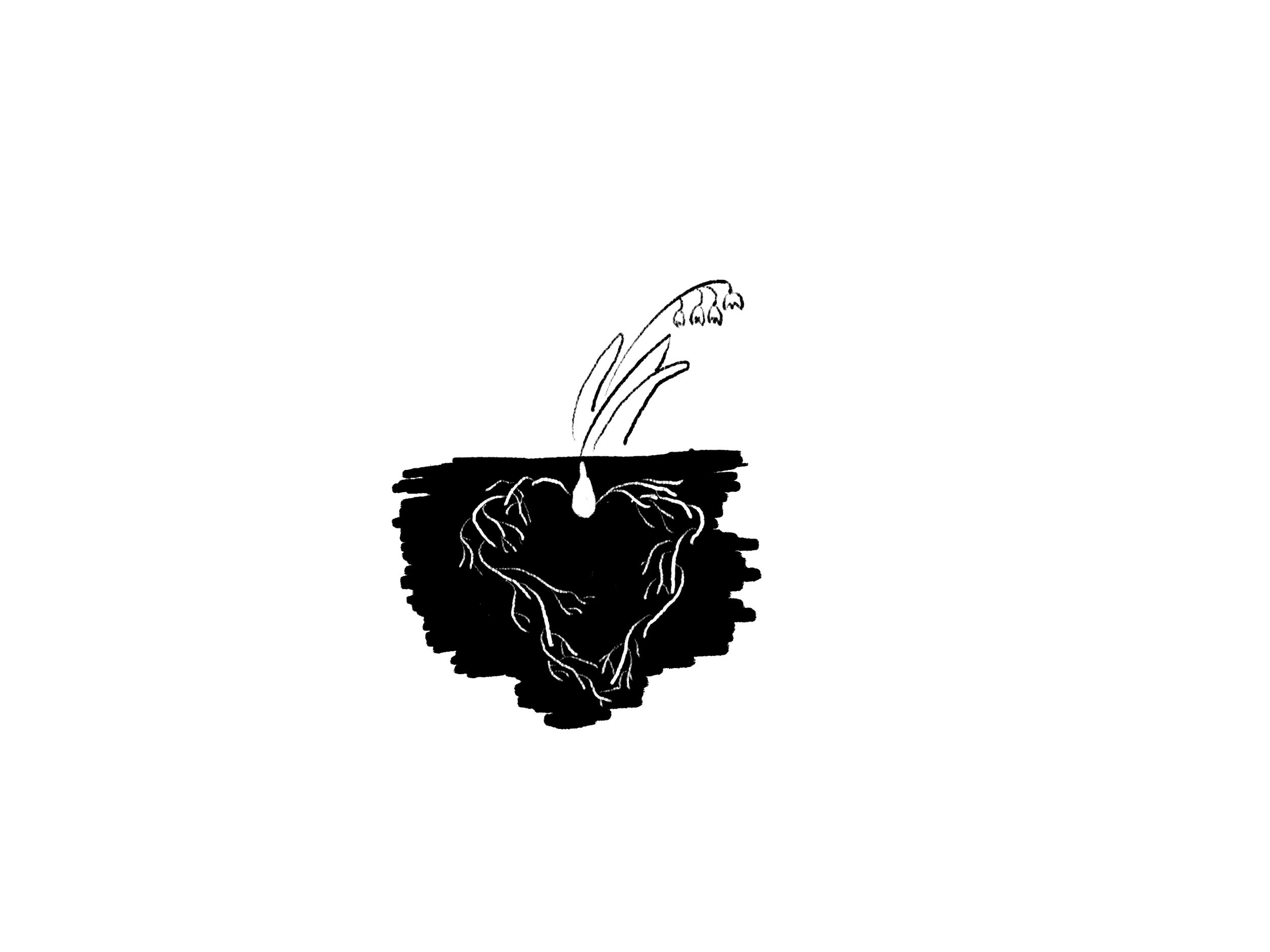
Illustrated by Tian Tian
“Mom, do you want to come plant flowers with me?” My daughter asked. “Plant flowers? We live in an apartment, there’s no garden. Where are we going to plant flowers?” I replied.
It turned out my daughter had signed up for a volunteer activity to plant flowers in a park. This immediately piqued my interest. I am always willing to try new things. Since the pandemic began, I’ve been travelling back and forth between Shanghai and London. Shanghai is my home, but during the pandemic, the children couldn’t go back to Shanghai, so I ended up spending more time in London. Last year, I finally decided to establish a home in London as well. This city is not entirely unfamiliar to me. I came to London in the mid-1990s, got married here, worked and lived here for several years, and then went back to Shanghai. I then returned to London, and back to Shanghai again, repeating this cycle over several years. This familiar yet foreign city always seems to surprise me with something new and different, sparking fresh thoughts.
For instance, this volunteer flower-planting activity.
After registering online, we received a detailed email a few days later, informing us of the date, time and meeting place, along with some precautions and a clearly marked map. It was very user-friendly. I was impressed that for planting flowers, they told us not to bring any tools as they would provide everything. All we needed to bring was a personal water bottle if we didn’t want to use their disposable paper cups. Since it was my first time and I didn’t know what to expect, I brought two pairs of rubber gloves from home, just in case.
The day arrived quickly. It was already November and at 10am, it was a bit chilly in London. We gathered outside a small cafe at the foot of Primrose Hill. We arrived five minutes early, and a few others joined us gradually. At exactly 10am, a small green maintenance truck labelled “Royal Parks” drove up. A young British woman got out and briefly explained where we would be planting flowers (actually flower seeds) on Primrose Hill. I counted seven of us, including my daughter and me. The truck took the main road while we walked across the lawn to a nearby slope.
At the destination, the British girl introduced the two types of flower seeds we would be planting: Spring Snowflakes and Bluebells. The Spring Snowflake seeds were larger, and she explained that we should dig a hole three to four times the length of the seed. She pointed to some large trees, saying that these flowers liked growing in the shade of trees. By next spring, the flowers we planted would bloom, creating a beautiful scene. Her description immediately conjured up an image of a sea of flowers in my mind. Those familiar with London know that it’s a city filled with green spaces and blooming flowers in the spring. This year, I brought my parents to London for a few months. My mother remarked on how many green spaces there were and how freely people could walk on the grass. I jokingly told her, “These are capitalist grasslands; feel free to step on them!”
We started planting, and the tools were indeed handy. I didn’t need to use my own rubber gloves. The gloves they provided were much better. There were small shovels, small spades, and a small foam pad to kneel on. Most of the tools were new to me, but once I started using them, they were very effective and in one word: professional! No wonder B&Q (a British DIY and home improvement retailing company) is still thriving here, whereas it has long ceased operations in China. After kneeling and planting for over two hours, my daughter and I had planted about 20 Spring Snowflake seeds and 40 Bluebell seeds. To be honest, it’s hard to imagine that such a large park relies on volunteers planting seeds one by one, on their knees. This volunteer activity happens year-round, several times a week, and all you need to do is register online to join – it’s very simple. While planting, we encountered several earthworms. Sometimes we accidentally cut them in half, which made us feel sorry. The soil two inches below the surface was moist and loose, but deeper down it was dry and hard. It was quite tiring, and my back and hands were sore.
Midway through the two-hour activity, we had a 15-minute coffee break, gathering by the truck to drink coffee and eat cookies brought by the British girl. She asked each of us about our jobs and what we usually do. British people are always reserved, and no one dominates the conversation. Everyone spoke briefly, softly and gently about where they were from and what they did. There is always a sense of restraint in the initial conversation between strangers in Britain. No one makes loud jokes, and everyone is careful not to say too much, yet they do not make you feel too distant. This sense of propriety is something I haven’t seen in other cultures. Among the seven of us, two were PhD holders. The British girl had just finished her PhD and worked in a lab for a few years but decided that wasn’t the life she wanted, so she quit and joined Royal Parks to work in park maintenance (to Chinese people, this might seem like a waste – why would a PhD holder leave a lab job to dig in a park? But she was at peace with it, doing what she liked). Another volunteer had a PhD in psychology, and there was a retired teacher and an older-looking software engineer who was still working. Apart from my daughter and me, there was another Chinese girl who was the loudest among us. She laughed heartily and spoke loudly. A straightforward person from Shandong, she said she wanted to be a gardener, but jobs were hard to find, so she started with volunteer activities.
The 2.5-hour volunteer activity ended quickly. The next day, the British girl sent the first email, thanking us for our selfless contribution.
I carefully read the email and was touched not only by the photos she sent of us planting but also by the links to detailed information about the two types of flowers we planted. Clicking on the links, I could read about various aspects of these flowers, how to care for them, suitable seasons, soil types, and their classification. This attention to detail made me feel that this was not just a flower-planting experience, but that the organisers took the volunteer work seriously and professionally. The care that she showed to thank us for our time and effort was quite moving.
A few days later, the British girl sent another email, inviting past volunteers to join another hedgerow planting activity.
After participating in this volunteer activity, I had some thoughts. In Shanghai, arguably the best-managed city in China in terms of greenery and cleanliness, the city’s beauty relies on countless gardeners and cleaners. It has little to do with the ordinary residents living there. In Shanghai, I also participate in some volunteer activities, like those organised by social welfare groups, but the willingness and persistence of volunteers seems to depend more on their passion. Public welfare organisations seem limited in what they can do, often lacking two things: resources and money. But how many participants (volunteers) have money or resources? Many volunteers of the gardening activity joined because it was a nice day, or the park was in a convenient location for them, or because they love flowers – volunteering their time was not a burden. In China, however, volunteers often need great enthusiasm and persistence to accomplish something, which is not easy. A good friend once told me that if doing public welfare doesn’t make you happy, you shouldn’t do it. Yet, in reality, many people in China persist in volunteering, even when unhappy. They impose on themselves the need to be loving, persistent and dedicated to society. I’m not saying this is bad, it’s just that the values in the two countries are so different. In China, we emphasise sacrifice, especially a silent sacrifice, as a noble virtue. Why can’t Chinese people do things more easily, without making every task seem profound, laborious and painstaking?
From another perspective, public welfare organisations should focus on making it easy and enjoyable for volunteers to participate in activities. The feeling of being taken seriously in a volunteer activity is far more important than just relying on the dedication of volunteers. Achieving sustainability, mutual respect, and no sense of indebtedness on either side is the essence of volunteering, in my opinion. How can this be achieved? This gardening volunteer activity and the subsequent emails from Royal Parks provided an excellent model. Any volunteer activity should provide value to potential volunteers. If a volunteer activity allows you to learn something or enrich yourself in some way, you won’t feel the need for tearful persistence. You can participate and learn in various ways, and it’s okay if you eventually stopparticipating.
In London, our daily life in the community – libraries, hospitals, museums and other public places – provides numerous opportunities for ordinary residents to participate in the community and the city’s construction. Sometimes I wonder, what exactly is “home”? I’ve lived in Shanghai for 20 years and still feel it is unfamiliar. I’ve lived in London for nearly eight years, and I feel that as long as I’m willing, I can understand this city from every corner. Of course, I can actively try to understand Shanghai, and I believe there are plenty of opportunities to get involved in civic activities if I put in the time and effort. However, somehow, this seems much easier to do in London. Perhaps civilisation, to some extent, is about creating a platform for ordinary people to participate and engage without burden.
I eagerly await next spring so that I can return to Primrose Hill and proudly say, “Look, those are snowflakes, and those are bluebells – such lovely names for such lovely flowers, planted by me!”
About the author
Shao Jie is currently retired. She used to work in the British Council Shanghai and London offices, promoting British culture and education. In her spare time, she likes painting, writing and reading books; She is also an active traveller and she has travelled around seven continents. She came to London in the mid-1990s and has lived and worked in Shanghai and London with her husband and two children for the past 30 years.
妹妹说:“妈妈,你要跟我一起去种花吗?”我答:“种花?我们住在公寓房里,没有花园,到哪里去种花?”
原来妹妹在网上预定了一个在公园里种花的志愿者活动。这立刻引起了我的兴趣,没做过的事情,我都愿意尝试一下。疫情以来的几年,我在上海和伦敦之间来回跑,上海有我的家。疫情期间孩子们回不了上海,没办法,我待在伦敦的时间超过了上海,去年我终于决定在伦敦也整一个家。其实,伦敦对我来说也并不是陌生的城市。上世纪 90 年代中期,我就来到伦敦,后来在这里结婚成家,工作生活好几年之后回到上海,又去伦敦,再回上海,来来回回,走走离离。这个我熟悉又陌生的城市似乎总能给我惊喜、新鲜……也许还有一些不一样的思考。
就比如说这次种花活动。
我们在网上注册之后,过了几天,就收到了一封详细的邮件,告知集合时间、注意事项等,并且给了一张清楚标注的示意图,反正就是 you can’t miss it(你不会走错的)。给我印象深刻的是,你去种花,他们告诉你不必带任何工具,他们全部会准备好。如果你介意用他们的一次性纸杯,就只需要带一个自己的水杯。不管怎么说,第一次去,我还是有点不放心,便从家里拿了两幅橡胶手套,只是为了以防万一。
这一天很快到来。已经是 11 月,早上 10 点的伦敦还是有些许寒冷。我们在樱草花山(Primrose Hill)山脚下公园的一个小咖啡馆外集合。我们提前了 5 分钟到,之后陆陆续续又来了几个人。
10 点整,一辆通常能在公园看到的写着皇家公园慈善会(Royal Parks)的维护公园绿化的绿色小车慢悠悠开了过来。下车来的是一个年轻的英国女生,她很简短地跟大家说了一下今天我们要到樱草花山的哪一片山坡种花(其实是种花的球茎)。我数了一下,今天参加这个志愿者活动的包含我和妹妹一共是 7 个人。车子走大路。我们一行穿过草坪往不远处的一个山坡走过去。
到达目的地,英国妹子给大家介绍了今天要种的两种花球茎,一种是雪片莲(Spring Snowflakes),另外一种是蓝铃花(Blue Bell)。雪片莲的球茎个头要大一些。英国妹子说,往下挖洞要挖 这个种球长度的 3— 4 倍这么深的距离。然后她指着几颗大树说: “你们就在这里种,这些花喜欢生长在大树的树荫下,到了明年春天,这里就会开出你们今天种下的花。”经她这么一说,我的脑海里立刻浮现一片花海,美极了。熟悉伦敦的人都知道,伦敦这么一个城市,到处是绿地,春天来的时候,公园里开满了各种各样颜色的花。今年我带父母来伦敦小住了几个月,我妈说:“哎呀,英国怎么这么多绿地,还可以随便踩,这要是在国内,那就是‘小草微微笑,请你绕一绕’。”我开玩笑跟我妈说:“妈,这资本主义的草,请尽情地踩!”
开始种花。他们这些工具还真是好用。小铲子,小锥子,还有可以垫在膝盖下的一块小泡沫塑料板。反正大部分工具我没见过,更没用过,但一旦用起来,真的很合手,就一个词:专业!难怪百安居(B&Q)在这里还活着,在国内早偃旗息鼓了。我也没有用上我自己带过去的橡皮手套,人家准备的手套比我带过去的好用多了。跪着种了两个多小时,我和妹妹大概种下了 20 颗雪片莲和大概 40 颗蓝铃花的球茎。说实话,很难想象这么大的公园,这些花的球茎都是靠志愿者一颗一颗这么跪着种下去的。这种志愿者活动一年到头都有,每周好几次,你只需要在网上注册加入就好,非常简单。种花的过程中,我俩遇见好几条蚯蚓,有时候不小心会把它们拦腰斩断,实在对不起。公园里的泥土地面以下 2 英寸很湿很松,再往下很干很硬。确实也蛮辛苦的,我真的有点腰酸背疼了,手也痛。
两个多小时的中间,我们有一个 15 分钟的咖啡茶歇时间,大家集中在小车旁边,喝喝咖啡,吃英国妹子带来的饼干。英国妹子挨个儿问大家做什么工作,平时忙什么。英国人总是含蓄,任谁都不会喧宾夺主,差不多都简短、轻声、温柔地说自己来自哪里,做什么工作。英国人这种陌生人之间的初次聊天,你总是会觉得有一些拘谨,没有人会大声地开玩笑,似乎都小心翼翼地不说出太多,但也不会让你觉得他们有太大的距离感,这种分寸的把握,我反正是在别的民族或者种族的身上没有看到过。我们 7 个人里有两个博士。英国妹子博士刚读完,在实验室里做了几年,她觉得那不是她想要的生活,于是果断辞职,加入皇家公园慈善会,开始做维护公园的工作。这要在咱中国人看来不是废了嘛!
好好的博士,实验室的工作不做,跑过来公园挖土干吗?但人家想得开,做自己喜欢做的事。另外一个是心理学博士,还有一个退休教师,一个是还在上班但看上去年纪也不小的软件工程师。除了我和妹妹,还有一个中国女生,她是我们这群人中最大声的,她大笑,也大声地说话,山东人,一副大大咧咧的样子,她说她想做园艺师,但工作不好找,所以先做做这种志愿者活动。
两个半小时的志愿者活动很快结束了。回到家里第二天,英国妹子发来了第一封邮件,感谢我们志愿者的无私付出。
我仔细阅读了这封邮件。让我感动的不仅仅是她发来了我们种花时的照片,她还发了我们种的两种花的链接。点开链接,我可以非常详细地阅读到关于这种花的各种知识,如何养护,适合什么季节,什么土壤,属于什么种、什么科的植物。光是这些就立刻让我觉得这不仅仅是一次种花的经历,人家对区区的一个志愿者的小事是认真的,也是专业的。这种感觉就是:你被一个人不小心认真对待了一回,况且还是被一个陌生人认真对待了一回。
又过了几天,英国妹子又发来了一封邮件,邀请参加过志愿者活动的人参加另外一个绿篱种植的活动。这次志愿者活动回来之后,我有一点点感叹。比如像上海,这个中国几乎城市管理最好的城市,无论是绿化还是清洁,几乎都无可挑剔,但这个城市的美丽是依靠着无数的园艺工人和清洁工的劳动维持着的,跟这个城市生活着的普通的你我他似乎没有什么关系。在上海,我也会参与一些志愿者活动,比如像社会公益组织的活动,但总感觉缺少了那种志愿者参与的意识、意愿和对参与者的一腔热血的持久依赖;因此,作为公益组织,他们能做的似乎非常有限。更多的时候,你会感觉他们缺的只是两件事——资源和钱。但是对于参与者来说,有多少人有钱或者资源呢?也许大部分人都像我们今天参加的这个活动一样,因为是一个好天儿,因为这是自家附近我们自己会常来的公园,因为我喜欢这样的花,于是我就来了,并不会背负更多的负担。而在国内,更多的时候,志愿者需要有极大的热情和努力的坚持,一件事才能做成,并不轻松。我记得一个好朋友曾经跟我说,即使做公益,如果这件事不让你快乐,你就不要做。但实际上,很多人,即使不开心,还是在努力坚持着。他们给自己加持了很多的其他的内容,比如我需要有爱心,我需要坚持,我需要为社会奉献等等,他们被自己感动着。当然,我也不是说这样就不好,只是我觉得两国的价值观是如此不一样。在中国,我们更强调的是“奉献精神”,似乎奉献了,再加上如果你还默默奉献了,更能显得你崇高伟大。为什么中国人做事就不可以轻松一点,好像每一件事我们都做得深刻、努力、认真、含辛茹苦。
从另一个角度说,我觉得作为公益组织,如何做到让志愿者轻轻松松愿意来参加你的活动才是更重要的事。那种你能够给予参加你活动的志愿者们一种“你被认真对待”的感受远比志愿者单纯用他们的一腔热血过来参加你的活动更重要。做到“可持续、互不欠、相尊重”我认为才是志愿者活动的真谛。那么如何才能做到这样呢?我觉得参加这次活动看到皇家公园慈善会之后的几次邮件跟踪和他们做的志愿者活动网站给了非常好的模式。任何一个活动,它都为怀揣不同目的的人提供机会,提供平台。你可以是一个家庭主妇只关心你的花园,想要试试看这种花的种子如何种才会长出漂亮的花。你也可以是一个初级的植物学研究者,在他们的网站上可以了解到更多关于这种植物的信息。这让我想起了前两天在跟孩子们聊天谈到的“要公平还是平等(Equality vs. Equity)”的问题。总而言之,如果一个志愿者活动能让你发现更多的价值,你就会觉得参与并不需要你付出含泪泣血和咬牙切齿的坚持。你可以通过不同的渠道参与和了解,即使之后不参加了,也真的没关系。
在伦敦,我们平时的生活社区,比如图书馆、医院、博物馆等等公共场所,它为住在这个社区里的普通人提供了参与建设这个社区、这个城市的许许多多的非常容易进入的机会。有时候我在想,到底什么是“家”呢?我在上海住了 20 年了,我依然觉得上海很陌生,我在伦敦也住了快七八年了,我觉得只要我愿意,我可以从各个角落去了解这个城市。当然,我尽可以主动努力地去了解上海这个城市,我相信我只要愿意去花时间花力气寻找,参与建设这个城市的机会肯定遍地皆是。不过,不知怎么地,似乎就不如伦敦她能提供给我的机会来得容易和轻松。可能有时候文明在一定程度上就是为普通人参与和介入建立一个平台,不带负担,每个人被认真对待。
我很期待来年的春天再来樱草花山。到那个时候,我可以指着这一片花,骄傲地说:“看,这是雪片莲,那是蓝铃花,多好听的名字,最重要的一点,是我种的!”
作者介绍
邵捷,目前退休闲赋。曾经在英国文化协会上海和伦敦办公室工作,推广英国文化和教育。喜静,所以画画、写字、看书;喜动,所以七大洲走走游游。上世纪 90 年代中来到伦敦,之后的 30 年里在上海和伦敦之间两边安家工作、生活和养娃。
Both the Chinese and English editions of Haha! Britain can be purchased at the following platforms:
· Daunt Books Marylebone: 84 Marylebone High Street, London W1U 4QW
· BOOK FAN