
Written by: Aurora Wang | 王阳春
Editor’s Note:
This article is excerpted from Haha! Britain — a charitable bilingual publication co-produced by The Mothers’ Bridge of Love (MBL) and River Cam Breeze. The book is a lively collaboration between 42 Chinese authors living in the UK and 36 university-based volunteer translators. With wit and warmth, the stories capture the everyday realities of Chinese communities in Britain, offering an honest look at the cultural clashes, humour, and adaptation that arise in the space between Chinese and British ways of life. Haha! Britain has been warmly endorsed by several well-known figures in UK-China relations, including Stephen Perry (former Chairman of the 48 Group Club), Luise Schäfer OBE (former British diplomat and Chamber of Commerce chair), Professor Hugo De Burgh (former BBC editor and academic), and British scholar Martin Jacques. The book’s title was handwritten by celebrated British-Chinese artist Qu Leilei, its cover illustrated by bestselling Chinese author and poet Feng Tang, and the postscript contributed by Xue Mo, a prominent voice in contemporary Chinese literature.
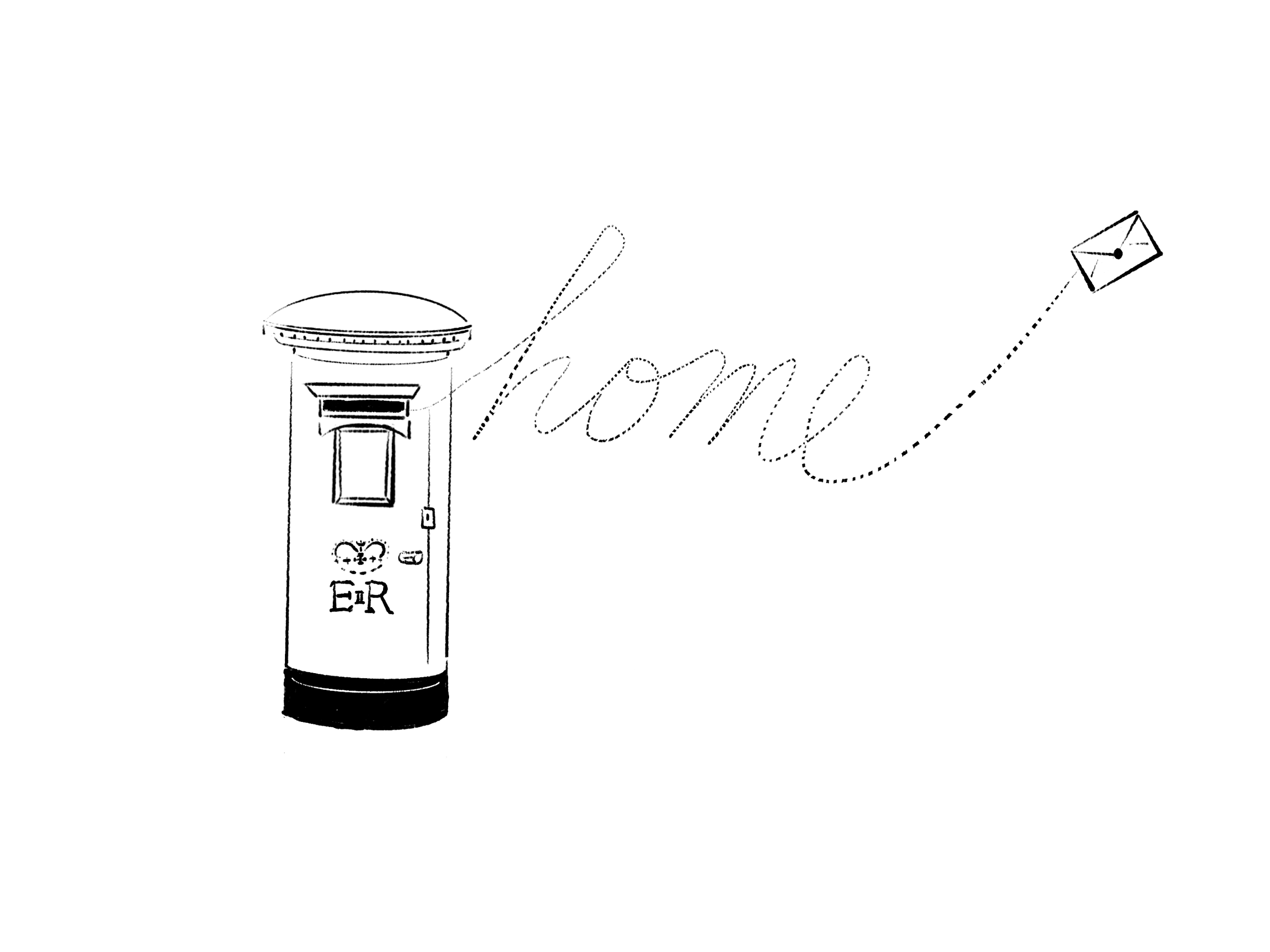
Illustrated by Tian Tian
Upon arrival in the UK, one is often captivated by the sight of red postboxes lining the streets. Some say that the red signifies urgency, showcasing the efficiency of the British postal system. Others say that the royal association with red denotes nobility, and the British populace simply favours it as a primary colour. There are even those who think that red symbolises the sincere and passionate emotions of the letter-writers. However, in reality, when postboxes were first introduced to Britain in 1840, they were not the iconic deep red we know today but were painted a deep green. Due to public complaints that the deep green postboxes blended into the rainy and foggy London weather, making them hard to see and leading to collisions with pedestrians and cyclists, the Post Office decided to repaint them a bright red. This charming incident highlights a delightful aspect of the British character.
Today, the UK boasts a delightful array of postbox designs, from the classic cylindrical style to wall-mounted versions, illuminated boxes, and even those shaped like animated characters. It’s as if the postboxes are strutting down a fashion runway, each with its own unique flair. Furthermore, postboxes are no longer limited to just one colour. During the 2012 London Olympics, for every gold medal won, the Royal Mail painted a postbox in the champion’s hometown gold and kept it that way permanently. Moreover, the upper half of the front of a postbox features a date plaque and an information card, akin to a time machine, indicating the next collection date for letters and contact details for nearby post offices. The lower half of the postbox typically bears a large crown and letters representing the period in which the postbox was established; for example, “E||R” indicates that the postbox was set up during the reign of Queen Elizabeth II, reminiscent of the inscriptions found on some antiques in museums, such as “Made during the Yongzheng reign of the Great Qing Dynasty” or “Made during the Qianlong reign of the Great Qing Dynasty.”
While pursuing my postgraduate studies in the UK, I found myself drawn to these red postboxes, which always reminded me of the times I used to help my mother read and write letters as a child. I often imagined myself slipping a letter into one of these antique-like postboxes and sending it to my mother. However, it wasn’t until after graduating from postgraduate school that I finally sent her a postcard through one of the red postboxes. It took two months for the postcard to reach her hands. Perhaps it was the long wait, or perhaps it was the first time she received an expression of love from her daughter, but when she finished reading the postcard, my mother cried. She reflected that the days when I, as a little child, helped her read letters from distant relatives felt like just yesterday. Yet, in the blink of an eye, I had grown into someone who writes to her from even further away. And in that moment, she realised that this distance might be a place she would never reach in her lifetime.
I come from a small rural village in southern Xinjiang, China. As a child, the moment I looked forward to the most every week was Thursday at noon, when the postman arrived at school on his motorcycle, carrying a dark green mailbag. Among the stack of letters he delivered, I would eagerly search for those from my aunts and uncles in Gansu. When I brought them home, I would read them to my mother again and again. The letters were filled with everyday anecdotes from distant relatives, along with their care and greetings for my mother. They were simple and sincere sentences, but to this day, they remain the most beloved and unforgettable words I have ever read. Since my mother never attended school, I would write the replies for her. After composing the letters, we would mail them together at the county post office and eagerly await a response. Sometimes, our distant relatives would also send along little gifts with their letters, and my mother has carefully preserved everything, both the letters and the accompanying items. Later, within just four or five years, telephones and smartphones became increasingly common in China, and I stopped reading or writing letters for my mother, until I encountered the ubiquitous red postboxes that dot the streets and alleys of Britain.
In the UK, the culture of letters and cards feels like a delightful party, full of surprises at every turn. In addition to the iconic red postboxes, the “card corner” in major supermarkets is a hidden gem waiting to be explored. Here, you can find a wide array of cards for every occasion imaginable, from birthdays and holidays to anniversaries. There are cards specifically designed for parents’ wedding anniversaries and others commemorating things as specific as a friend’s achievement in passing their driving test.
But it doesn’t stop there! Within each specific role-related card category, there are further subdivisions based on various scenarios. For example, cards related to daughters can be categorised as daughter, daughter’s first Christmas, and daughter’s first to 21st birthdays (after turning 21, it’s mostly milestone birthday cards), as well as step-daughter, god-daughter, daughter and her partner, daughter and her girlfriend, daughter and son-in-law, and so on. Cards related to sons are similarly subdivided. After buying and writing the cards, you can seal them in envelopes, affix stamps and drop them in the postbox, or simply take them to the post office for mailing. This traditional culture of letter-writing is filled with joy and warmth, adding a lot of happiness and emotional exchange to people’s lives.
Additionally, the postal system in the UK is highly developed. It’s like an invisible hero silently supporting the entire country’s way of life.
In the UK, almost all documents, bank cards, bills, and even passports, BRP (Biometric Residence Permit) cards, etc., are delivered through the postal service. The modern postal system and the concept of postage stamps originated in the UK, with the world’s first postage stamp, the “Penny Black”, being issued in 1840 – a true British masterpiece. Actually, long before the British postal system began using stamps, letter-writing had already become a part of people’s lives. However, the difference was that before 1840, writing letters in the UK wasn’t a wallet-friendly affair. During the time of renowned writers like Jane Austen (1775–1817), postage was determined by factors such as the weight, distance and quantity of the letters, often paid by the recipient. Therefore, letter writers had to ensure their content was concise and valuable; otherwise, the recipient might feel uneasy about being charged for the letter Austen herself was a masterful communicator, with every word in her letters being a thoughtful gift. Upon receiving letters, Austen praised the sender for their articulate, concise and clear writing style, which also reflected her own. Austen was born into a poor but loving family and was once engaged to a young man named Tom Lefroy, but they ultimately broke up due to their poverty. In a letter to her sister, Austen wrote, “Friday – I and Tom Lefroy had our last meeting of love. By the time you read this letter, everything will be over – as I write, my heart is full of sadness, tears gushing like a fountain.” From that time on, Austen began writing the epistolary novel Elinor and Marianne, which served as the precursor to Sense and Sensibility.
In recent years, with the development of the “fast but not broken” internet era, our connections with family and friends have become increasingly convenient, and the days of waiting for letters seem to be fading away. As Chinese writer Mu Xin said, “The days of the past have become slow, with slow cars, slow horses, and slow mail.” The care and blessings found in handwritten letters from a slower-paced life, the sincerity and warmth revealed in everyday greetings, and the lingering aftertaste that can be savoured time and again – all these, along with the imagined surprise when the recipient receives the letter or the joy of finally getting a reply after a long wait, are truly irreplaceable. The red postboxes in Britain serve as gentle guardians, quietly standing on the streets and continually reminding passers-by that while they enjoy the convenience of a fast-paced life, they can also take a moment to savour the exquisite and warm moments nurtured by attentiveness. It’s an invitation to slow down and earnestly cultivate those precious feelings.
About the author
Aurora Wang is a volunteer at the Mothers’ Bridge of Love (London Headquarters) and literature enthusiast, obtained a master’s degree in Education from the University of Leeds in 2023.
初到英国,人们大都会被街上红色邮筒所吸引。有人说,红色代表十万火急,以此显示英国邮政系统的高效率;有人说,英国皇室用红色显示高贵,英国人民也喜欢将红色作为主色;也有人说,红色代表写信人真诚炽热的情感。但事实上自 1840 年邮筒最初被引入英国时,它并不是现在经典的深红色,而是被漆成深绿色。后来由于公众来信抱怨,在多雨多雾的伦敦,深绿色不够醒目,人们在匆匆走路或骑行时,很容易撞上去,于是邮局便决定将邮筒都刷成鲜艳的红色。由此可见英国人傻萌的一面。
如今,英国邮筒种类很多,有经典的圆桶式,有墙壁嵌入式,也有灯箱式邮筒和生气的人样式邮筒等,犹如邮筒界的时尚秀场。另外,邮筒的颜色也不再是单一的红色,比如,2012 年伦敦奥运会期间,英国每获得一枚金牌,英国皇家邮政就会将冠军家乡的一个红色邮筒漆成金色并永远保持。不仅如此,邮筒正面上半部分,贴有日期牌与说明卡,就像是一张时光机,上面写着下次邮递员来收信的日期以及附近邮局的联系方式。而邮筒的下半部分则是一个大皇冠及表示邮筒设立所处时期的皇家密码,比如,“EIIR”表示该邮筒是在伊丽莎白女王二世时期设立,像极了博物馆里有些古董上刻着的“大清雍正年制”或“大清乾隆年制”之类的底款。
在英国读研究生时,我也总是被这些红色邮筒所吸引。它们总让我想起小时候帮妈妈读信和代写信的时光,将一封家书塞进一个古董似的邮筒里寄给妈妈的场景。但直到研究生毕业后,我才真正通过红色邮筒寄了张明信片给她。这张明信片经过了两个月终于被送到妈妈手里。或许是经历了漫长的等待,也或许是第一次接收到女儿对她爱的表达,当读完明信片的那一刻,妈妈哭了。她说,小小的我帮她读远方亲人来信的日子仿佛就在昨天,转眼我已经长大,成为在更远的远方写信给她的人,而这个远方,可能是她这辈子也无法到达的地方。
我来自新疆南疆的一个小村庄,小时候,最期待的事就是每周四中午,骑着摩托车、载着墨绿色的邮件包的邮递员来到学校。在他送来的那一大沓信件里,看到甘肃的姨姨舅舅们写给妈妈的信,然后拿回家,一遍遍地读给妈妈听。信里写的都是远方亲人们的日常琐事,以及对妈妈的关心和问候,都是很简单朴实的句子,但也是我迄今为止读到的最喜欢和最难忘的文字。妈妈没有上过学,所以每次回信都是我代笔。写好后,我们一起到县上的邮局寄出,接下来就开始等待回信。有时候,远方的姨姨舅舅们也会随信附带寄一些东西过来,无论是信件,还是一起邮寄过来的东西,妈妈至今都完好地保存着。后来仅四五年的时间,电话和智能手机就陆续普及开来。打那以后,我再也没有给妈妈读或代写过信,直到遇见遍布英国大街小巷的红色邮筒。
英国的书信和卡片文化就像是一场别开生面的派对,你永远不知道下一个角落会有怎样的惊喜。除了标志性的红色邮筒外,各大超市的“贺卡角”更是别有洞天。在这里,你可以找到各种花样繁多的贺卡,从生日、节日到纪念日,应有尽有。有专门为父母结婚纪念日准备的贺卡,也有为朋友获得驾照而欢庆的贺卡。
但还不止这些!在与每一种具体角色相关的贺卡中,又被进一步细分出各种场景。比如,与女儿相关的贺卡可以分为:女儿、女儿的第一个圣诞节以及女儿的第一到下一个生日(过了 21 岁后大都是整十岁的贺卡),也有送给继女、教女、女儿及其伴侣、女儿及其女友、女儿和女婿等人的贺卡。类似的,与儿子相关的贺卡也会被细分。买了贺卡写完之后可以装进信封、贴上邮票投递进邮筒,或者直接去邮局邮寄。这种传统的书信文化充满乐趣和温馨,为人们的生活增添了不少欢乐和情感的交流。
此外,英国的邮政系统也十分发达。它就像一个隐形的英雄,悄悄支撑着整个国家的生活。
在英国,几乎所有的文件、银行卡、账单、甚至护照、BRP卡(英国居留卡)等都会通过邮局来寄送。现代邮政和邮票制度的雏形就在英国诞生,1840 年发布的世界第一枚邮票——“黑便士”,也是英国的杰作。其实,早在英国邮政系统开始使用邮票之前,书信往来就已经成为人们生活的一部分。但不同之处在于,在 1840 年前,在英国写信可不是能随便掏腰包的事情。比如:在简·奥斯汀(Jane Austen)这样的知名作家生活的年代(1775- 1817),邮费取决于信件的重量、距离和数量等因素,且常常由收件人支付。所以,写信人必须确保内容简洁有价值,否则,收信人可能会因为被“收费”而心情堪忧。奥斯汀本人在书信往来中就是一位精湛的表达者,她信件中的每一个字都经过用心斟酌。奥斯汀曾在收到来信后称赞写信人叙述到位、简明扼要、清晰易 懂,这也正符合她本人的写作风格。此外,奥斯汀的一些小说可以看作是她给家人的另一种书信。奥斯汀出生于一个贫穷却充满爱的家庭,她曾与一位名叫汤姆·勒弗罗伊的年轻人谈婚论嫁,但最终因双方经济原因而分手。在写给姐姐的信中,奥斯汀写道: “星期五—我和汤姆·勒弗罗伊最后一次谈情说爱的日子到了。当你读到这封信时,一切都将结束—写信时,我心中充满了悲伤,泪如泉涌。”从那时起,奥斯汀开始写作书信体小说《埃琳诺与玛丽安》,它正是《理智与情感》的前身。
近年来,随着“唯快不破”的互联网时代的发展,我们与亲朋好友之间的联系愈发便捷,等待来信的日子似乎渐行渐远。木心说:“从前的日色变得很慢,车,马,邮件都慢。”慢节奏生活里的手写信件所蕴含的关心与祝福、日常琐碎的暄中所流露的真诚与温暖、以及其可被反复品味的余韵,甚至是寄信时想象对方收到信时的惊喜,或是经漫长等待后终于收到回信时的喜悦都是无法被替代的。英国的红色邮筒像是一个个温柔的守护者,静静地站在街头,时刻提醒着路过的人们:在享受快节奏所带来便利的同时,也可以慢下来,享受生活中每一个因为用心而变得精致温暖的时刻,慢下来,去用心经营维护那份珍贵的感情。
作者介绍
王阳春,母爱桥伦敦总部志愿者,文学爱好者,2023 年获得英国利兹大学教育学硕士学位。
Both the Chinese and English editions of Haha! Britain can be purchased at the following platforms:
· BOOK FAN