
Right to Roam | 有权闲逛
Written by: Zhang Ye | 张烨
Translated by: Seth O’Farrell
Editor’s Note:
This article is excerpted from Haha! Britain — a charitable bilingual publication co-produced by The Mothers’ Bridge of Love (MBL) and River Cam Breeze. The book is a lively collaboration between 42 Chinese authors living in the UK and 36 university-based volunteer translators. With wit and warmth, the stories capture the everyday realities of Chinese communities in Britain, offering an honest look at the cultural clashes, humour, and adaptation that arise in the space between Chinese and British ways of life. Haha! Britain has been warmly endorsed by several well-known figures in UK-China relations, including Stephen Perry (former Chairman of the 48 Group Club), Luise Schäfer OBE (former British diplomat and Chamber of Commerce chair), Professor Hugo De Burgh (former BBC editor and academic), and British scholar Martin Jacques. The book’s title was handwritten by celebrated British-Chinese artist Qu Leilei, its cover illustrated by bestselling Chinese author and poet Feng Tang, and the postscript contributed by Xue Mo, a prominent voice in contemporary Chinese literature.
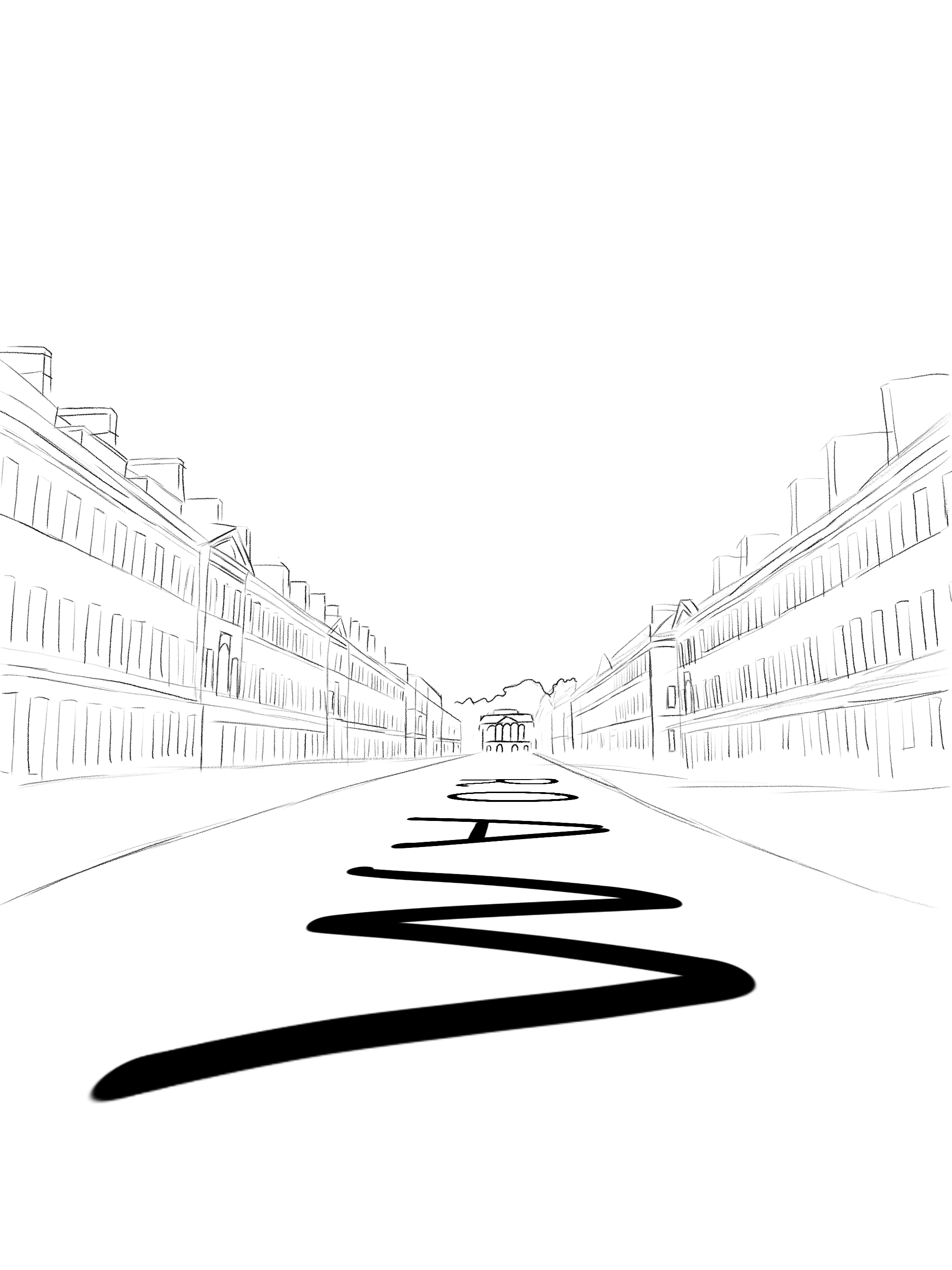
Illustrated by Tian Tian
British people have peculiar rights. For example, the British have the right to sunlight entering their home from their windows (right to light), so homeowners whose light is blocked by their neighbour’s houses often launch lawsuits. Similarly, British customers have the right to get free tap water from anywhere with a liquor licence (tap water right). When they go to a pub, they can ask the waiter to fill their water bottle with tap water (although the latter has the right to charge for filtered water). The British also have the right to roam in special terrains such as mountains, swamps and grasslands, even if the land is private property.
When I first arrived in the UK, I thought this “right to roam” was inconceivable.
As a Chinese city girl, it is hard to imagine under what circumstances one might roam across other people’s land. The roads in my hometown were always perfectly straight: streets with eight car lanes ran across the city from all points of the compass. The process of getting from one point to another was numerical: you drove in one direction and turned when you needed to. If you turned too soon or too late, there could be dire consequences. I remember once my dad and I parked a block away from our destination. At first, I was secretly delighted that we had found a good parking spot but didn’t realise that we would have to walk for forty five minutes in the glacial December winter winds before reaching our destination. In this kind of special environment, I learned how to survive getting from one point to another in the fastest way possible. This kind of knowledge came to be of unprecedented value when I left school to go to university. After adding up the time spent studying for two degrees, one week’s worth of classes consumed forty hours from Monday to Sunday. Then outside of classes I had exams and extracurricular activities. Just going from the dormitory to the classrooms took half an hour. So whether I was rushing for an early class at 8am or dashing to the canteen for a coveted spot at lunch, it was critical for me to be able to leave the dormitory at exactly the right time and find a yellow Ofo bike in exactly the right place so I could ride to my destination at breakneck speed.
I used to think that this kind of survival knowledge would serve me for life. But life brings about unexpected changes. When I arrived in London, there were no longer dormitories enclosed by towering school walls, nor any yellow Ofo bikes. Walking was the only option. London’s small roads criss- cross: it is common to see five roads extending down from one small hill in all directions. Not to mention, said roads frequently twist and turn into dead ends. And so, even with the help of modern technology such as Google Maps, it’s impossible to navigate with precision. Even if you manage to avoid getting lost and recover ten minutes by making every second count, you can’t use it to work non-stop, like I thought I should. After arriving at my laboratory, I would often boil some water to make tea in the communal kitchen. I’d chat with my colleagues for a few minutes, and then slip away. They’d stay behind, talking about their weekends – a concert in Scotland, a visit home to see parents. My weekends were always spent working. In fact, my supervisors were so tired of receiving emails from me during out-of-office hours that they gave me explicit and implicit requests to take the weekends off.
All of a sudden, my winning strategy of racing against time seemed to have turned me into a sad person with no social life. A new environment requires new knowledge, and luckily, I was smart enough to embrace both. I met my then-boyfriend and now husband for our first date one December afternoon. We had planned to go to the Grand Union Canal in Camden, which was only a ten-minute walk from Kings Cross Station, near where I lived.
London in December is often overcast and rainy but on that day the weather was fantastic. The sun shone on the water’s surface, reflecting glimmering lights underneath the dark coloured stone bridges, while the long shadows of different shades were cast on dark green moss. As a group of five dust-coloured Canadian geese swam by, my date told me that the group of five geese were probably a family, and that they’d stay in a group no matter what. As we made our way along the river, we walked for twenty minutes or so and came upon Camden’s Stable Market. I was surprised to discover that Camden was one of the most hip and humble areas in London’s centre. Its stalls contained everything from snacks and coffee to second-hand books, antique tableware and gothic clothing. In one Egyptian souvenir shop, the shopkeeper and my now husband, an Egyptologist, were engaged in such lively conversation that business was put on hold for at least half an hour. Even though we didn’t buy anything, the shopkeeper very kindly offered me a turquoise scarab as a gift. I was flattered by this act of kindness but also slightly worried for this man, as he seemed like someone who was here to make friends instead of money. There is a bronze statue of Amy Winehouse outside the Stable Market. While reading the description, I realised that when she died, Winehouse was living in Camden. All of this was only 30 minutes from where I lived, but after three months in London, I was only now discovering it. It’s as if I had entered a new world. I had to see what else was out there.
My husband and I bought a London walking guidebook which became a weekly weekend activity for us. We’d pick one of the 25 routes in the book at random and set off, learning fascinating things along the way. For instance, Hitler’s cousin once lived in Soho on 4 Percy Street and Hitler himself even came to visit him in 1912. In Farringdon, there’s a church called St Etheldreda’s. It looks unassuming from the outside, but actually contains a massive, magnificent stained glass window that covers an entire wall. It’s one of England’s oldest churches, built early in the thirteenth century.
Ironically, one of the most interesting discoveries was my place of work, where I spent night and day: 26 Bedford Way. It was a deep grey concrete building. I prefer Georgian and Victorian houses, so I had never given the exterior much attention until one on one of our walks I learned that it was an outstanding example of 20th century brutalist architecture.
We walked around London like this for two years, and there were days when we’d be out for 12 hours and rack up as many as 40,000 steps. I even got a new epithet from my friends “Walks far!” I was pleased with this new identity.
Little did I know, I was still earning my walking stripes.
One spring, my husband and I went on holiday to Bath. When we left the city to go to Prior Park, Google Maps suggested a busy motorway. Since it was not scenic, my husband and I opted for an ordinary-looking small road on the map instead. Unexpectedly, this small road was not an ordinary city alleyway but a public footpath. Nine times out of ten, a public footpath is a dirt road with bushes and thickets. It had rained a few days before, so the ground was wet and muddy, but it was too late to turn back. As I saw other walkers with windproof clothing, hiking boots and poles, I looked down at my own suit, coat and little white shoes and couldn’t help but say to them: “You’re very well-equipped.”
It was then I realised that walking in the English countryside has its own set of tricks. When we lived in the small town of Amersham on the outskirts of London, my husband and I splurged on a whole new wardrobe of country clothes and country shoes. Once we had this kit, we blended in perfectly with the old ramblers and wandered from village to village along the public footpaths with the locals. At that time, I had been living in London for six years and thought of myself as half local. But like the first time I discovered Camden Market, I was surprised to find another world not that far away. A narrow path would sometimes follow a creek and lead into a dense forest as the sunlight, splintered by the trees, would fall on thick mottled leaves. But once you got through the forest, vast fields would open up in front of you, as far as the eye could see. It all looked like a desktop from Windows XP!
During my walks I picked up indispensable bits of knowledge about leaves being trimmed with frozen silver after a frost, or about how etiquette requires one to smile and greet a fellow passing hiker. It was on a hike that I tried my first Sunday roast in a village pub and discovered a small church built in the Anglo-Saxon period that contained Norman murals.
My husband and I became walking experts. I could chat for hours in pubs with friends who were born and bred in the UK about all the little fun things to do in small British towns. In the end, they would give me an admiring look, saying that my knowledge of the UK was roughly akin to that of the locals. It was then I realised that all these years I had been making use of the British “right to roam”, by roaming across other people’s land and enjoying it. Roaming became one of my life’s greatest hobbies. In the city or the country, on large streets or in small alleys, I realised that if you just slow down and pay attention, everywhere has a story.
In the unremarkable Markfield Park in Haringey, just outside of London’s city centre, there is a nineteenth-century steam engine. On specific days of every year, it gets switched on by aspiring engineers. It huffs and it puffs, and it breathes life into a long gone era. In springtime on the East Hill of Hastings, there are fresh, bright yellow flowers, reflecting the deep blues of the sea and sky in the distance. There is an interesting town in Kent called Wye (yes, it sounds like “why”): and outside of the town there is a very long, narrow climbing path that goes along a nature reserve. At a magical point on the path, the landscape opens up into a sea of glistening green.
The year we went to Bath, we bought a guidebook written by an architect. As an architect, the writer denounced a newly-built straight and wide road as ugly, “This is not a street, it’s a route.” I couldn’t help but remember the large streets and small alleys I rode through at breakneck speed during my calculated youth. Regardless of the beauty of the landscape, everything was just a route to me – a way to get from A to B in the most efficient way possible. Fortunately, I’ve since learned that an unexamined life is not worth living and I never leave home without my passport to roam.
About the author
Dr. Zhang Ye is a data scientist with a background in cognitive neuroscience. Her dream is to one day roam along the Via Francigena all the way to Rome.
英国人有很多奇怪的权利。比如,英国人有阳光从自家窗户照进的权利(right to light),因此被邻居的房子挡了光的屋主时不时就发起诉讼。再比如,英国顾客还有从任何有执照卖酒的店铺里取得免费自来水的权利(tap water right),到酒吧里就可以要求店家给自己的水瓶装满自来水(虽然店家有权对过滤水收费)。还比如,英国人有在山区、沼泽、草地之类特殊地形漫步的权利(right to roam),哪怕这块地是谁家的私人财产。
初到英国时的我觉得闲逛权这样的权利匪夷所思。
作为一个从小长在城市里的中国孩子,很难想象究竟在怎样的情况下才要跑到别人家的田间地头去闲逛。家乡的路总是修得笔直,八条车道的马路贯穿南北东西,从一个点到另一个点的过程约等于数数,需要往哪个方向走几个红绿灯后再转。如果数错了数字有时会有可怕的后果。记忆里有一次和老爸把车停在了目的地一个街区开外,本来还在窃喜找到了好车位,却不想在 12 月的凛凛风里硬生生走了四十五分钟才灰头土脸地到达目标。在这样特殊的环境里,我习得了如何从一个点最快达到另一个点的生存智慧。这样的智慧在离家上大学时变得空前重要。两个学位的学时加总之后,一周单是上课就接近四十小时,从周一排到周日,且不说课时之外还有社团考试和见缝插针的一点点休闲时刻。雪上加霜的是,从宿舍悠哉地走去教学楼要足足半个小时。因此,无论对于赶上 8 点的早课还是对于抢上食堂午餐时的宝贵一座,可以准确无误地卡着点从宿舍出发,错峰在正确的地方找到一辆小黄车,然后飞车骑行到目的地都是至关重要的能力。如果绕路去未名湖打个卡凑一凑每学期的伪晨跑学时,兴许晚上可以在 11点断电熄灯之前获得奢侈的半小时休闲的特权,翻几篇闲书。
我曾以为这样的生存智慧是我终身的好伙伴。然而天有不测风云。来到伦敦之后,不再有学校高墙里围起的宿舍,也没有小黄车。只有走路。伦敦的小路纵横交错,一个小丘往下向四面八方延伸五条路是常事,更莫论动辄就七拐八拐地走进个死胡同。因此,哪怕辅以现代科技谷歌地图的帮助,想要准确无误地遵循着最短路径、选中每一个正确的路口也绝非理所当然。况且,哪怕成功避免迷路并且争分夺秒地抢回来十分钟,也未必可以把它投入到无限的工作当中。更常见的情况是,刚刚到达实验室的我正在公共厨房里给自己烧水泡茶,便会遇到也来给自己补充咖啡的同事。闲谈里十分钟不知不觉就溜走了。同事们常常会微笑着互相询问周末过得如何,这个人去了苏格兰听演唱会,那个人回家里探望了父母。到了我的时候,如果我有点尴尬地说我加了个班,就往往会接收到同情的眼光。甚至连三位导师都受够了我工作时间以外的邮件,明示暗示着要求我去过周末。
忽然间争分夺秒似乎不再是默认的最优策略,反而成了个同事眼里没有生活的可怜人。新的环境需要新的智慧。恰巧此时遇到了当时的男友和现在的先生,在 12 月某一天相约一起散步。目的地是伦敦坎姆登区(Camden)的大联盟运河(Grand Union Canal),距离我居住的伦敦国王十字车站步行只有十分钟。
12 月的伦敦常是阴雨天,可那一天天气极好。阳光照在水面上,粼粼的光亮反射在深色的石头桥下,深绿的苔藓投下深深浅浅的阴影。灰褐色的大雁一行五只在河上闲闲地游,先生告诉我说那五只大雁好像是一家,无论什么时候都成群结伙。沿着运河走了二十多分钟就来到伦敦坎姆登市集,我惊讶地发现坎姆登市集大概是伦敦城中心最有人味儿的地方之一。街边的小摊小店从小吃咖啡到二手书籍,从古董杯碟到哥特衣饰,毫不相干的品类一字排开。在一家卖埃及纪念品的小店里作为埃及学家的先生和店主相谈甚欢,以至于虽然我们什么都没买还耽误人家半小时生意,店主却还十分热情地塞给我一枚松石绿色的圣甲虫珠子作为礼物。这份善意让我受宠若惊之余还有点暗暗担忧起这位大叔,他似乎不像是来做生意的,倒像是来交朋友的。小小的坎姆登广场上还有一尊艾米·怀恩豪斯(Amy Winehouse)的小铜像。读了旁边的介绍才知道这位传奇歌手过世时,就在不起眼的坎姆登。明明距离我的住处只有半小时步程,我却是来到伦敦三个月之后才第一次踏足。这样的失误令人不能接受。
痛定思痛,我和先生入手了一本伦敦步行指南。作者葛瑞米·切斯特斯(Graeme Chesters)精心设计了 25 条路线,自此之后它就成了我和先生每周周末的活动指南。随便翻去一条,就可以走上整整一天,附加这条路上随机却有趣的历史。比如,苏豪区(Soho)一条名叫珀西街(Percy Street)的小街四号曾经住过希特勒的表兄弟,希特勒本人甚至还在 1912 年来此拜访过他。又比如,藏在法令顿(Farringdon)一条名叫伊莱巷(Ely Place)的死胡同中的圣埃塞尔德蕾达教堂(St. Etheldreda’s Church),从外表看只是伦敦无数个教堂中平平无奇的另一个。可如果你推门进去,就会看到一面巨大的彩绘玻璃占据了一整面墙,晴天时阳光被染成彩色。这才知道这竟然是英格兰最老的天主教教堂,早在 13 世纪就已伫立在这里了。最有趣的发现之一大概是我朝夕相处的工作地贝德弗街 26 号(26 Bedford Way)。这是一座深灰色的大水泥建筑。我偏心乔治亚和维多利亚式古典漂亮的房子,因此从到这里工作的第一天就常和家人朋友吐槽这座建筑。然而在某一个周末的下午,步行路线特意绕了个弯。大周末的被强迫站在办公室的楼门口时,才知道原来被我嫌弃的办公楼竟然是 20 世纪野蛮主义建筑的优秀范本。
这样的步行继续了小两年,以至于我自认为自己在走路这件事上颇有心得——毕竟,在某一个夏天,我与先生曾经创下过从国王十字附近沿着运河,一路走到 14 公里外的格林威治又步行回来的传奇。早上 8 点出门走到晚上 8 点回家合计四万多步的奇迹,给我在朋友间贴上了崭新的标签:能走!我为自己的这个新身份颇为得意。毕竟,别人谈起我时不再满脸同情,甚至连当地人都要来向我咨询哪里有有趣的地方和适合散步的路线。这对于我而言不得不说是大胜利。
然而,无情的事实证明,无知使人傲慢。在走路这件事上,我还只是个小学生。
一年春天和先生去巴斯度假。出城去普莱尔公园(Prior Park)时谷歌地图给我指了条车来车往的公路。嫌弃它不美,我和先生一合计,打算从地图上找出一条平平无奇的小街绕行。谁料这条小街不是平日常走的城市小巷,而是英国的公共步道(public footpath)。十之八九是土路,两侧不是村里人家的房前屋后就是高高矮矮的灌木树丛。前几日刚刚下过雨,开阔的地方有阳光晒着还好,到了树林里可是都和了泥。这时后悔也已经晚了,于是只能硬着头皮往前走。在树林里和一对正下山的本地老夫妇狭路相逢,瞧见人家穿着防风服踩着登山靴拄着登山杖,再低头看看自己身上的西装大衣小白鞋,不由得哂然地和人家说,“您装备真好。”
这才知道,在英国乡间走路有大学问。借着在伦敦郊区的小镇阿麦斯罕(Amersham)短住时的机会,我和先生一狠心,重金置备了全套的行头,名曰村服村鞋,和城里走路的城鞋相区分。一套上身之后和村里散步的老头老太太一般无二,融入得无比和谐。有了村服村鞋傍身,我们两个也大着胆子和当地人一样沿着公共步道挨个村闲逛。那时的我已经在伦敦住了六年,自以为自己在英国也算是小半个当地人。然而,却像是当初第一次发现坎姆登集市一样,惊讶地发现原来距离自己不远的地方竟然是另一片天地。窄窄的小路有时沿着小溪,有时穿过密林,阳光被树叶切得零碎,斑斑驳驳地打在厚厚的落叶上。可一转身,穿过密林旁的小灌丛,眼前就是一望无际的开阔的田野,直直延伸到视线尽头。忍不住感叹原来小时候用过的 Windows XP 系统自带的桌面背景竟然是真实的!来英国的第六年,第一次知道下了霜的日子灌木的小叶子会被冻出一个银色的边。第一次尝到了乡间小酒馆里的周日烤肉(Sunday roast),相比伦敦的高级餐馆也不差。第一次发现只有一条小街的不起眼的小村里,竟然藏着一个小教堂,盎格鲁撒克逊时期建成,还保留着诺曼时期的壁画。第一次学会了在乡间步道上如果偶尔迎面遇上同样来散步的人,要微笑着打个招呼说声你好才不失礼。
不知不觉间,我和先生真的成了人们眼中的走路专家。在酒吧和英国土生土长的朋友聊起英国小镇上的好玩好逛,可以整整聊上一小时,最后收获一个钦佩的目光,说我对于这些犄角旮旯的东西了解比当地人不差。我这才发现,这么多年,我竟然也用上了英国人的闲逛权,跑到了别人家的田间地头,还乐在其中。闲逛成了我人生的一大爱好。城里乡间,大街小巷,慢下脚步来细看,才发现处处是故事。伦敦远郊不起眼的哈灵盖区(Harringay)的马可菲尔德公园(Markfield Park)里有一个十九世纪的蒸汽机,一年里特殊的几天里会被志愿者工程师给打开,在突突突的声音里蒸汽时代似乎活了过来。黑斯廷斯的东山上,春天时会有鲜艳的明黄的野花映着远处碧蓝的天空和海。肯特郡有个名字有趣的小镇 Wye(对,它的读音是 why),镇外的自然保护区里沿着长长的窄道爬上山去,一抬眼视野忽然开阔时会让人感觉踏进了一片欲滴的绿。
没有经过审视的人生是不值得过的,但是不能闲逛的人生怕也没有什么滋味。
那年去巴斯时曾机缘巧合买到一本建筑师写的巴斯步行指南。作为一位建筑师,作者痛斥巴斯的一条新修的笔直宽敞的大街难看,this is not a street, it’s a route(它不是一条街道,它只是条通道)。好笑之余,忍不住想起过去那些年风驰电掣地骑着车按照最优策略走过的大街小巷。无论是北京有滋有味的胡同,还是家乡湛蓝的天空和高高的树,似乎都模模糊糊地变成一个背景,不是一条街道,只是条通道。这样的想法让人怅然若失,不知道无权闲逛的那些年究竟错失了什么,甚至连当初觉得无比重要一门心思赶去的目标究竟是什么,都想不起来了。
作者介绍
张烨,伦敦大学学院认知神经科学博士。目前从事数据科学工作。梦想有一天能沿法兰奇纳古道(Via Francigena)走到罗马。
Both the Chinese and English editions of Haha! Britain can be purchased at the following platforms:
· BOOK FAN