
My Distant Neighbour Bernice | 我的远邻伯妮丝
Written by: Xiaohei | 小黑
Translated by: Amy Culver
Editor’s Note:
This article is excerpted from Haha! Britain — a charitable bilingual publication co-produced by The Mothers’ Bridge of Love (MBL) and River Cam Breeze. The book is a lively collaboration between 42 Chinese authors living in the UK and 36 university-based volunteer translators. With wit and warmth, the stories capture the everyday realities of Chinese communities in Britain, offering an honest look at the cultural clashes, humour, and adaptation that arise in the space between Chinese and British ways of life. Haha! Britain has been warmly endorsed by several well-known figures in UK-China relations, including Stephen Perry (former Chairman of the 48 Group Club), Luise Schäfer OBE (former British diplomat and Chamber of Commerce chair), Professor Hugo De Burgh (former BBC editor and academic), and British scholar Martin Jacques. The book’s title was handwritten by celebrated British-Chinese artist Qu Leilei, its cover illustrated by bestselling Chinese author and poet Feng Tang, and the postscript contributed by Xue Mo, a prominent voice in contemporary Chinese literature.
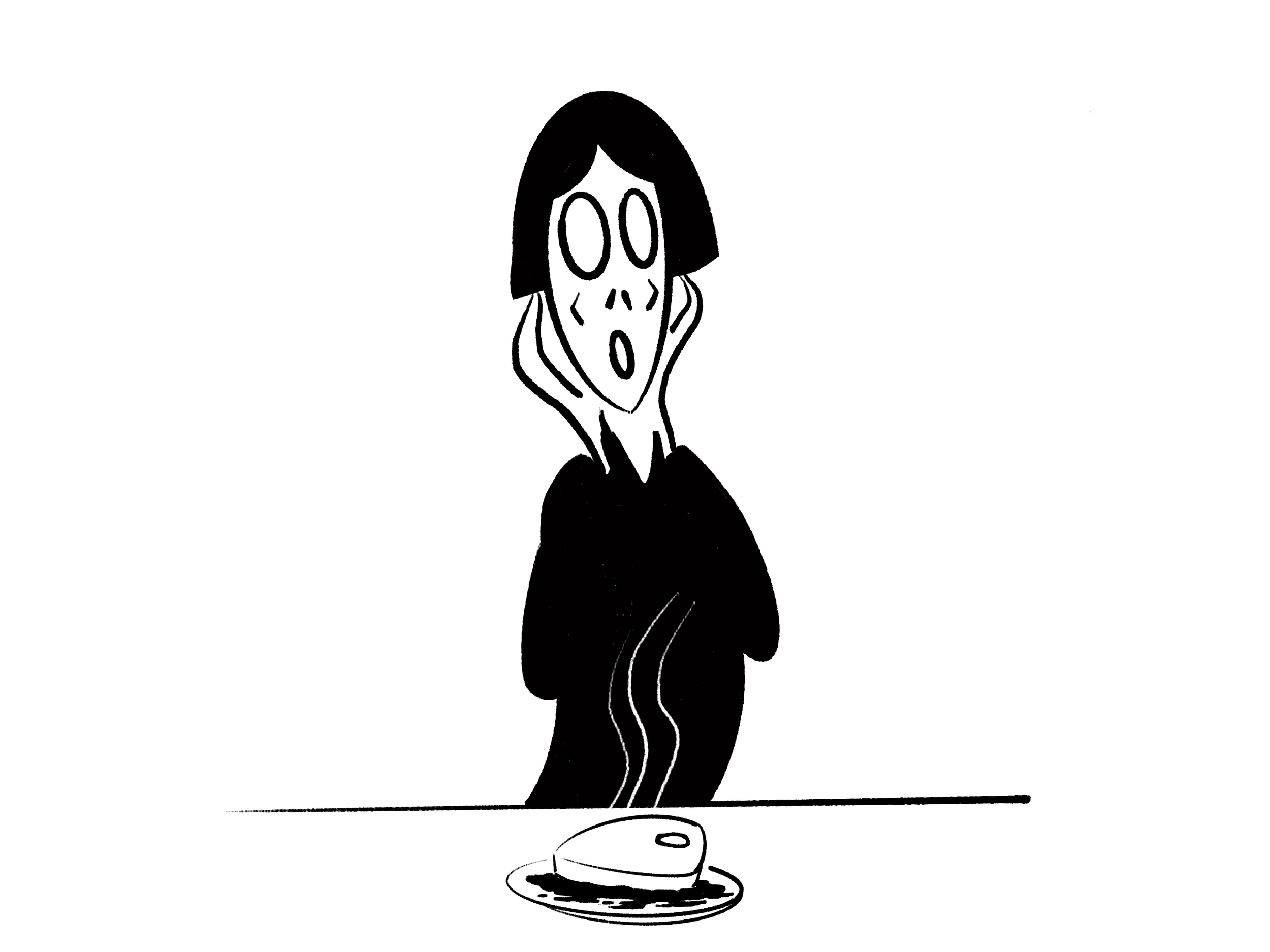
Illustrated by Tian Tian
In the first decade of living in the UK, I made two major accomplishments: I earned a Master’s Degree in Science from a middling UK university and bought a two-storey house with front and back gardens in Zone 3 in North London during the economic downturn. The neighbourhood was pleasant and there were cherry blossoms lining the street, filling it with the beautiful colours of spring.
I met Tony on the day I moved in. He was the British neighbour to my right. “Hello, you alright? The weather is…” And with that, the acquaintance was made. On the fourth day, I met Raj, the Indian neighbour to my left. We had a three-minute chat and became friends.
As a writer, and therefore a homebody, I barely spoke to other neighbours in the few years that followed. Then one day, a middle-aged white woman with pronounced cheekbones and a pointy chin walked over to me from across the street, looking upset.
At the time, I was removing a large hedge by the street with the help of a handyman. The hedge was growing quickly and it took too much work to maintain it. The woman stood very close to me, and remarked coldly, “What you’re doing is wrong.”
I was taken aback and completely speechless. She carried on, “Birds have nests in these hedges. You can’t dig them up.”
I pretended I didn’t hear her and said nothing at the time, but I was fuming inside. “This woman is a bit nosy!” I thought. She walked off after not getting a response out of me.
A few days later, I happened to bump into her again in the street. I thought she would be annoyed with me for what happened and would just ignore me. Instead, she started making small talk, “How was your weekend?”
I hurriedly put on a polite smile and said, “I visited Chatsworth House. Oh, it is grand like a palace, the garden alone is over a hundred acres…”
She broke in and said in a more serious tone, “For only one family to live in such a big house, don’t you think it’s unfair?”
I didn’t know what to say, and thought perhaps she was a hypocritical leftie.
But she looked sincere.
I stood around while she went on about how the estate should belong to the people. Then, all of a sudden her voice softened up and got more enthusiastic, “I must invite you over for a cup of tea.”
About a year later, I found a handwritten invitation to tea in my letterbox. I only learned then that her name was Bernice (meaning “bringer of victory”). I checked out her house number, it was about 150 steps from my house, making us “distant neighbours”.
I accepted her invitation. After a few cups of tea, we were still deeply engaged in conversation. I learned that Bernice worked in a university library in London. Her husband, Oliver, was a poet. Aside from a few ad-hoc jobs here and there, he spent most of his time sitting at home, like me, gazing out of the window.
Bernice liked talking about current affairs and politics. Her father was a secondary school teacher. She told me that from her great grandfather on to her, her family had always voted Labour in every general election. She would also worry about issues that were tens of thousands of miles away. She had a pact with her friends to buy only second-hand clothes from charity shops, in order to help famine victims in Africa. She also boycotted discount stores, as the cheap products they sold were made by child labourers in poor countries. I was touched by the sensibilities and sense of justice she demonstrated throughout our conversation. She said, “We need to do the right thing,” which stuck with me.
As I was leaving, I extended a formal invitation to Bernice and Oliver to come to my place for dinner at a time that suited them.
I would have never guessed that my budding relationship with Bernice would be curtailed after that meal.
I opted to cook, wanting them to try the Western food I make at home made steaks, which are a personal favourite, and therefore something I make well. They arrived as I was busy in the kitchen.
When Bernice came in with a glass of red wine, I was focused on flipping the steaks. I noticed how she looked cold as I turned around. “Oh, I am so sorry. I didn’t mention that I was a vegan,” she said while looking uncomfortable. I told her not to worry as I could make her the Chinese staple of stir-fried tomatoes and eggs.
I served the steaks and suddenly had a feeling that Bernice was glaring at me. “Did you see the latest news?” she said in a concerned tone. “Global warming is intensifying, and it’s threatening our existence!”
As I returned the pan to the stove, I responded casually, “Is it that bad?” Bernice pointed at the steaks, “Cows are some of the main contributors.
According to statistics published by scientists, “a cow’s fart is more damaging to the atmosphere than the farts of a hundred people put together.”
I involuntarily tilted my head to one side and burst out laughing. Bernice was annoyed, she exclaimed, “I wasn’t joking!”
I quickly shut up. She then said, “You should become a vegan too.”
I thought she was joking, but she looked serious. I started feeling uneasy.
I pretended to agree in hopes of preserving a convivial mood over dinner, “Yeah, sure!”
“Do you mean it?”
“Of course.”
She cheered, and cracked a smile.
For the rest of the meal, fast-talker Bernice continued emphasising the importance of being vegan, trying to make us realise that we could all become world-saving heroes if we gave up steak.
I made the decision that night to sever ties with Bernice. The reasons were simple: I wouldn’t give up steak and I didn’t want her to think of me as a promise-breaker.
It was just that I was never left in peace again. Whenever I had steak again, I could hear Bernice’s words of warning echoing in my head: a cow’s fart is more damaging to the atmosphere than the farts of a hundred people put together.
When I walked around different British towns and saw various charity shops, or when I saw news about environmentalists protesting…I couldn’t help but feel that my distant neighbour Bernice was somehow already everywhere, her presence manifesting in layered vignettes that seemed to follow me incessantly, never leaving me alone.
About the author
Xiaohei, a native to Chengdu, Sichuan Province, is a Chinese writer living in the UK. To date, he has published over a million words across diverse genres. He is also a noted translator, known for his translation of Wild Swans: Three Daughters of China. His first novel Gently, I Leave (published by Writers Publishing House) was critically acclaimed by China Reading Weekly as a breakthrough in new immigrants’ novels.
移居英国的第一个 10 年,我干成了两件至今仍念念不忘的人生大事:在一所排名不靠前也不靠后的英国大学里拿到理科硕士学位;当房价低迷时在伦敦北三区的一条巷子里,买下了一栋前后有花园的两层楼住宅。环境不错,沿街种着樱花树,每到春天,满街灿若云霞。
搬进新居的第一天,我就跟右边的白人邻居托尼碰面打了招呼:“哈罗,你好吗?今天天气……哈哈哈。”算是认识了。第四天,又遇到左边的印度邻居拉杰,聊天三分钟,结果成了朋友。
由于我是一个喜静不喜动的“坐家”(作家),在随后的若干年中,几乎没有再跟其他的邻里说过话。直到有一天,一个颧骨突出、下巴尖细的中年白女人,带着满脸的不高兴,从街对面径直朝着我走过来。
当时,我正在一位工人的帮助下,挖掉靠街一侧的大片树篱,原因是树篱长得太快,修剪起来费时费力。这个女人走到离我很近的地方才站住,冷冷地对我说:“你这样做是不对的。”我愣住了,完全不明白她的意思。只听她又说:“这些树篱是鸟儿们栖息的地方,你不能挖掉。”我装着没听见,一声不吭,心里鬼火直冒:这个英国婆娘管得也太宽啦!她见我不理她,讪讪地走了。
偏偏那么巧,没过几天,我在街上又遇见了她。我以为她生气了,会对我视而不见,谁知她主动问候我:“周末过得怎么样?”我赶紧满脸堆笑地说:“去游览了查茨沃斯贵族庄园。哇,那建筑,大得像皇宫,光是花园就占地一百多英亩……”她打断我的话,语气郑重地说:“这么大的一栋房子,只住一家人,你不觉得很不公平吗?”我一时不知该如何回答,心想:此人大概就是一个虚伪的“白左”吧。然而,从她闪烁的目光里,我看到的是真诚。
我耐着性子,听她讲了一通“这座庄园应该属于人民的”之后,忽然发现她的语气变了,变得柔和而热情:“我必须请你到我家喝一杯茶。”
一年后的某一天,我从住宅门上的收信口,看到她送来的手写的喝茶请帖,我这才知道她的名字叫“伯妮丝”(意思:胜利的使者)。再看门牌号,从我家到她的住宅,估计要走 150 步才能到达,名副其实的“远邻”。
我应邀前往。几杯茶下肚,我们的谈兴依然不减。伯妮丝在伦敦的一所大学图书馆工作。丈夫奥利弗是一名诗人,一年到头,除了有一点能挣到钱的临时性工作,他的大部分时间是坐在家里,跟我一样,望着窗外发呆。
伯妮丝喜欢谈论当前政治。她的父亲是中学老师,她告诉我说,从她曾祖父到祖父到父亲再到她,每次大选都是投工党的票。她还为万里之外发生的事操碎了心:为了帮助非洲饥民,她曾与朋友们约定,不去服装店买新衣服,只到慈善商店买二手货。她还参与过一次抵制卖便宜货商店的行动,原因是这些便宜货都是穷国的童工做的。聊天中伯妮丝所表现出来的同情心和正义感,令我自愧弗如。她说的一句话,让我印象深刻:要做正确的事。
这天我离开时,向伯妮丝和奥利弗发出正式邀请:请他们在适当的时间到我家共进晚餐。
怎么也没想到,这次晚餐之后,我跟远邻伯妮丝的交往无可奈何地终结了。
为了这次晚餐,我亲自下厨房,想让他们尝尝我做的西餐:煎牛排。这是我的拿手好戏,原因是我喜欢吃、经常做。两人登门时,我在厨房里忙。当伯妮丝手端一杯红葡萄酒走进来时,我正在专心致志地翻动牛排,一回身,我注意到她的眼睛里射出一道叫人不舒服的冷光。“噢,对不起,我忘说了,我是素食者。”伯妮丝心神不定地说。我要她放心:“我就再加一道中国人最爱吃的菜,西红柿炒鸡蛋。”我把煎好的牛排放进盘子里,忽然有一种感觉:伯妮丝的双目正紧盯着自己的后背。“你看到最新报道了吗?”只听她问,语气里透着焦虑。“全球变暖正在加剧,已经威胁到人类生存了!”我把煎牛排的平底锅放回炉头上,不以为然地说:“有那么严重吗?”伯妮丝指着盘子里的牛排说:“牛是罪魁祸首之一,据科学家统计,一头牛每次放屁,对地球大气层的危害程度,超过一百个人放屁的总和!”我一时没忍住,头往旁一倾斜,张开嘴,迸发出一长串笑声:哈哈哈……伯妮丝生气了,大声说:“我不是在开玩笑!”我赶快闭住嘴,她又说:“你应该像我一样,成为素食者。”我以为她在开玩笑,却见对方神色严肃,心里便有了些不安。为了不破坏晚餐该有的愉快情绪和气氛,我装作爽快地答应了她的建议:“好啊,没问题!”“说话算话?”“当然!”她欢呼了一声,脸上展现出难得的笑容。随后在饭桌上,能说会道的伯妮丝继续大谈素食的重要意义,似乎要让饭桌上的所有人意识到:一旦放弃吃牛排,就是一位拯救地球的英雄。
当晚我做出决定:终结跟伯妮丝的个人往来。原因很简单:我不可能不吃牛排,也不愿意让伯妮丝把我看成一个不信守承诺的人。只是,我从此不再清静。每当我吃牛排时,脑袋里就响起伯妮丝的警告声:一头牛每次放屁,对地球大气层的危害程度,超过一百个人放屁的总和。每次信步在英国的城镇,见到一家家不同名号的慈善商店,每次在电视新闻上见到环保主义者的游行,我的英伦远邻伯妮丝就会变幻出多重剪影,一层又一层地包围在我身旁。
作者介绍
小黑,四川成都人,旅英华人作家。迄今已发表各类作品超过百万字。英文名著《鸿:三代中国女人的故事》中译者。首部长篇小说《轻轻的,我走了》(作家出版社出版),被当年的《中华读书报》评为“新移民小说的突破”。
Both the Chinese and English editions of Haha! Britain can be purchased at the following platforms:
· BOOK FAN