
Xiaoman (小满): The Wisdom of “Not Yet”
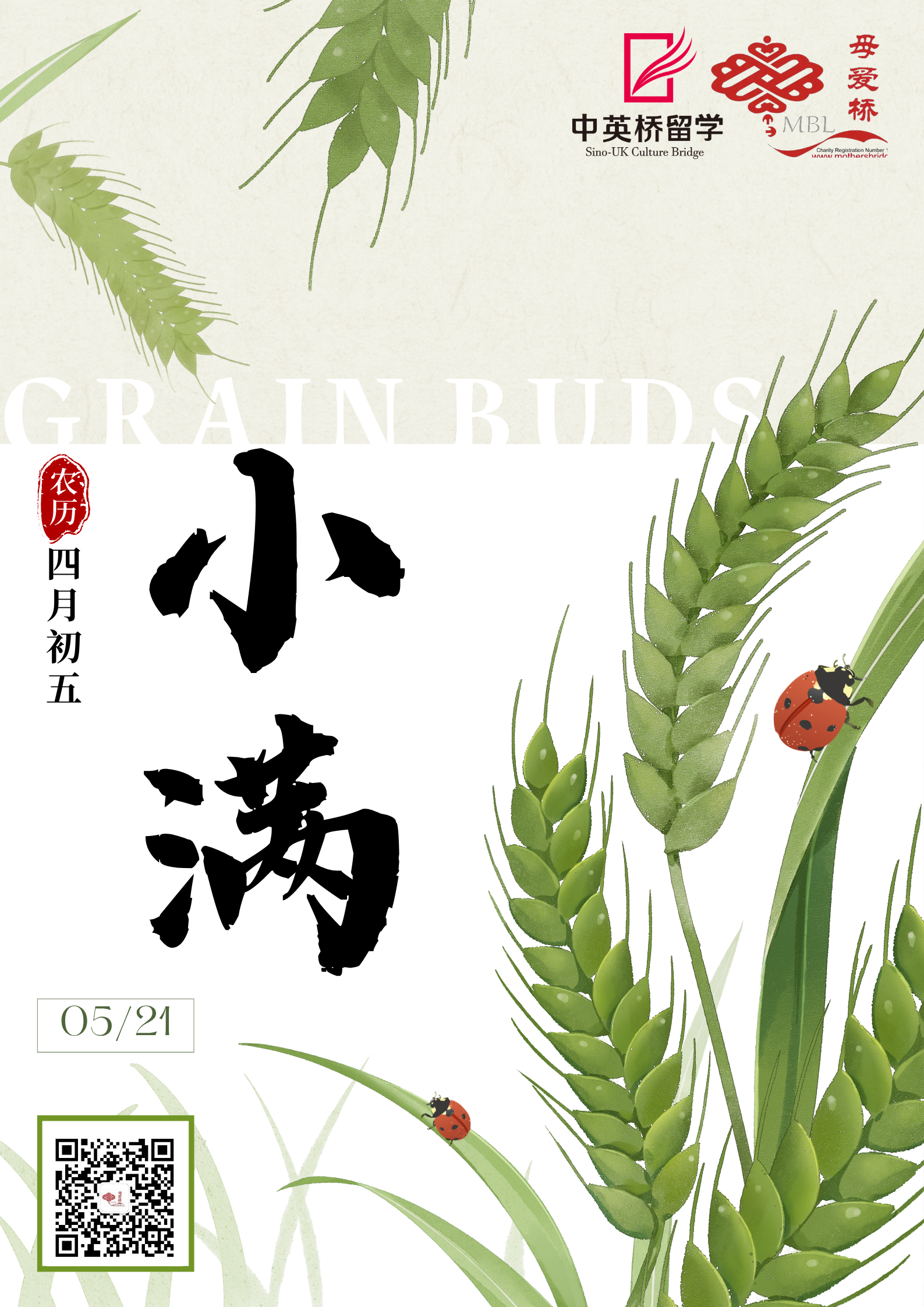
Among the twenty-four traditional Chinese solar terms, Xiaoman (小满) may be one of the most intriguing.
Its name is often translated as “Grain Buds” or “Lesser Fullness”, referring to the time when summer crops begin to fill with grain. The fields are green, the harvest is visible on the horizon, and growth is evident everywhere.
Yet the season is not called Daman (Great Fullness).
It is called Xiaoman.
Not full, but almost full.
This distinction reflects a long-standing idea in Chinese thought: that there is wisdom in moderation, and beauty in what is still unfolding.
A completely full cup cannot hold anything more. A tree laden with fruit must eventually bend under its own weight. In traditional culture, “fullness” was often viewed not as a final goal, but as a point that required balance and restraint.
Xiaoman therefore occupies a unique place in the calendar. It celebrates progress rather than completion.
Modern life tends to favour finished results. Diplomas, promotions, milestones, and achievements often define how success is measured. Yet many of the most meaningful parts of life resist neat completion.
Children do not suddenly become adults overnight. Trust develops gradually. Communities grow through countless small interactions. Understanding between cultures emerges through years of conversation, curiosity, and patience.
The value lies not only in the destination, but in the process itself.
Perhaps this is why Xiaoman continues to resonate centuries after the agricultural conditions that gave rise to it. It offers a reminder that growth does not need to be rushed, and that a life still in progress is not an incomplete one.
As spring gives way to summer, the fields remain not quite ready. There is more growing to be done.
And perhaps that is exactly as it should be. 🌾