
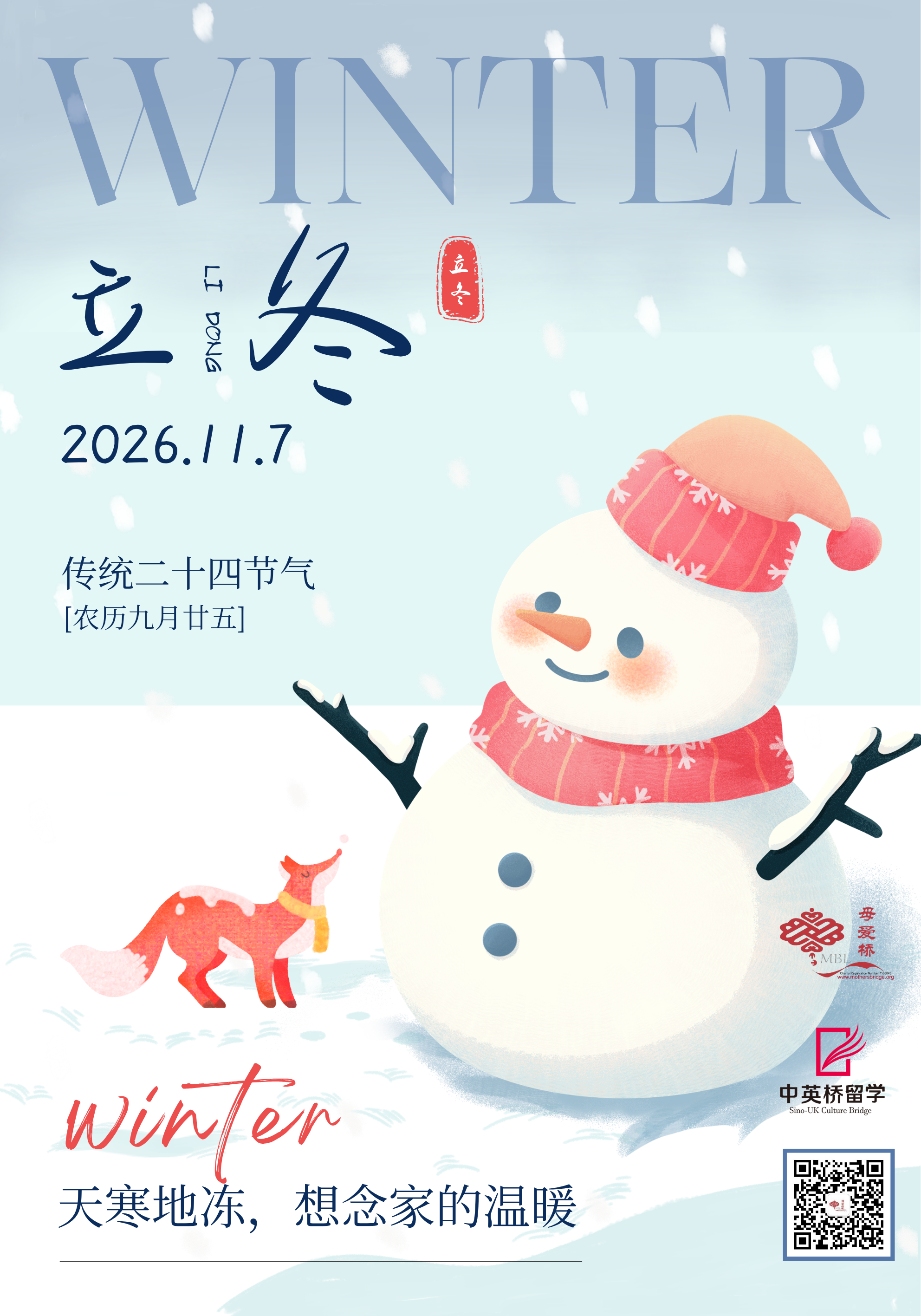
Today marks Lidong (立冬), the nineteenth of China’s twenty-four solar terms and the traditional beginning of winter.
The name itself is simple and clear: li means “to establish” or “to begin,” and dong means “winter” or “the end.” In the old calendar, this is the moment when the year turns inward. The three traditional pentads describe it plainly: water begins to freeze, the ground begins to harden, and the pheasant is said to enter the water and become a clam. Whether taken literally or poetically, the image is the same — the world is drawing in, storing what it has gathered, and preparing for the quiet months ahead.
In many parts of China, people mark the day by “nourishing for winter” (补冬). Families share warm, substantial meals — dumplings in the north, lamb or ginger duck in the south — not only for the body, but as a gentle way of saying: we are ready for what is coming. It is a time of gathering, of putting aside a little extra warmth, of looking after one another before the cold settles in.
There is something quietly instructive in this turning.
Not every warmth is visible. Not every preparation looks dramatic. Sometimes the most important work of a season is simply keeping a connection open — a letter, a conversation, a book that carries a piece of culture, a willingness to stay present while someone else finds their own pace. For many of the children and families connected with The Mothers’ Bridge of Love, the distance between birth culture and adoptive culture can feel, at times, like a long winter. Questions of origin, belonging, and identity do not always arrive on a convenient timetable. Some people feel ready to explore them early; others need years. Some find comfort in searching; others prefer to hold their stories more privately. There is no single correct season for these things.
What matters is that the bridge remains open.
Over more than twenty years, MBL has tried to be that kind of bridge — one that does not freeze when the weather turns. It has carried books and cultural programmes to children in China, supported adoptive families seeking to understand the world their children come from, and created spaces where birth and adoptive cultures can meet with respect rather than pressure. The work is often quiet, like the storing of energy in winter: not always spectacular, but steady.
As the days grow shorter and the air cooler, we are reminded that love, like the old practice of nourishing for winter, is something we choose to keep and share. It does not require perfect timing or perfect certainty. It asks only that we continue to tend the connection — between children and their roots, between families across oceans, between cultures that might otherwise remain distant.
Water freezes. The ground hardens. But the care that reaches across those distances need not.
Wishing everyone a peaceful Lidong.