
By Yi Gong
On the afternoon of 14 November 2026, the new publication Ha Ha! Canada, available in both Chinese and English, was officially launched at the Chinese Cultural Centre of Greater Vancouver. Guests from the fields of culture, education, art, academia and public affairs gathered alongside the book’s contributors, community volunteers and readers from different backgrounds to explore the history of Chinese immigration to Canada, cultural heritage, community service, the fight against racial discrimination and civic participation.
The Ha Ha! Canada project grew out of a global writing and discussion initiative launched by the UK-based charity The Mothers’ Bridge of Love (MBL), with its publication supported by the Chinese Cultural Centre of Greater Vancouver. The initiative aims to encourage people of Chinese heritage living in different countries to preserve their cultural traditions while taking a greater interest in the social development and public affairs of their adopted countries and actively contributing to the societies in which they live.
Among those addressing the gathering were Guo Yinghua, Chair of the Chinese Cultural Centre of Greater Vancouver; Tao Wenqin, Executive Director of the Centre; Hon Chan, Member of the Legislative Assembly of British Columbia; artist Cheng Shuren; Chinese immigration history researcher Liu Jing; and several of the book’s contributors and readers. The event was hosted by Dr Wang Li, Vice-Chair of the Cultural Centre and leader of the Ha Ha! Canada project.
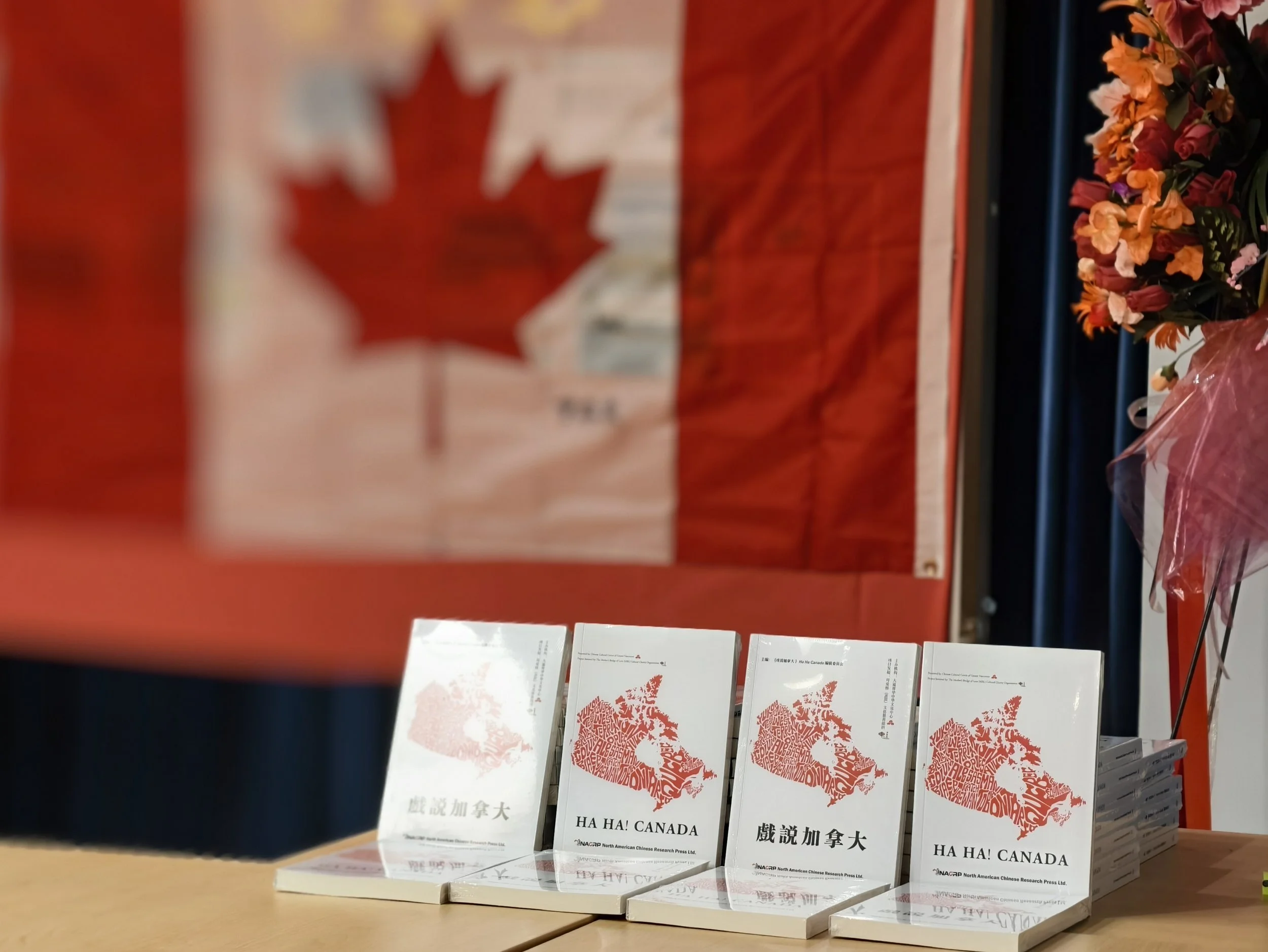
Photograph by Ban Zhang
One Book, Many Lives Across Canada
Published by North American Chinese Research Press, Ha Ha! Canada is available in separate Chinese and English editions, each with its own ISBN. The book features 57 stories selected from 155 submissions received from across Canada, with a foreword by Senator Yuen Pau Woo and cover endorsements from Chen Zhidong, Dr Leung Lai-fong and Guo Yinghua, among others.
The stories explore immigrant life, cultural differences, observations of society, personal growth and identity. They capture both the uncertainties and challenges of arriving in Canada and the gradual process of adapting to a new environment, understanding society and developing a sense of belonging.
The humour suggested by the book’s title is about more than simply taking a light-hearted approach. Through vivid and relatable personal accounts, the book invites readers to discover a more authentic and diverse Canada through moments of both laughter and reflection.
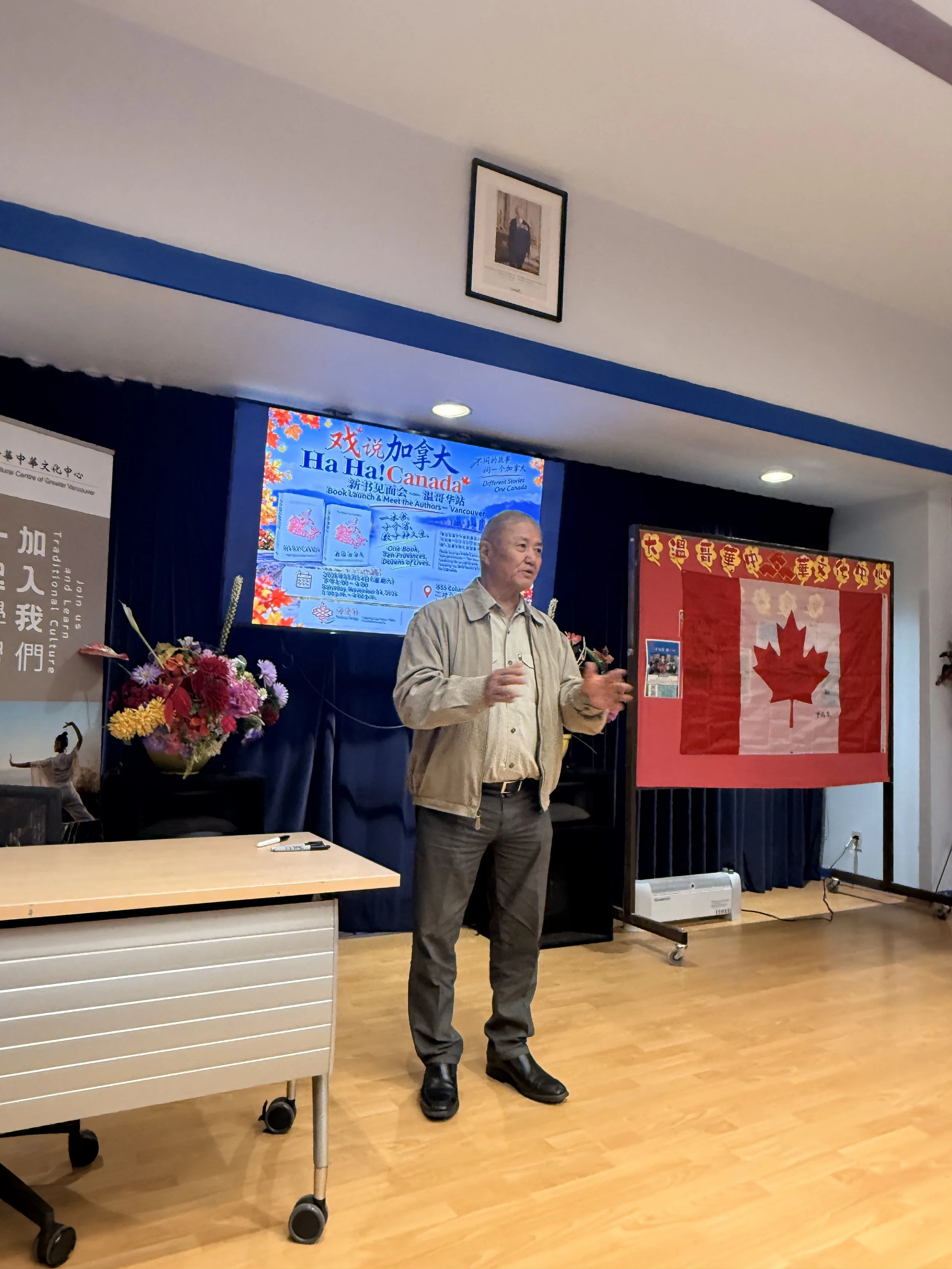
Guo Yinghua, Chair of the Chinese Cultural Centre of Greater Vancouver
From Chinatown to the Cultural Centre: Preserving the History and Heritage of the Chinese Community
Guo Yinghua, Chair of the Chinese Cultural Centre of Greater Vancouver, looked back on the development of Vancouver’s Chinatown and the responsibilities undertaken by the Cultural Centre, whose establishment began in 1973, throughout more than half a century of Chinese community development.
Vancouver’s Chinatown was not only a place where early Chinese immigrants lived and earned their livelihoods, but also an important historical space where the community established mutual support networks, preserved cultural traditions and sought recognition within wider society. From the struggles of early immigrants to establish themselves in an unfamiliar environment to the gradual founding of schools, associations and cultural institutions, this history reflects the collective efforts of several generations.
As the demographics, lifestyles and geographical reach of the Chinese community have changed, traditional Chinatown and its cultural institutions have also encountered new challenges. Guo’s reflections reminded the audience that the significance of a cultural centre goes far beyond providing a venue for activities. It also lies in preserving historical memory, sustaining cultural traditions and fostering connections between generations.
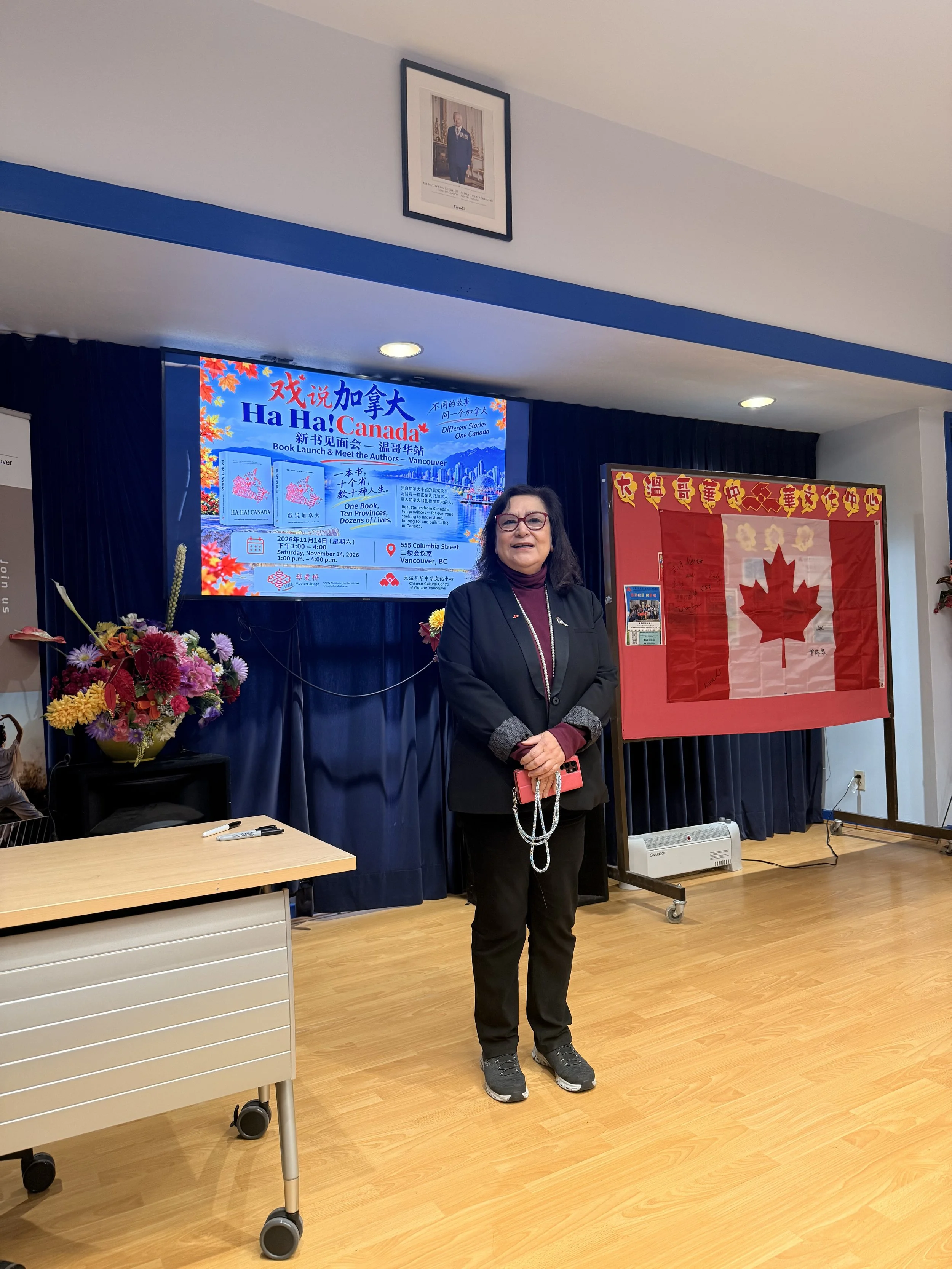
Tao Wenqin, Executive Director of the Chinese Cultural Centre of Greater Vancouver
From Chinese Language Schools to Community Volunteering: The Dedication Behind Cultural Heritage
Drawing on the development of Chinese language schools and her own longstanding involvement in community volunteering, Tao Wenqin, Executive Director of the Chinese Cultural Centre of Greater Vancouver, shared stories behind Chinese language education and community development.
Chinese language schools fulfil a particularly important role within Canada’s Chinese communities. They not only help younger generations learn Chinese but also provide opportunities for them to understand their family heritage, immigration history and cultural roots. For young people of Chinese heritage growing up in a multicultural environment, Chinese language education is also an important means of developing cultural understanding and a sense of identity.
The continued development of a Chinese language school depends on the support of educators, parents and community volunteers. Tao’s experiences illustrate an important driving force behind the growth of Chinese communities: the many individuals who, alongside their professional commitments, devote their time and energy to education, cultural activities and charitable causes. It is this dedication, sustained over many years, that provides a foundation for community development.
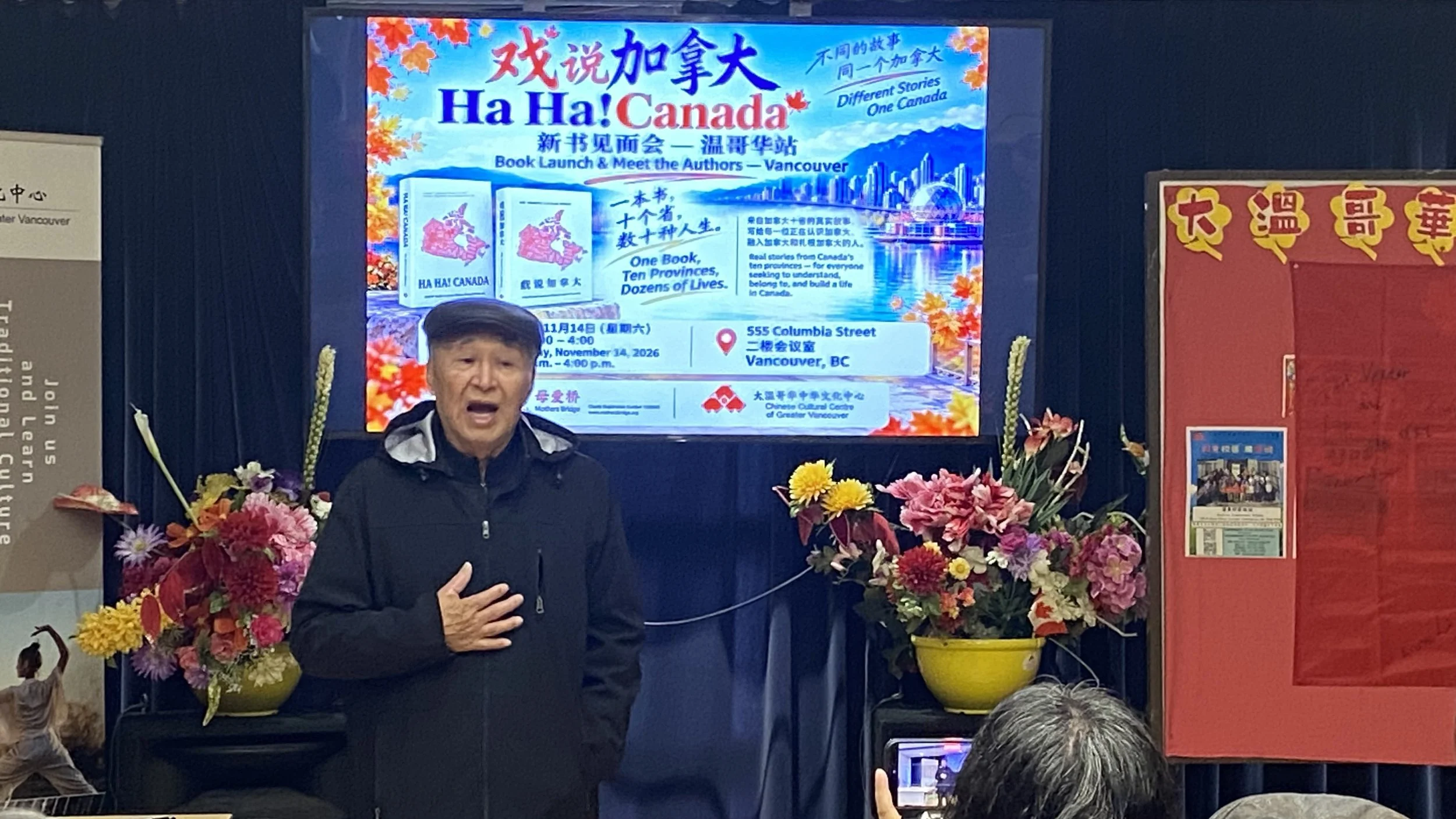
Artist Cheng Shuren
From Sculptures and Murals to Protecting Chinatown: Art as a Form of Community Action
Artist Cheng Shuren shared his reflections on immigrant life, cultural identity, and the history and contemporary realities of Chinatown.
Over the years, Cheng has created numerous public artworks in Vancouver’s Chinatown, including sculptures and murals. These works not only enrich the urban landscape but also use artistic expression to document the history and community life of Chinese immigrants. For Cheng, Chinatown is more than a place of historical significance. It is a cultural home built collectively by generations of Chinese people.
Cheng also spoke about his longstanding involvement in maintaining and protecting public artworks. In the face of racial discrimination and vandalism targeting Chinatown’s cultural spaces, restoring murals and protecting sculptures have become practical ways of defending the dignity of the community and preserving its historical memory.
His experiences demonstrate another form of community participation: culture needs not only to be celebrated and remembered, but also to be actively protected in everyday life.
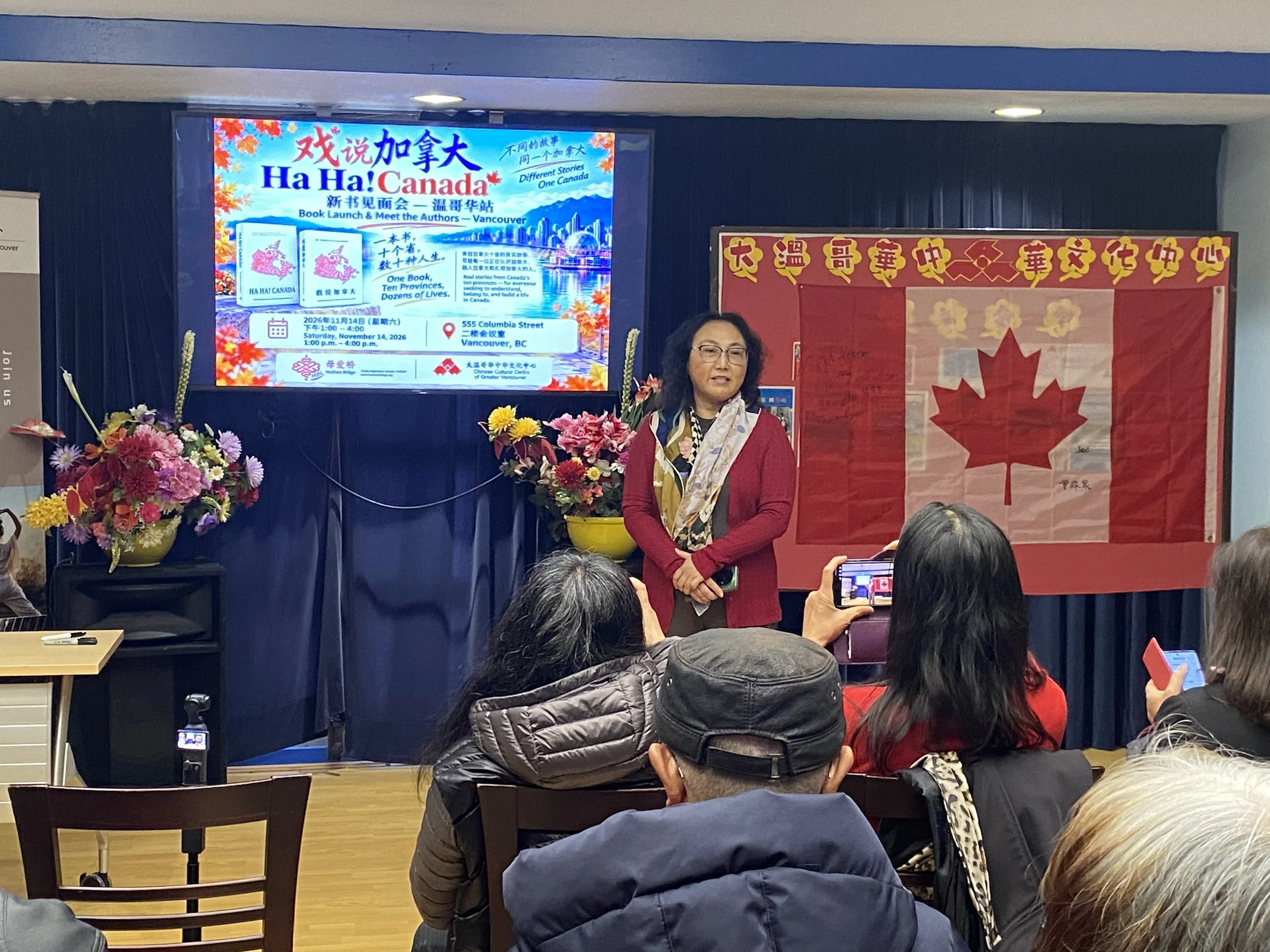
Liu Jing, Head of the Chinese Section at the University of British Columbia’s Asian Library and researcher of Chinese immigration history
From Personal Migration Experiences to Historical Research: Bringing More Stories to Light
Liu Jing, author of the book’s afterword, Head of the Chinese Section at the University of British Columbia’s Asian Library and researcher of Chinese immigration history, drew on personal migration experiences to share insights into immigrant life in Canada and the history of its Chinese communities.
Personal migration stories are often rich in detail: the unfamiliarity of arriving in a foreign country, differences in language and culture, the challenges of rebuilding professional and family lives, and the gradual process of becoming part of a new society. For individuals, these experiences form unique personal memories. When countless individual stories are brought together, however, they collectively form the social history of an immigrant community.
From the perspective of historical research, immigration history is found not only in government archives, historical documents and significant events, but also in the everyday lives and family memories of ordinary people.
Although the stories collected in Ha Ha! Canada are not sweeping historical narratives, they preserve authentic glimpses of immigrant life from individual perspectives, offering valuable personal accounts through which readers can better understand Canada’s Chinese communities and multicultural society.
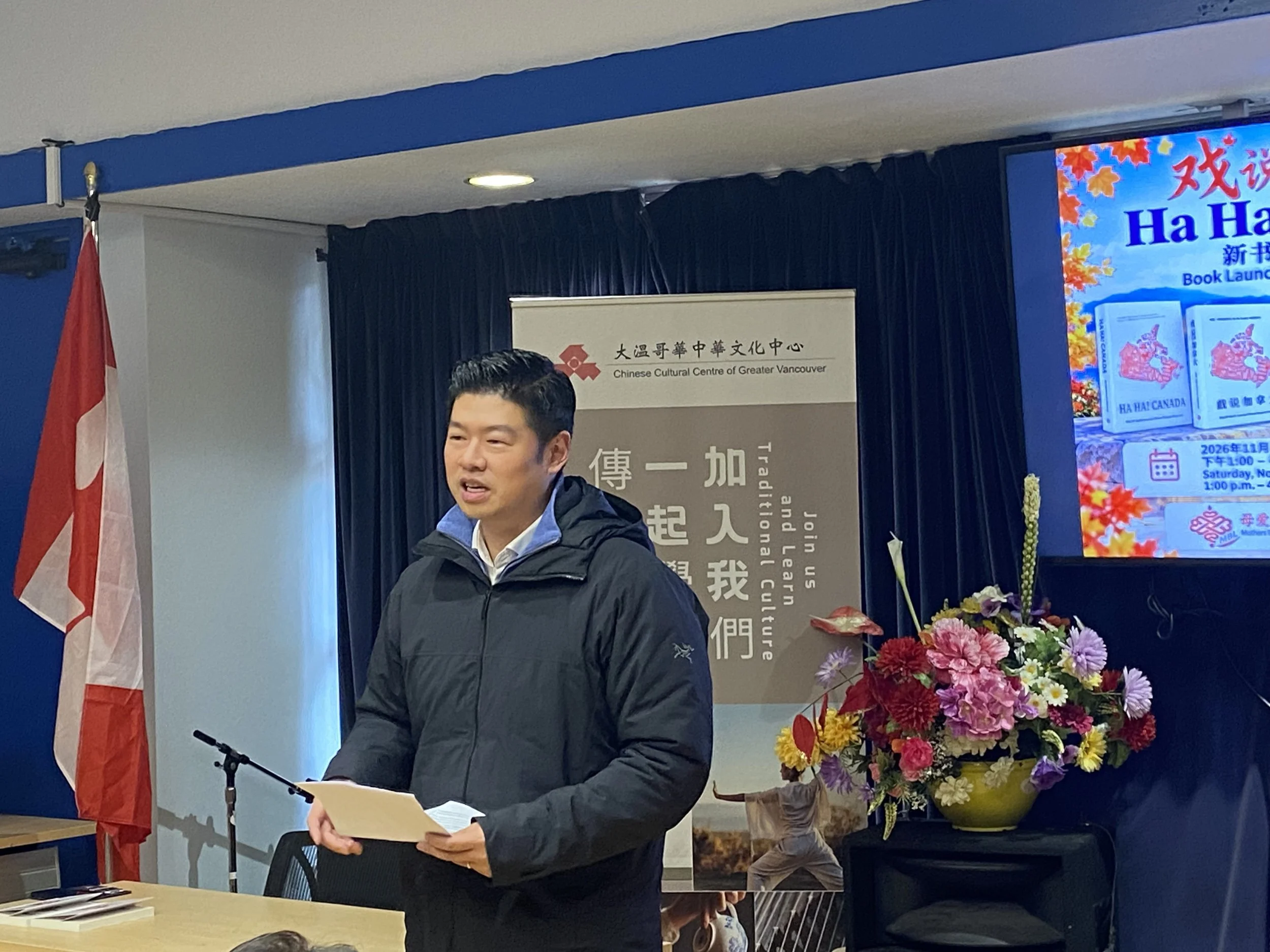
Hon Chan, Member of the Legislative Assembly of British Columbia
From Community Involvement to Political Life: Civic Participation Among a New Generation of Chinese Canadians
Hon Chan, Member of the Legislative Assembly of British Columbia, shared his personal journey, from developing an interest in community affairs and participating in social activities to eventually pursuing a career in politics.
His experiences brought the perspective of civic participation to the day’s discussions. For immigrants and their descendants, becoming part of Canadian society means not only studying, working and living in the country, but also understanding its institutions, taking an interest in public policy and contributing to public affairs wherever possible.
From attending community activities and volunteering to engaging in public discussions, participating in elections and undertaking public service, civic participation can take many different forms.
Chan’s journey also reflects generational changes within Canada’s Chinese communities. While earlier immigrants worked hard to establish themselves and build new lives, growing numbers of Chinese Canadians and their descendants are now actively contributing to the development of Canadian society. This progress has been made possible by the growth of community organisations and the foundations laid over many years by earlier generations of immigrants.
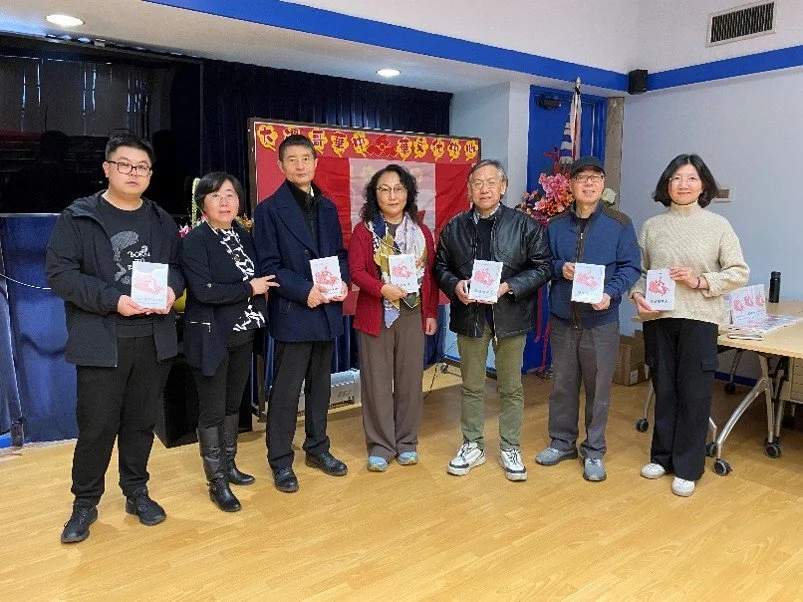
Some of the book’s contributors, from left to right: Jiang Xiaolong, Wang Li, Ren Jingsheng, Liu Jing, Jia Yanqiang, Ban Zhang and Li Bin.
Different Authors, Different Lives, Writing Canada’s Story Together
Several contributors to Ha Ha! Canada, including Ban Zhang, Chen Yiping, Lin Weizhi, Lin Feng, Ren Jingsheng, Li Bin, Cynthia Shi and Jia Yanqiang, also shared their experiences, reflections and perspectives on the new publication. They were joined by Buddhist monastics from Chuandeng Temple, other readers and community members, including Li Jiawen. Brian Zhang, a sponsor of the publication, also gave a brief speech reflecting on his own journey of community involvement.
These exchanges gave the book launch a distinctly community-focused character. Participants of different ages and migration backgrounds brought their own understandings of Canada to the discussion. Some recalled the difficulties of their early days in the country, while others reflected on encounters between languages and cultures. Some spoke of contributing to community development through education and volunteering, while others turned their attention to broader social and public affairs.
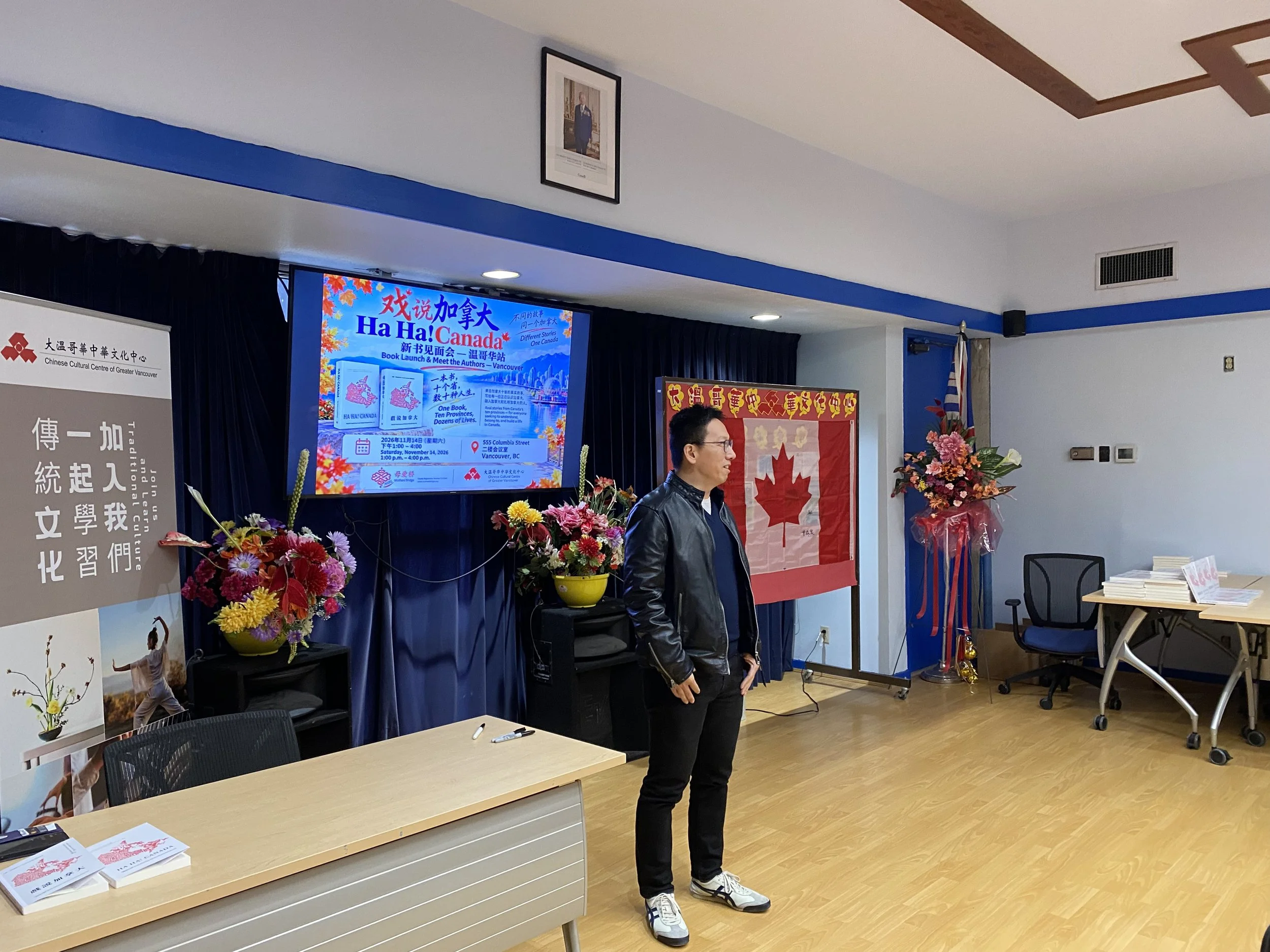
Project sponsor Brian Zhang
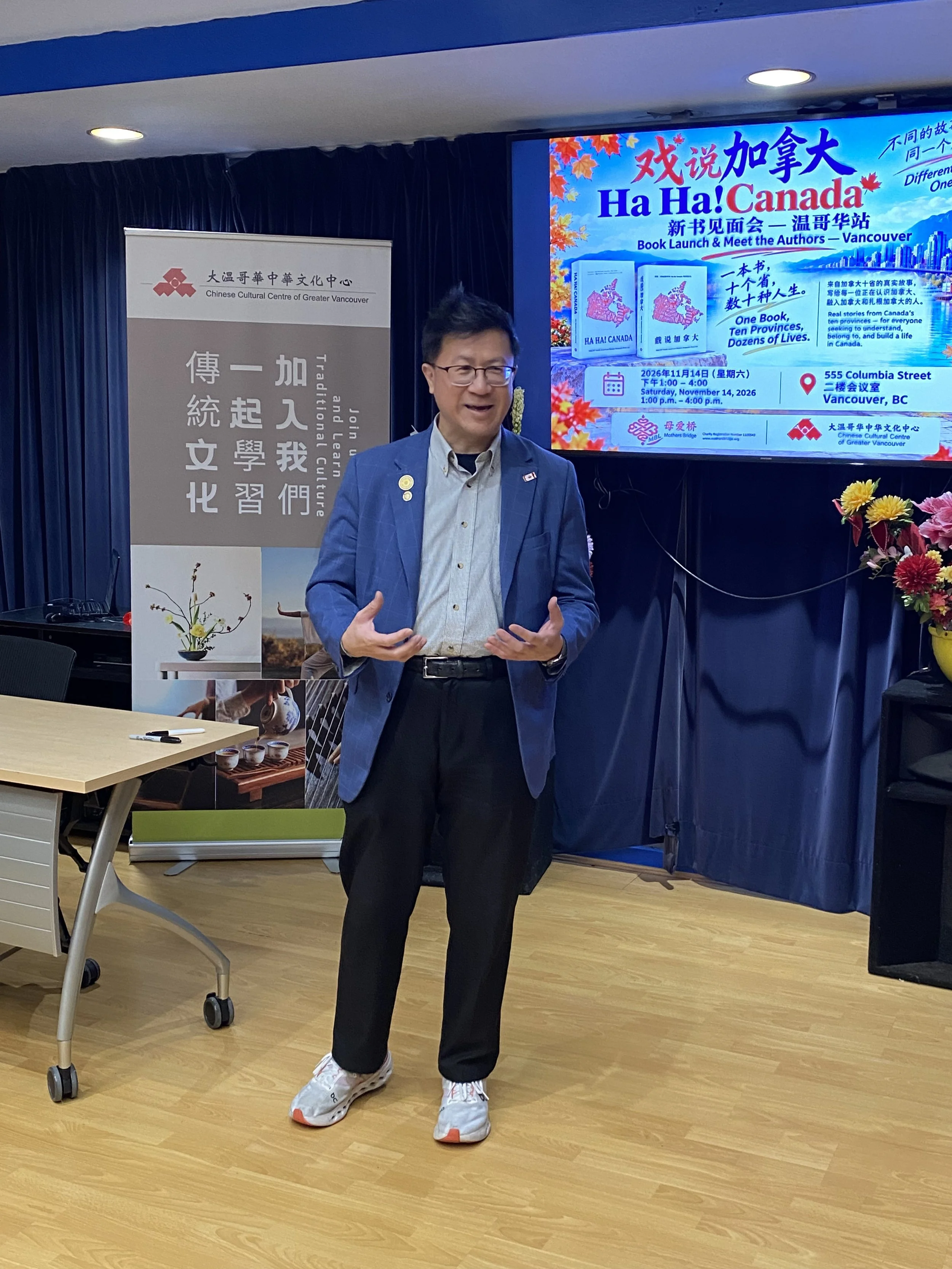
Community member Li Jiawen
From Preserving Cultural Heritage to Participating in Wider Society
One common theme ran throughout the book launch: preserving cultural heritage and becoming part of wider society are not mutually exclusive.
Maintaining one’s language, culture and historical memory can go hand in hand with understanding Canadian society, embracing civic responsibilities and actively participating in public life. Indeed, these commitments can reinforce one another. This is also the message that The Mothers’ Bridge of Love hoped to convey through its global writing and discussion initiative, and that the Chinese Cultural Centre of Greater Vancouver has sought to promote through the publication of Ha Ha! Canada.
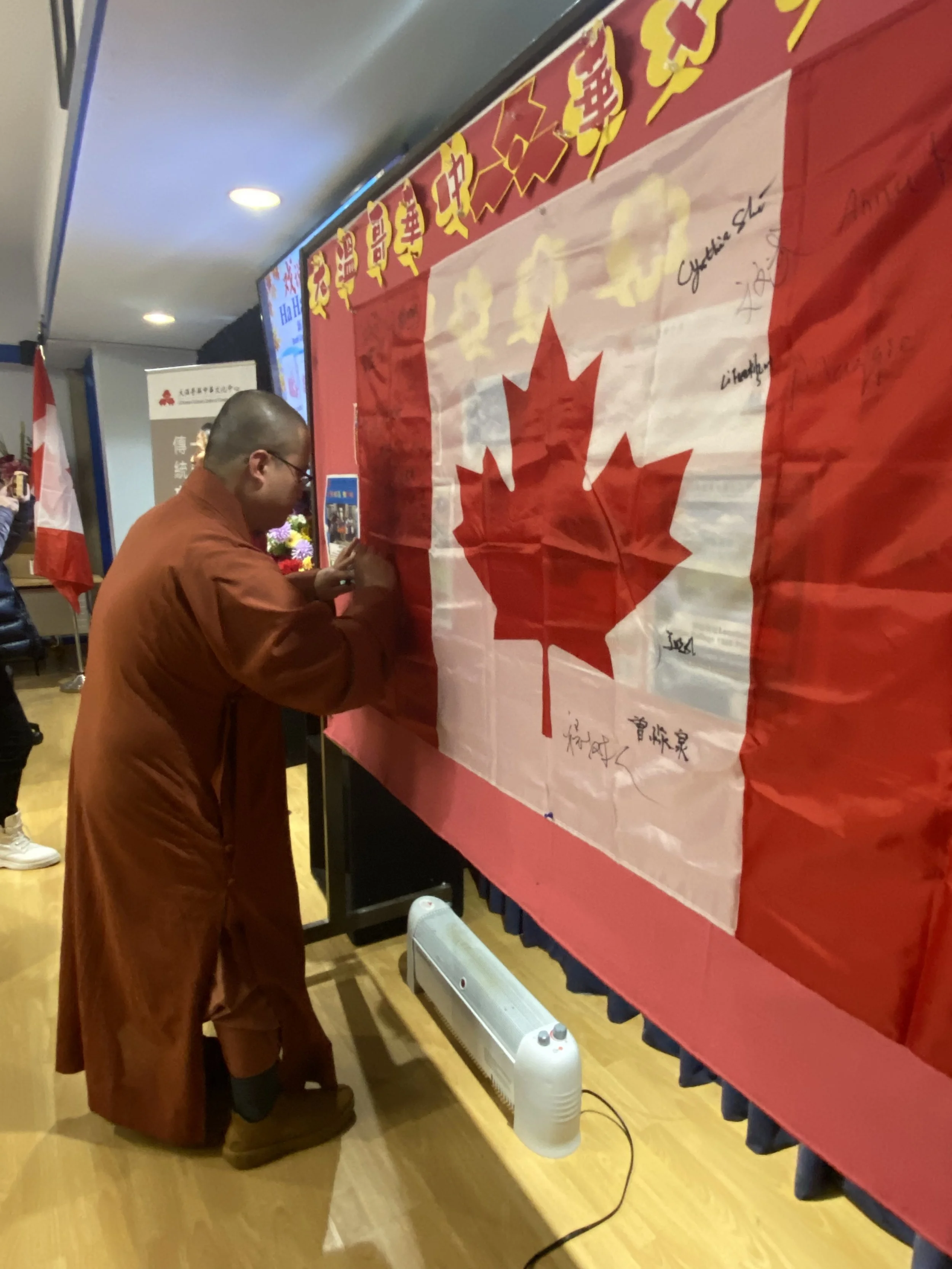
A Buddhist monastic from Chuandeng Temple signing the Canadian national flag
The day’s discussions ranged from the history of Chinatown and Chinese language education to the creation and preservation of public art, research into immigration history, community volunteering and political participation. Together, these diverse experiences traced the development of Canada’s Chinese communities, turning the book launch into a meaningful community dialogue about history, culture and civic responsibility.
To commemorate this special cultural exchange spanning Canada’s east and west coasts, the Chinese Cultural Centre of Greater Vancouver prepared a Canadian maple leaf flag. Beginning its journey in Vancouver, British Columbia, the flag will accompany the nationwide Ha Ha! Canada book tour eastwards, eventually reaching St John’s, Newfoundland and Labrador.
Participants at each stop along the way will witness the flag’s journey. Once the tour concludes, it will be permanently preserved by the Cultural Centre as a treasured reminder of an experience that transcended geographical boundaries, brought communities together and strengthened friendships.
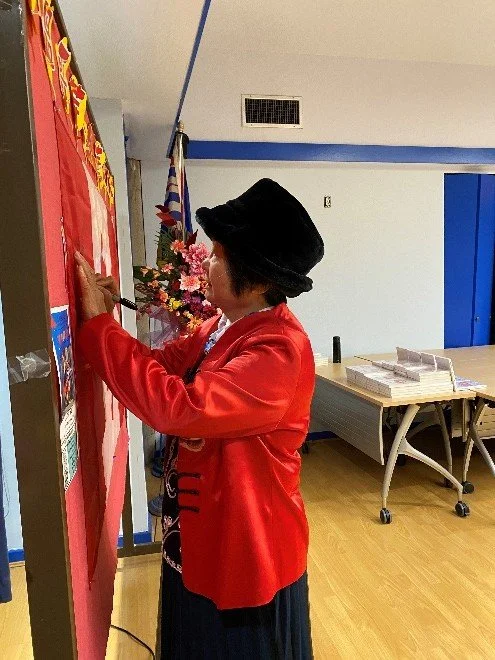
Contributor Lin Weizhi signing the Canadian national flag
One book, ten provinces, dozens of lives.
What Ha Ha! Canada documents is not simply the lives of Chinese people in Canada, but also the continuing development and enrichment of Canadian multicultural society.
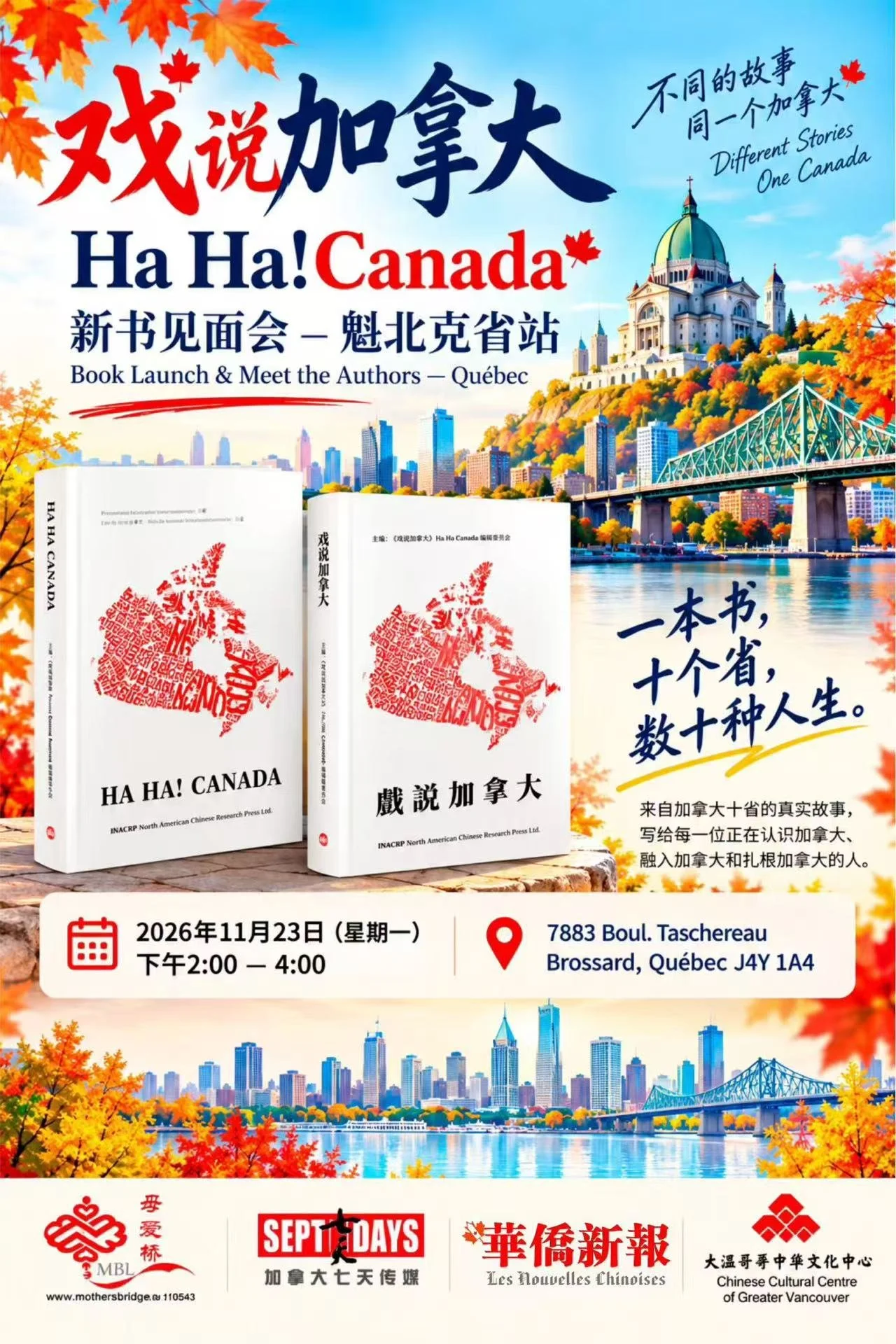
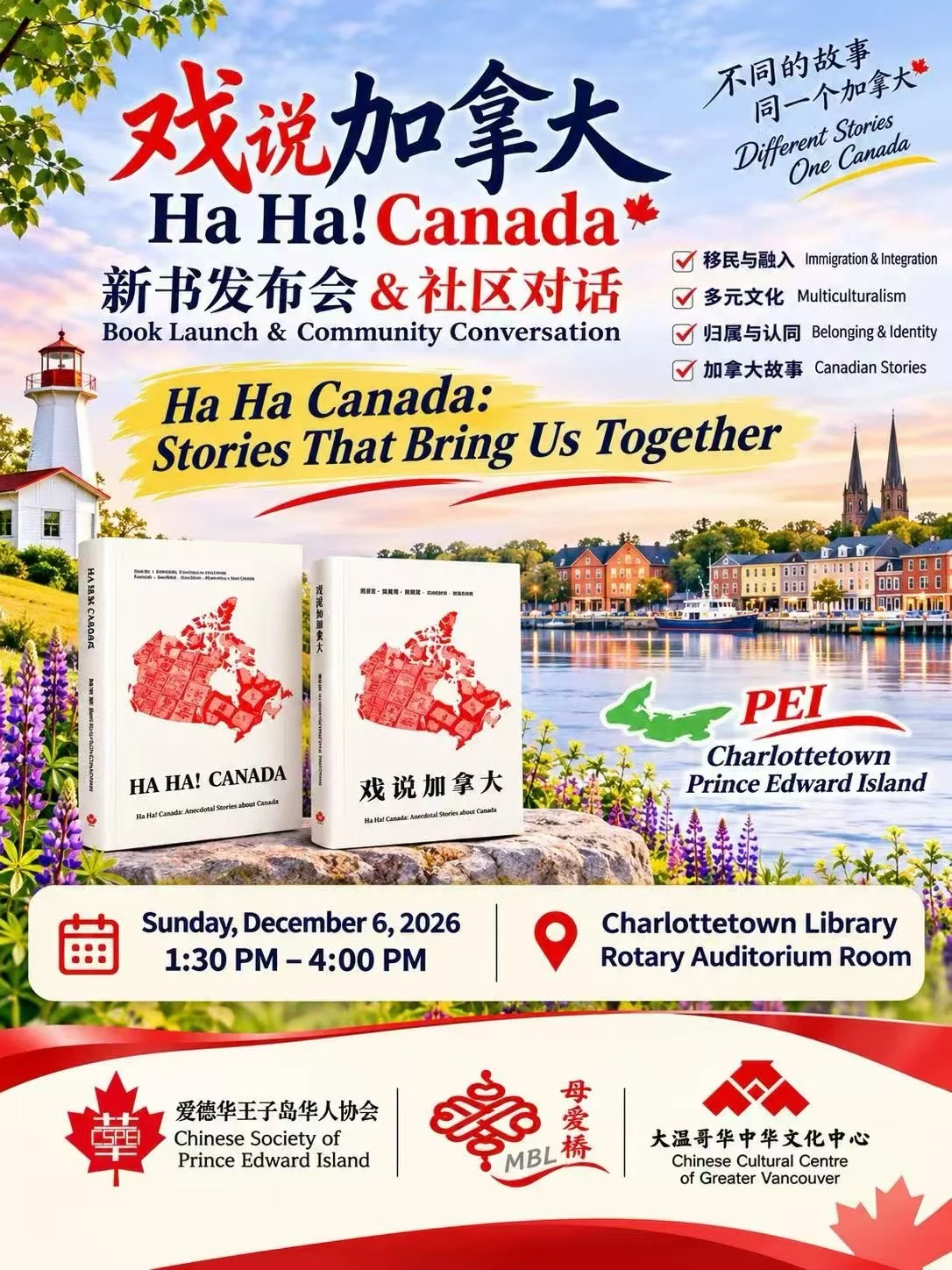
Following its Vancouver launch, the book will be introduced to readers in several other Canadian cities through a series of launch events, including:
22 November 2026: Coquitlam
23 November 2026: Montreal
6 December 2026: Charlottetown
8 December 2026: Fredericton
14 January 2027: Calgary
16 January 2027: Edmonton
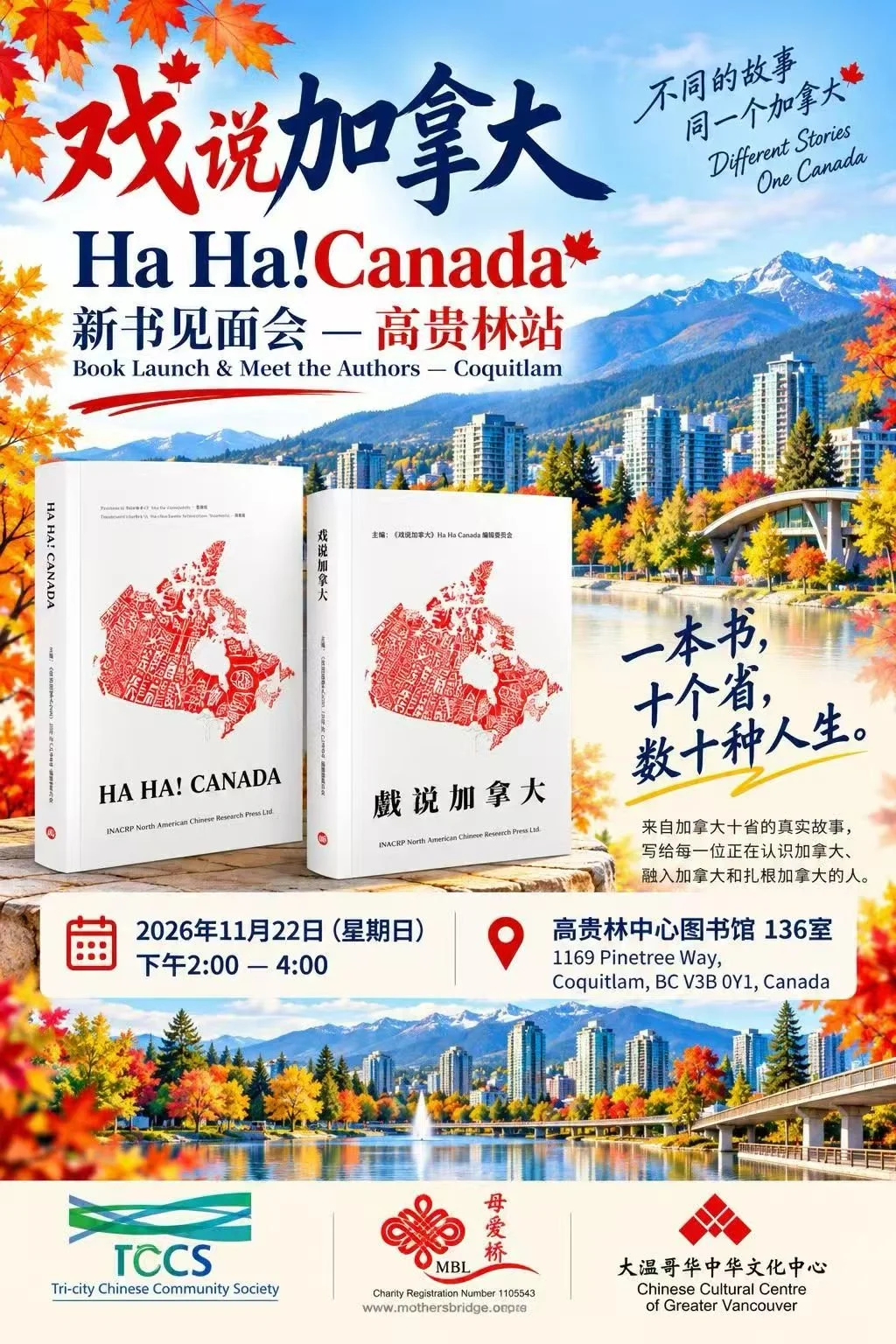
For book purchases and further information, please contact hahacanadabook@gmail.com.