
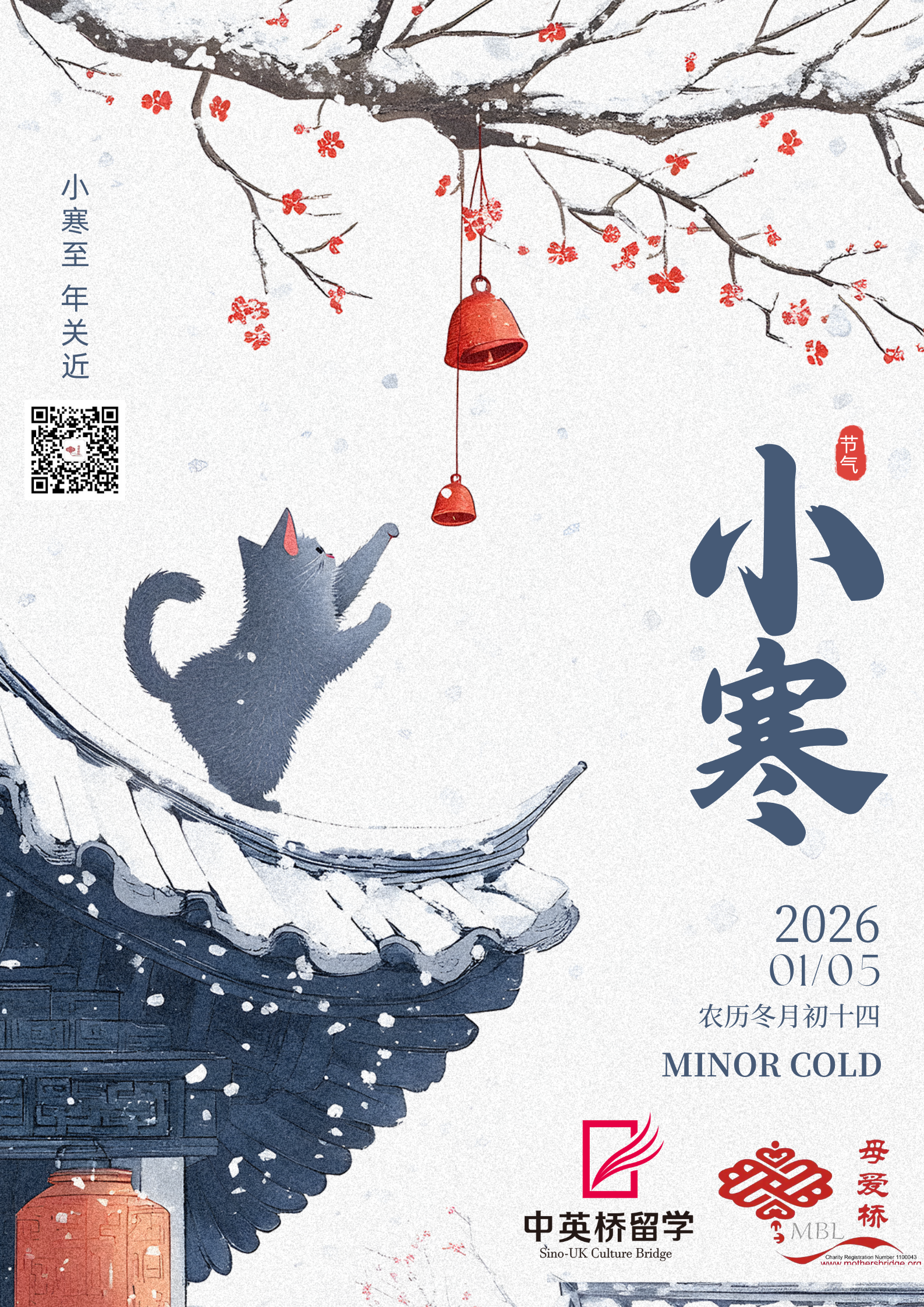
As we pack away the Christmas decorations and settle into the new year, the Chinese calendar marks a significant shift in the natural world. Today marks the beginning of Xiaohan (小寒), or "Slight Cold."
Falling annually around January 5th, Xiaohan is the 23rd of the 24 Solar Terms. While its name suggests only a "slight" chill, don't let it fool you—in many parts of China (and certainly here in the UK!), this period marks the beginning of the coldest days of the year, leading up to the Spring Festival.
But within Chinese culture, the cold is never just about the weather; it is an invitation to create warmth, nourish the body, and gather with family.
📉 Understanding the "Three Nines"
In Chinese tradition, the arrival of Xiaohan signals the start of the "Three Nines" (Sanjiu). This is an ancient counting method where winter is divided into nine periods of nine days. The "Third Nine" usually falls within Xiaohan and is considered the peak of winter's bite.
However, nature offers signs of hope even in the frost. Ancient proverbs observe that during Xiaohan:
Wild geese begin to fly north.
Magpies start building their nests.
Pheasants begin to call.
These are subtle reminders that while the air is freezing, the Yang energy (warmth and life) is slowly beginning to stir beneath the surface, preparing for the arrival of Spring.
🍲 Warming the Heart and Body: Seasonal Foods
One of the most beautiful ways to connect MBL children with their heritage is through food. In Traditional Chinese Medicine (TCM), winter is the time to preserve energy and consume foods that generate internal heat.
Here are a few traditions you might explore at home:
1. Mutton Hot Pot: In Northern China, eating mutton is a popular Xiaohan custom. Mutton is believed to warm the body and boost the immune system. A family hot pot night is a fantastic way to bond—gathering around a steaming pot of broth is the ultimate "bridge" of love!
2. Sticky Rice (Glutinous Rice): In Southern China, particularly in Guangdong, families eat glutinous rice mixed with cured meats, peanuts, and diced mushrooms. It is hearty, filling, and warms the stomach.
3. Laba Porridge (Laba Zhou): Xiaohan often overlaps with the Laba Festival (the 8th day of the 12th lunar month). This involves cooking a porridge made from multiple types of rice, beans, dried fruits, and nuts. It symbolizes a prayer for a good harvest and good fortune.
🏮 Activity Idea: Preparing for the New Year
Xiaohan is not just about enduring the cold; it is the prelude to the biggest celebration of all: Chinese New Year.
As the old saying goes: “Big Cold, Slight Cold, clean up for the New Year.”
This is the perfect time to start a new tradition with your children:
Declutter: Explain that cleaning the house sweeps away the "bad luck" of the past year to make room for the new.
Paper Cutting: While it’s too cold to play outside, try making red paper cuttings (Jianzhi) for the windows.
The Nine-Nine Song: Teach your children the concept of counting down the cold days until the blossoms appear.
🌉 A Bridge to Spring
At The Mothers' Bridge of Love, we believe that understanding these solar terms helps ground us. It reminds us that winter is temporary and that warmth — whether from a bowl of porridge or a hug from a loved one — is precious.
As we navigate the "Slight Cold," let us look forward with excitement. The days are slowly getting longer, the plum blossoms are preparing to bloom, and the Year of the Horse is just around the corner.
From all of us at MBL, stay warm and healthy!