
When Childhood Wears History: MBL’s Chinese Ethnic Minority Children’s Costume Exhibition Concludes Successfully
From 26 January to 30 March 2026, the Chinese Ethnic Minority Children’s Costume Exhibition, jointly organised by The Mothers’ Bridge of Love (MBL) and Charing Cross Library in London, was successfully held at Charing Cross Library. As an important part of the 2025–2026 Joint Exhibition Programme, the exhibition was themed Where Childhood Meets Diversity. With children at its heart and clothing as its language, it invited visitors into a journey woven from childhood, maternal love, and cultural memory.
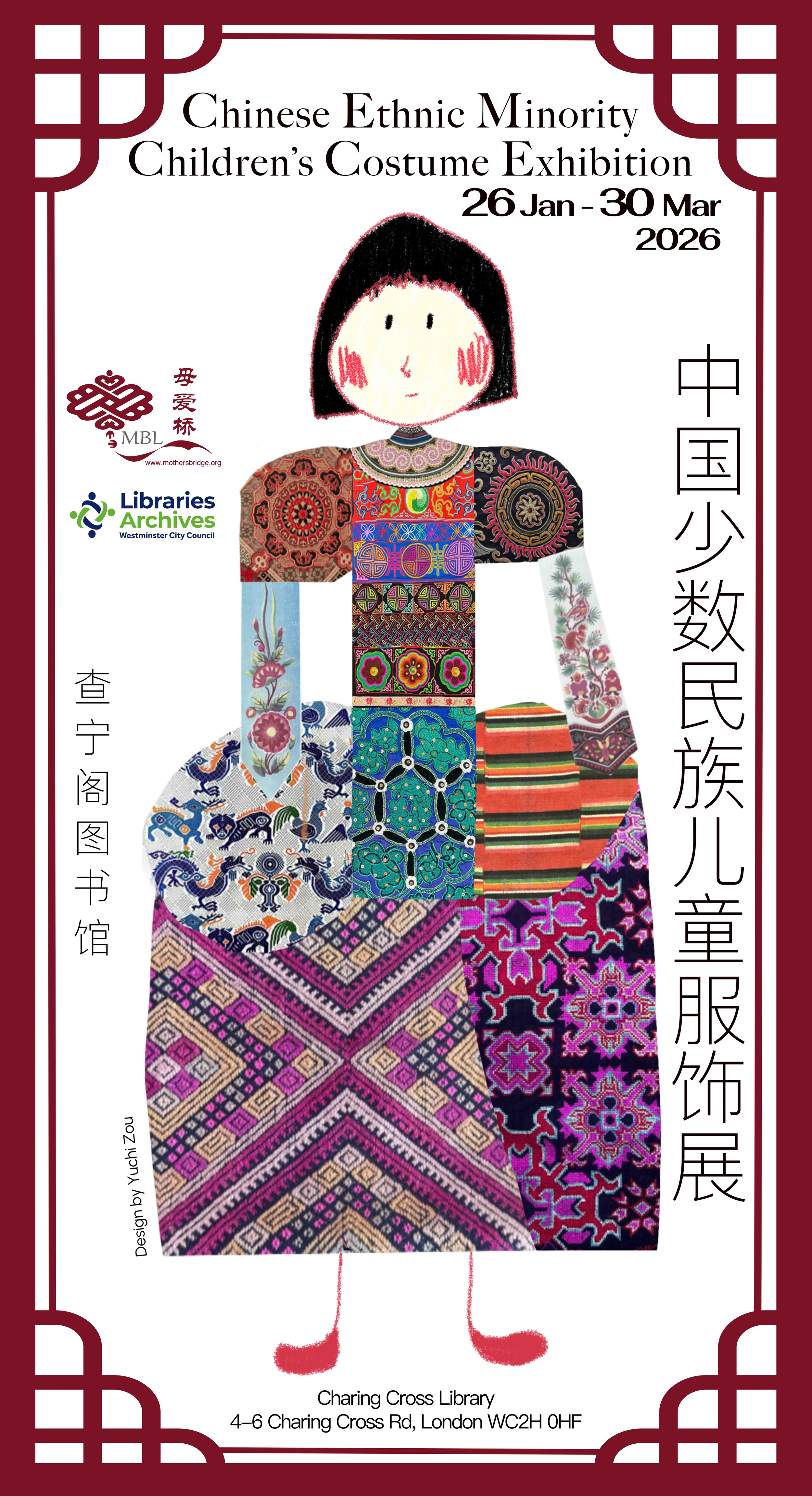
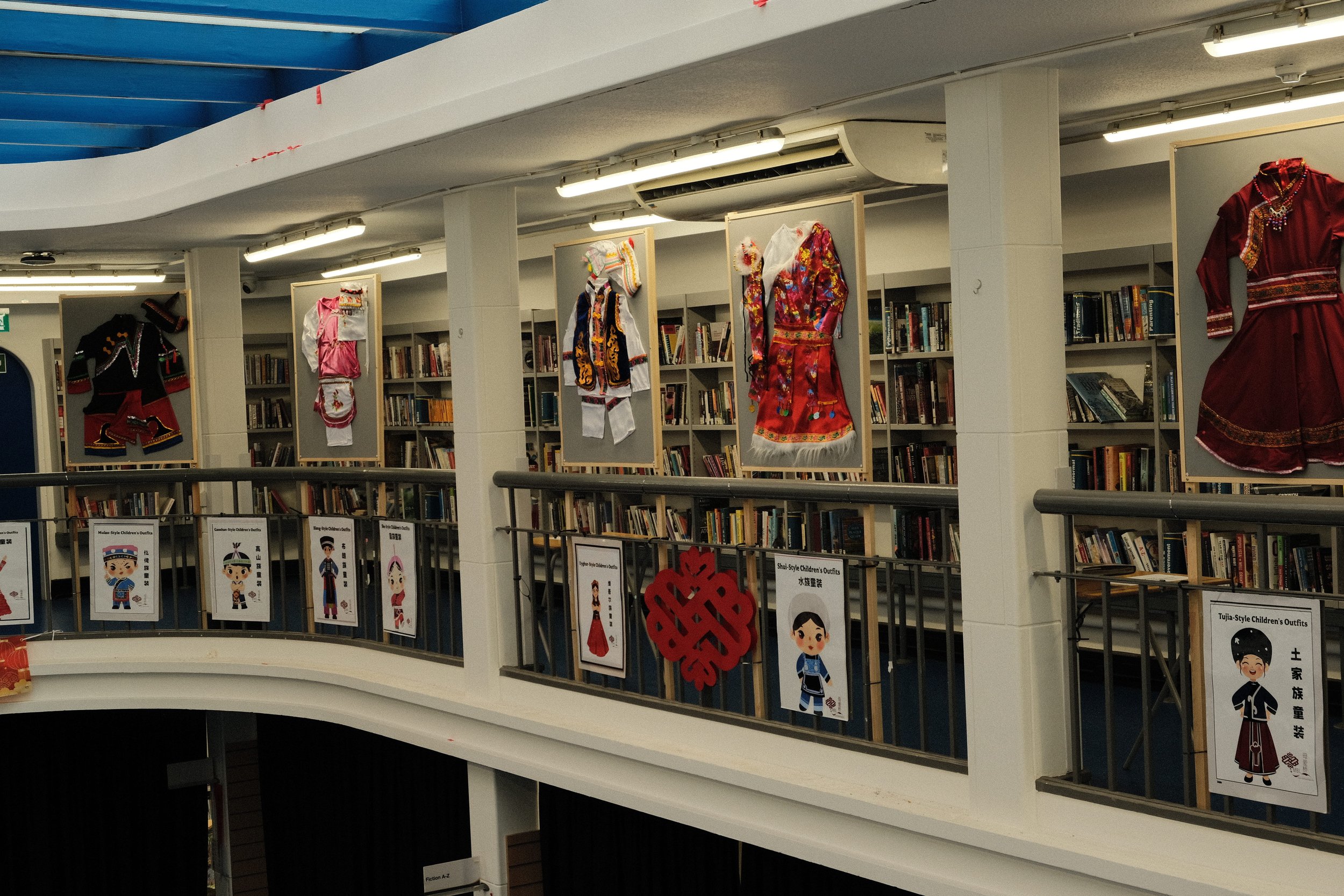
The exhibition presented sixteen sets of children’s costumes from China’s ethnic minority communities, representing the Miao, Tibetan, Yi, Mongol, Bai, Zhuang, Tujia, Dong, Manchu, Korean, Hani, and She peoples, among others. Embroidery, batik, brocade weaving, silver ornaments, decorative fastenings, and traditional tailoring came together in one space, allowing visitors to appreciate the historical depth and living vitality of China’s many cultures through the gentle lens of children’s dress.
In many ethnic minority traditions, clothing is far more than everyday attire. It carries history, belief, and blessing. Through centuries of migration and the absence of written records, mothers stitched rivers they had crossed, mountains they had lived among, flowers, birds, and prayers into their children’s garments. The softly chiming silver ornaments symbolised family memory and were also believed to protect children as they grew. For this reason, these costumes are not only history worn on the body, but also expressions of motherly love passed down through generations.
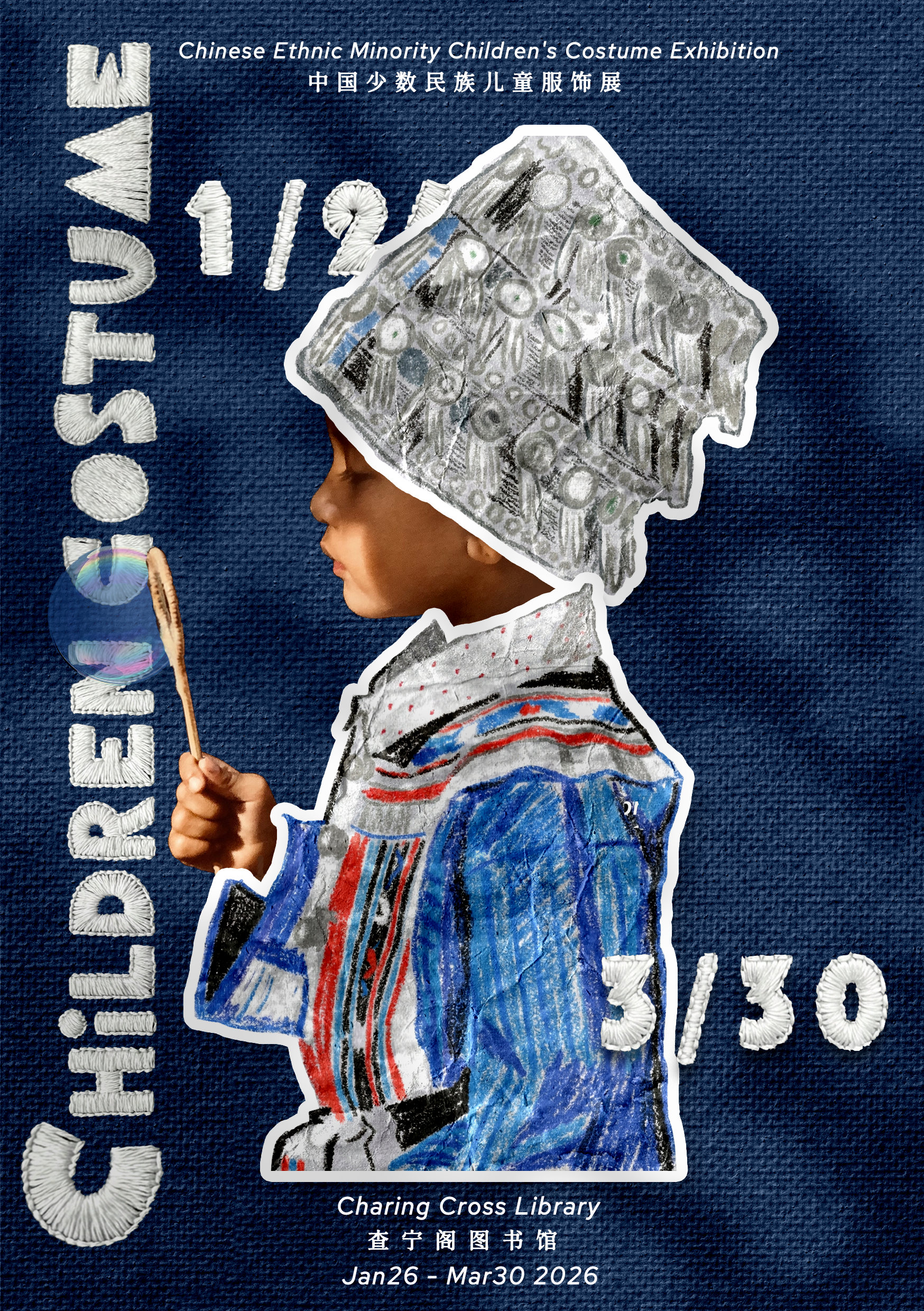
Throughout the exhibition, many visitors lingered thoughtfully before the displays, studying the details on collars, cuffs, and hems. The silverwork and batik of the Miao told stories of migration and protection. Tibetan robes carried the warmth and faith of the snowy plateau. Mongol riding outfits reflected the freedom and strength of the grasslands. Bai tie-dye echoed the clear beauty of Cangshan Mountain and Erhai Lake. Bright geometric patterns in Zhuang brocade conveyed wishes for good fortune. The silver studs on Hani garments resembled stars reflected in terrace waters, symbolising a mother’s watchful care through the night.
Many families visited together. Children curiously asked about the meaning and purpose of the clothing, while parents explored the cultural connections between different peoples, regions, and traditional crafts through the bilingual Chinese and English descriptions. For many non-Chinese visitors, it was also a valuable opportunity to encounter the richness of China’s diverse cultures at close range. Tradition was no longer something distant, but something warm, visible, and deeply human.
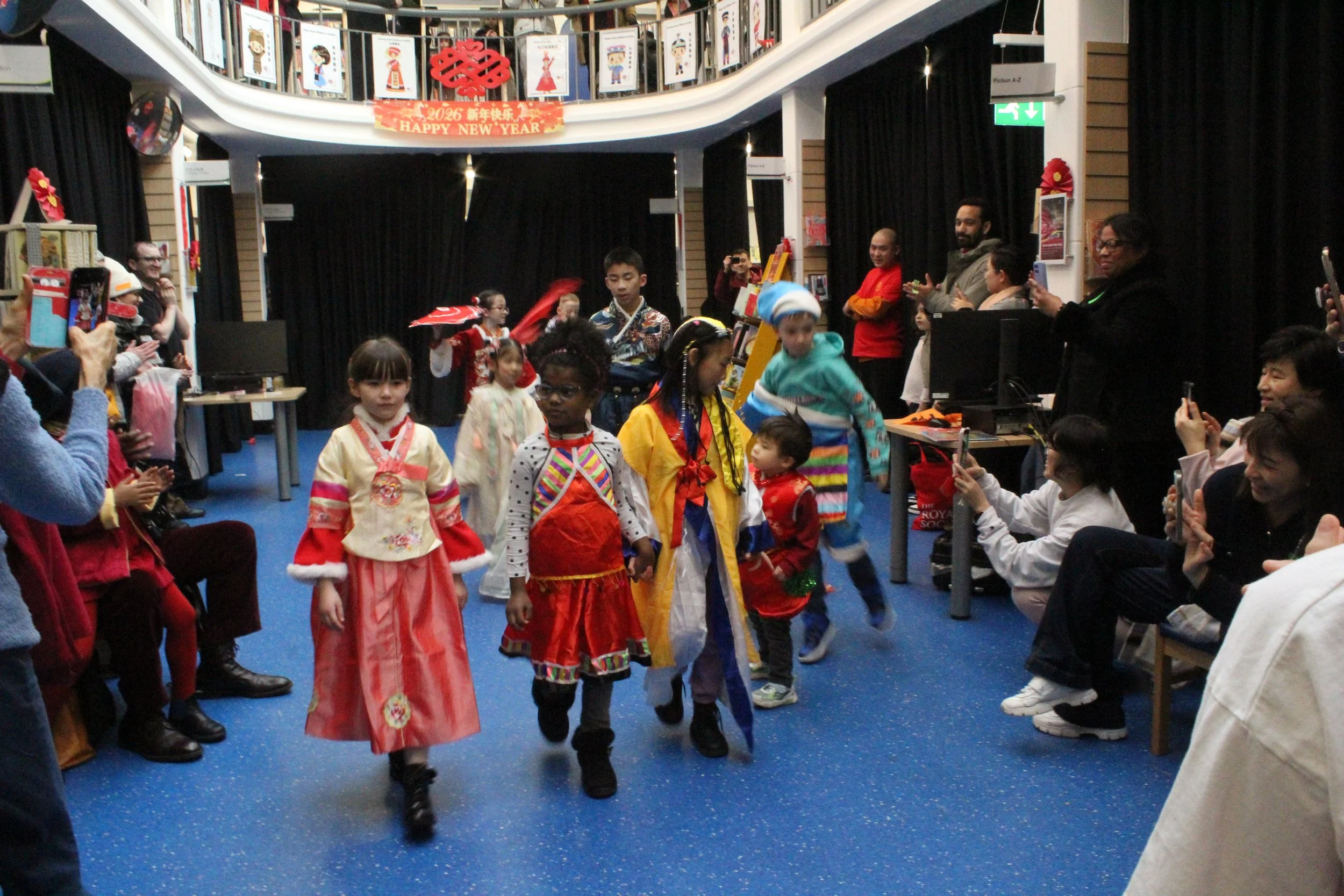
During the exhibition, on 22 February, MBL also hosted the Chinese New Year Family Cultural Day at Charing Cross Library. Centred on Chinese New Year traditions, the event combined lion and dragon dances, calligraphy, paper cutting, rubbing art, reading activities, book signing with authors, and ethnic costume interaction to create an open, inclusive, and joyful celebration for local families. According to on-site estimates, around 1,000 people participated in various forms throughout the day.
One of the highlights was the children’s ethnic costume showcase. With the help of volunteers, children changed into traditional costumes and stepped confidently onto the stage. The garments, which had stood quietly in the exhibition space, seemed to come alive again through their smiles and movement. Many visitors stopped to watch, and the hall was filled with applause and laughter. Later, audience members were invited to try on the costumes themselves, attracting many non-Chinese families. Children posed happily for photographs in the colourful outfits, while parents enjoyed experiencing the beauty and diversity of Chinese costume culture in a relaxed and welcoming atmosphere.
The Chinese New Year Family Cultural Day not only enriched the exhibition’s presentation, but also transformed the children’s costumes from static displays into living cultural experiences. The garments became more than exhibits. They became a bridge connecting children, families, and the wider community. People from different cultural backgrounds met naturally in the same space, learning through participation and drawing closer through shared experience.
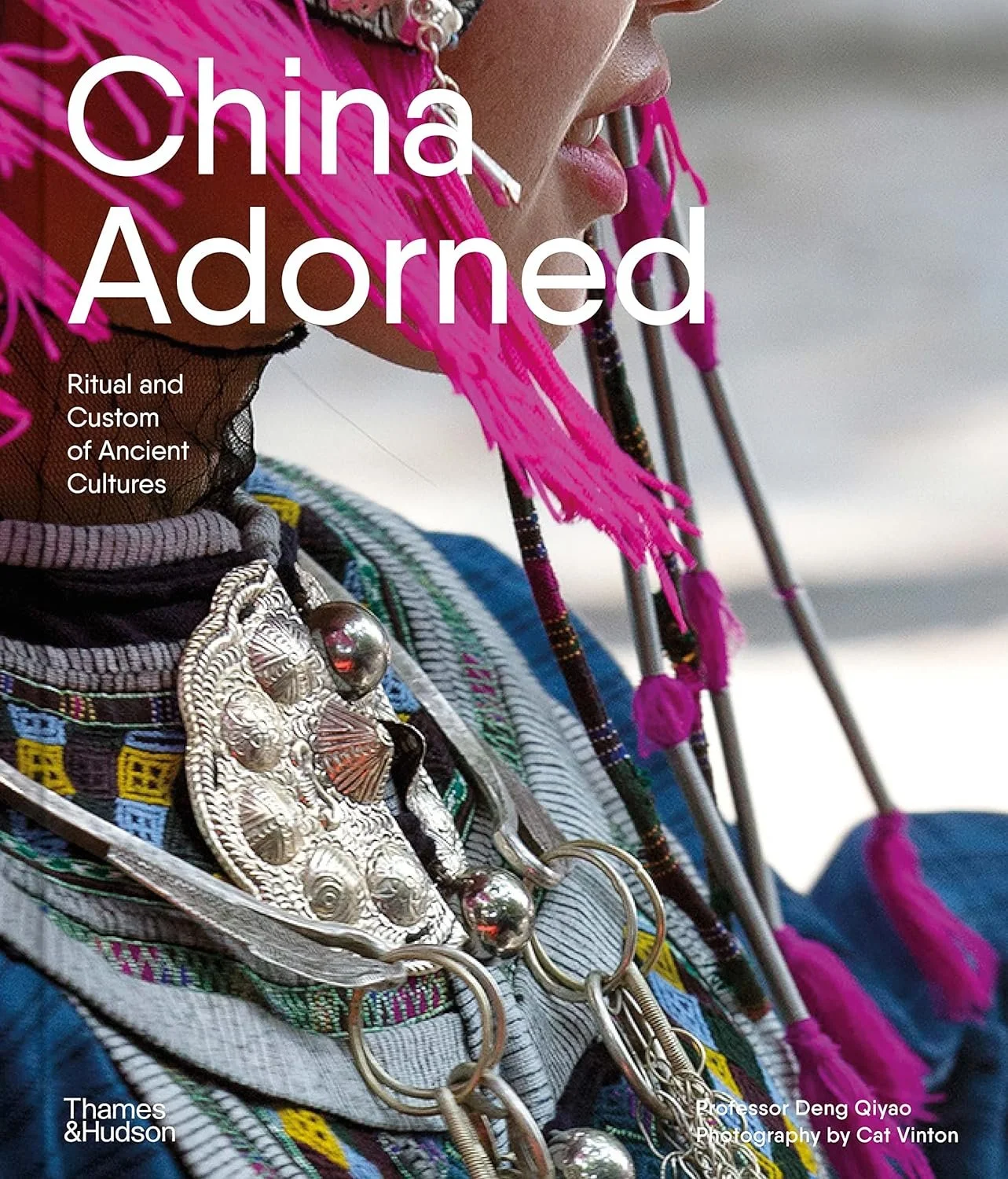
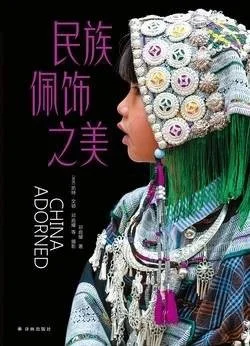
The exhibition also featured China Adorned (民族配饰之美), published by Yilin Press in January 2026. This photographic collection of China’s ethnic minority cultures was photographed by Professor Deng Qiyao, Professor of Sociology and Anthropology at Sun Yat-sen University, and the renowned British anthropological photographer Kate Vinton, with MBL founder and acclaimed writer Xinran serving as chief curator. Its English edition was published by Thames & Hudson in 2023. Displayed alongside the costumes, the book added further visual and scholarly depth to the exhibition, helping visitors gain a deeper understanding of the aesthetic wisdom and spiritual traditions expressed through clothing, adornment, ritual, and everyday life.
Located near London’s Chinatown, Charing Cross Library is one of the UK’s important Chinese public cultural spaces. Holding the exhibition there gave the event special significance. The library is not only a place of reading and learning, but also a site of cultural memory and identity for the British Chinese community. Through exhibitions such as this, MBL hopes to bring together local families, international visitors, and Chinese communities in an open public space where they can share the emotions and values found in art, heritage, and childhood.
The Chinese Ethnic Minority Children’s Costume Exhibition was more than a celebration of beautiful clothing. It was also a gentle conversation about motherly love, cultural inheritance, and cross-cultural understanding. When children wear traditional dress, they wear not only colour, pattern, and craftsmanship, but also history, blessing, and a childhood protected by love.
Looking ahead, MBL will continue to use culture as a bridge and place children at the heart of its work, helping people from different backgrounds to see one another, build connections through understanding, and experience the enduring power of cultural continuity through inclusion and exchange.