By Yi Gong
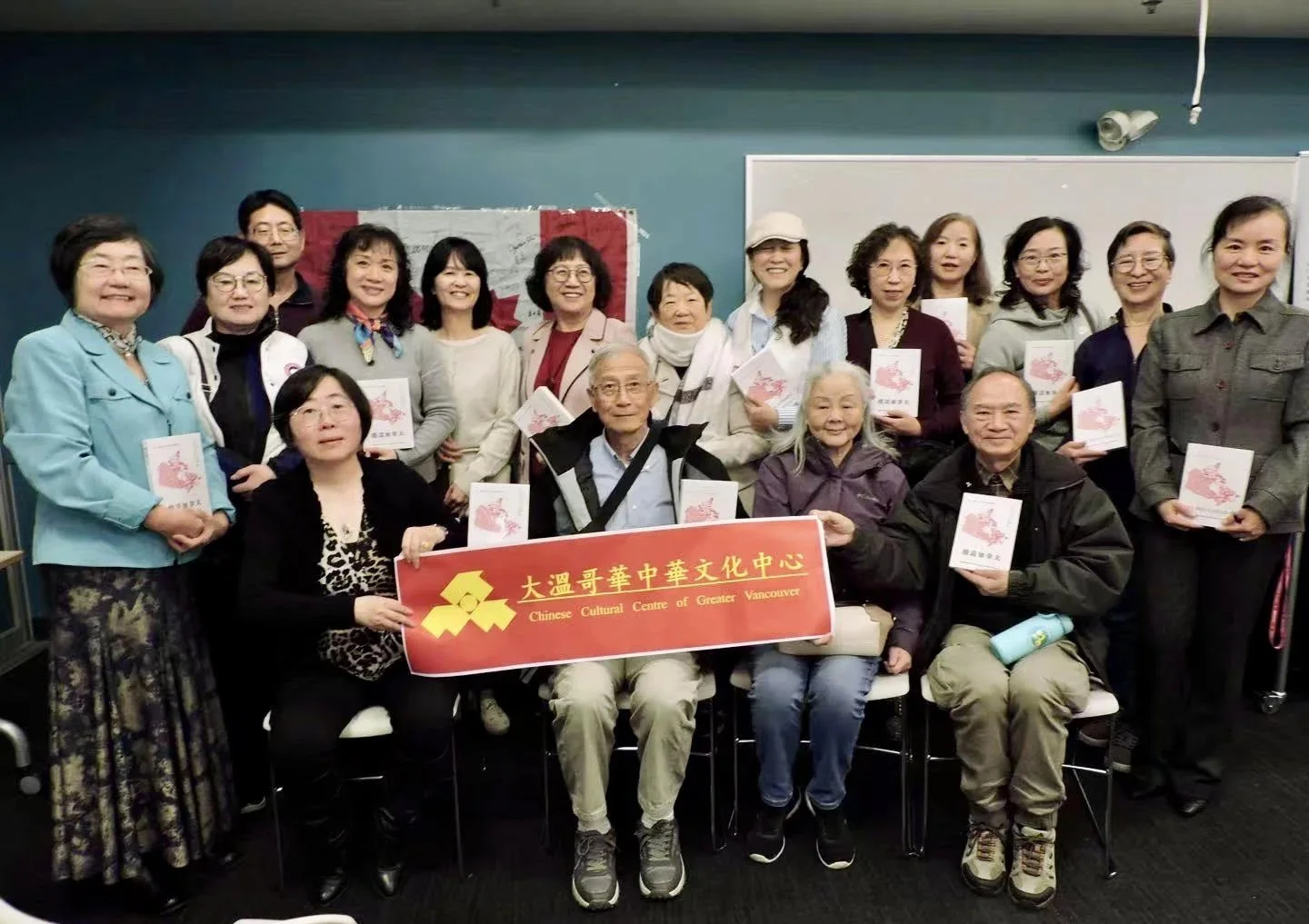
Following its successful launch in Vancouver’s Chinatown on 14 November, Ha Ha! Canada, a publication available in both Chinese and English, held its second book launch and community sharing event at Coquitlam Public Library on the afternoon of 22 November. Initiated by the UK-based charity The Mothers’ Bridge of Love (MBL) and organised by the Chinese Cultural Centre of Greater Vancouver, the event was hosted locally by the Tri-City Chinese Community Society (TCCS). It attracted authors, community organisation representatives, volunteers and readers from Coquitlam, Port Moody and Port Coquitlam, as well as Vancouver, Burnaby, Richmond, Langley and White Rock.
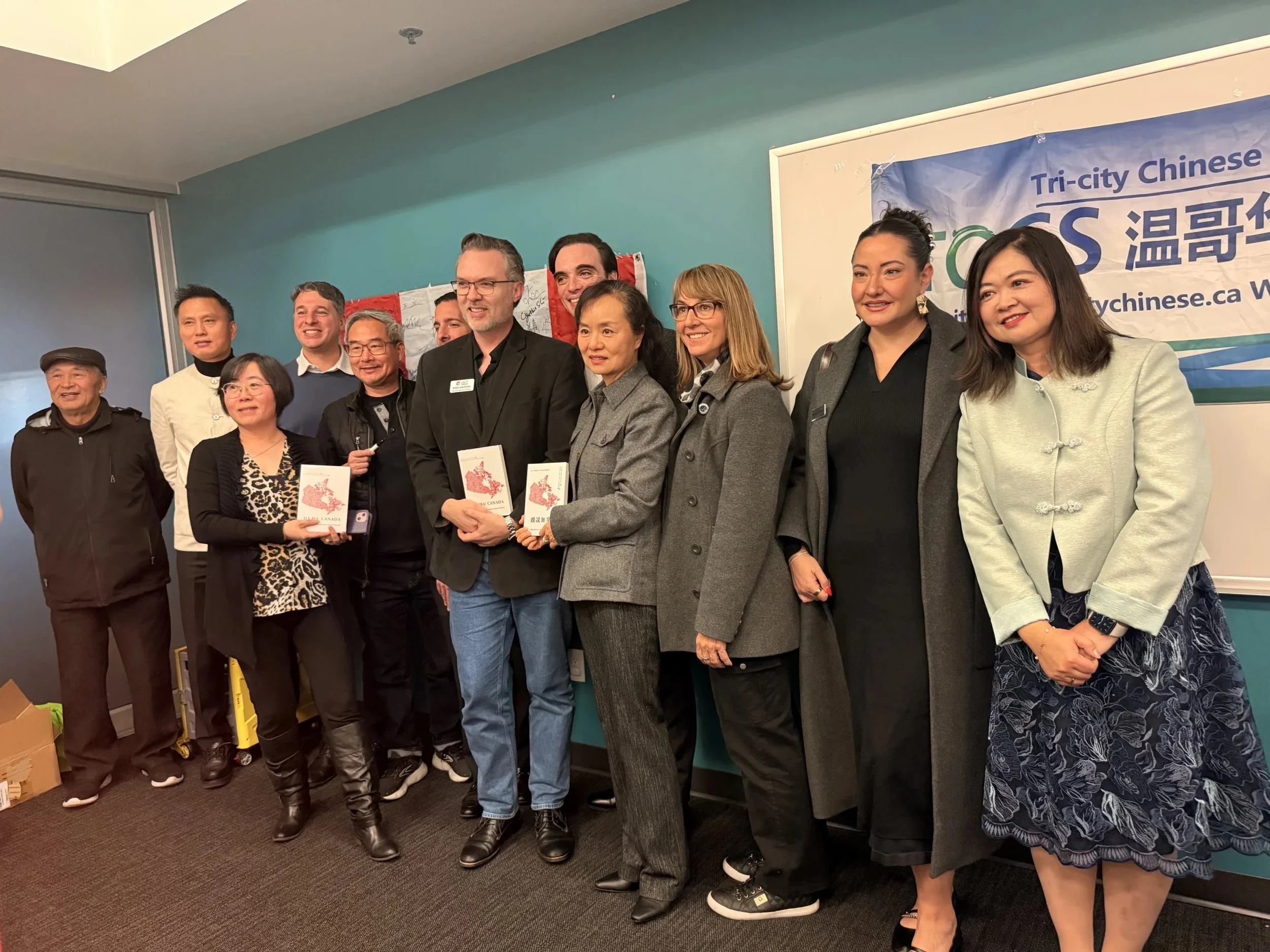
Several members of the newly elected Coquitlam City Council attended the event to offer their congratulations, including Harvey Su, Robert Mazzarolo, Steve Kim, Matthew Sebastiani, Matt Djonlic, Teri Towner and Rosalinda Thorleifson. Speaking on behalf of the City Council, Matt Djonlic expressed his support for community cultural exchange and the development of a multicultural society. Councillor Harvey Su, who is of Chinese heritage, drew on his own immigration experiences to reflect on his journey from adapting to life in Canada to becoming actively involved in community affairs.
Zoe Royer, Member of Parliament for Port Moody–Coquitlam, also sent a congratulatory message, which was delivered at the event by her Chief of Staff, Ernest Wu.
Ryan Jamieson, Deputy Director of Coquitlam Public Library, accepted donated copies of both the Chinese and English editions of Ha Ha! Canada on behalf of the library. Through donations to public libraries across Canada, the Chinese Cultural Centre of Greater Vancouver hopes to ensure that these true stories of ordinary Chinese immigrants are preserved, read and shared more widely.
From Stories on the Page to Conversations in the Community
Published by North American Chinese Research Press, Ha Ha! Canada is available in separate Chinese and English editions, each with its own ISBN. The “Ha Ha” in the book’s title signifies more than simply laughter. As Senator Yuen Pau Woo explains in his foreword, laughter can express joy and humour, but it can also convey irony, frustration, embarrassment and other complex emotions. The immigrant experience is much the same, encompassing both amusing cultural differences and social issues that deserve serious reflection.
Dr Wang Li, Vice-Chair of the Chinese Cultural Centre of Greater Vancouver and leader of the Ha Ha! Canada project, explained that the nationwide series of events was intended to achieve much more than promoting a book. Through the stories of ordinary people, the initiative hopes to deepen understanding of Canadian society and encourage more Chinese Canadians to become familiar with their local surroundings, take an interest in their communities and gradually become involved in public affairs, ultimately putting down meaningful roots in Canada.
In her address, Rena Lau, President of the Tri-City Chinese Community Society, noted that first-generation immigrants arriving in Canada often have to adapt to a new language, culture and way of life. Although each person’s experiences may seem ordinary, together they form the collective memory of a generation of immigrants. She also explained why TCCS had been keen to support the event and encourage members of the Chinese community across the Tri-Cities to participate in cultural exchange. Through such activities, the organisation hopes to help more residents build connections and develop a stronger sense of belonging within their local communities.
Different Experiences, Shared Conversations
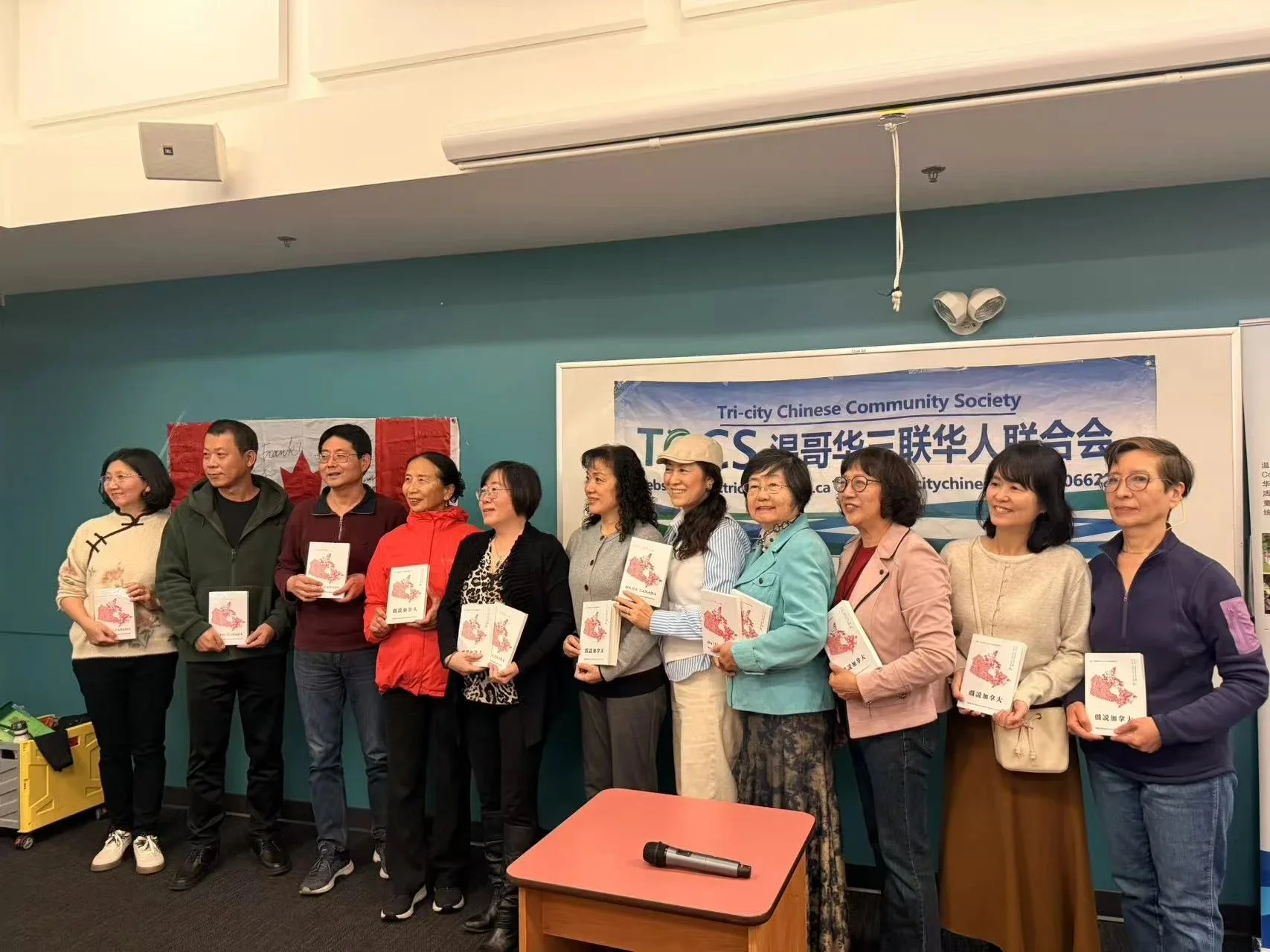
The afternoon was marked by lively discussions. Nearly ten of the book’s contributors attended the event, with Li Chunyan, Da Wei, Jiang Yan and Cynthia Shi among those sharing their writing and personal experiences. Their discussions explored cultural heritage, adaptation to immigrant life, community service and social participation.
Drawing on his artistic practice, artist Cheng Shuren spoke about his understanding of Chinese history and culture, with particular attention to Canadian culture, and how these cultural influences have become sources of inspiration for his creative work. His reflections also encouraged participants to consider how immigrants can contribute to Canada’s cultural landscape while remaining connected to their own cultural roots.
Representing the Shandong Association, Li Chunyan introduced the organisation’s support for and involvement in the Ha Ha! Canada project. Her contribution demonstrated how associations bringing together people from the same region of origin can do more than maintain connections with their hometowns. They can also play an important role in promoting cultural exchange, mutual support and social integration.
Frank Zhou and Taylor Zhang from Richmond also attended the event, introducing their newly established community action association. They shared their aspirations to encourage greater public participation and raise awareness of issues affecting everyday life, inviting attendees to become involved in relevant community activities.
Vance Wang, a young Chinese immigrant from Surrey and a candidate for school trustee, shared his experiences of living in Canada and his journey from gradually adapting to a new environment to taking an active interest in education, community affairs and public life. Representing a younger generation of Chinese immigrants, he demonstrated through his own experiences that newcomers can not only work towards becoming part of Canadian society but also actively participate in public affairs and contribute to community development. His enthusiasm and practical commitment set an encouraging example for other young Chinese Canadians to look beyond their immediate social circles and become more engaged with the wider community.
Zhao Yi, who previously worked as a director in China, had to start afresh after immigrating to Canada. With support from educational institutions and the wider community, she gradually returned to the fields of photography, directing, and film and television production. Having volunteered to film the Vancouver launch of Ha Ha! Canada and produced a beautifully crafted short film, she travelled to Coquitlam to offer her photography and filming services once again. At the event, she shared her experiences of rebuilding and developing her career, illustrating how immigrants can draw on their existing professional skills to establish new career paths and fulfil their potential in a different social environment.
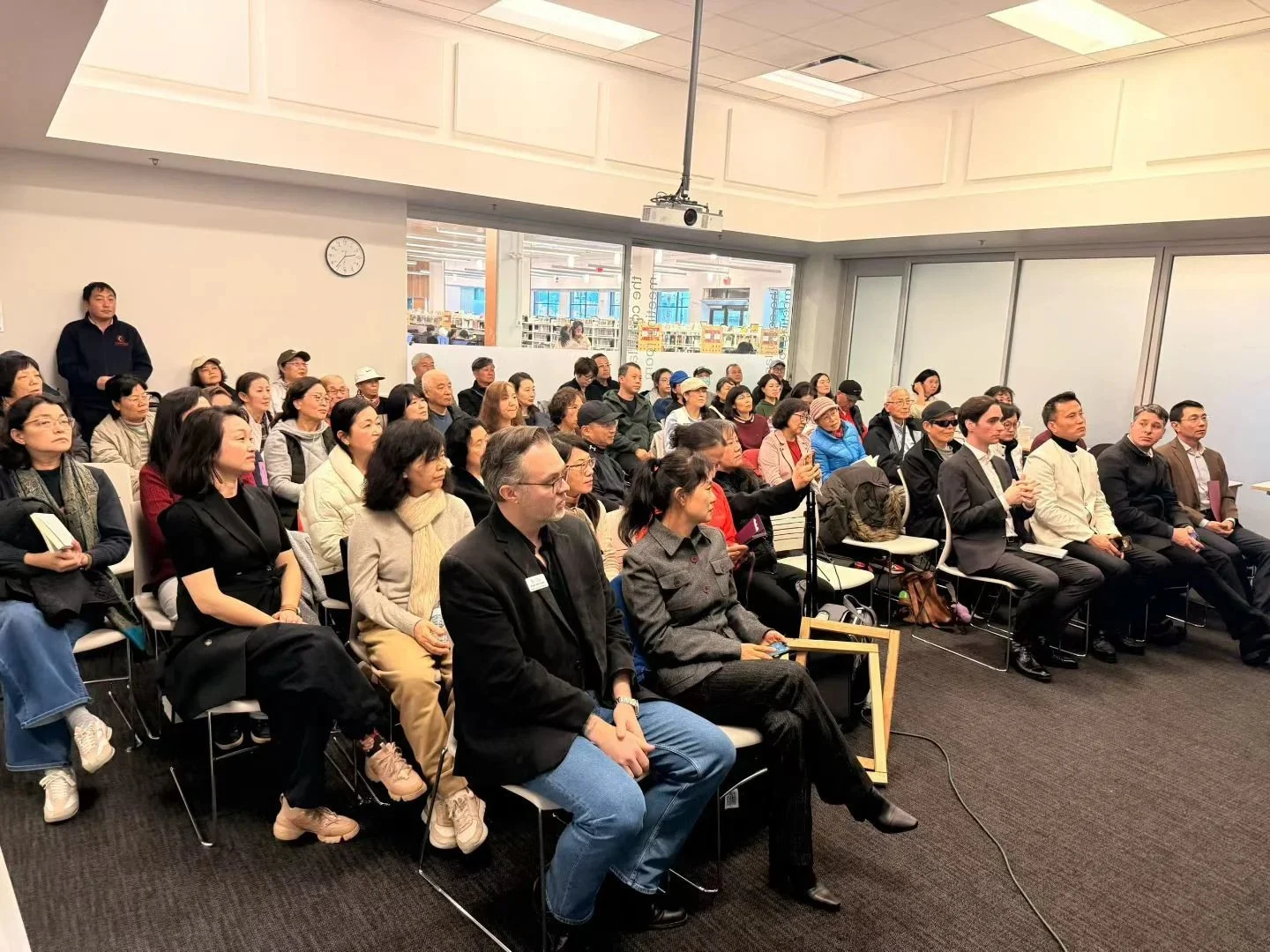
Notably, several contributors and readers, including Lin Weizhi, had already attended the Vancouver launch and made a special effort to come to Coquitlam to continue the conversation. With so many people eager to contribute and limited time available, some participants did not have the opportunity to speak.
This enthusiasm demonstrates that the conversations inspired by Ha Ha! Canada extend well beyond the pages of the book. Different life experiences can become a starting point for mutual understanding, while encouraging more people to reflect on two important questions: how can we build better lives in Canada, and what can we contribute to the communities in which we live?
From Preserving Cultural Heritage to Active Community Participation
The Chinese Cultural Centre of Greater Vancouver believes that preserving cultural heritage and integrating into Canadian society are not contradictory. Understanding our own cultural history can help us develop a clearer sense of identity, while learning about Canada’s history, institutions and public life can foster a deeper sense of belonging.
Whether through artistic creation, regional community associations, volunteering or civic engagement, everyone can contribute to their community in ways that draw on their own interests, experiences and abilities.
During the event, participants were also invited to sign a Canadian maple leaf flag. Prepared by the Chinese Cultural Centre of Greater Vancouver, the flag will continue its journey alongside the nationwide Ha Ha! Canada book tour, collecting signatures from participants at each stop. It will eventually be preserved by the Cultural Centre as a treasured reminder of this cultural exchange initiative, which brings communities together across geographical boundaries.
The Cultural Centre also extended its special thanks to the Tri-City Chinese Community Society for its organisation and support, as well as to event host Natalie Wang, Da Peng for his work on venue arrangements and photography, and the TCCS board members and volunteers for their dedication and hard work.
Next Stop: Montreal
Following the Coquitlam event, the nationwide Ha Ha! Canada book tour will hold its third event in the Montreal area on 23 November. Further events are planned in Charlottetown, Prince Edward Island, Fredericton, New Brunswick, and other Canadian cities, continuing the programme of cultural sharing and community dialogue.
One book, ten provinces, dozens of lives.
From Vancouver to Coquitlam and onwards to more cities across Canada, the Chinese Cultural Centre of Greater Vancouver hopes that Ha Ha! Canada will serve as a bridge connecting Chinese Canadians from different regions and backgrounds. By sharing experiences and deepening mutual understanding, the initiative encourages people to preserve their cultural traditions while participating more actively in Canadian society and contributing to the communities they call home.