
Birthday Surprises — Not All Surprises Are Roses; Sometimes They’re Two Kitchen Knives
By Vicky
Originally published on the WeChat public account “Vicky in the UK”, translated from Chinese.
The distance between China and Ireland is roughly ten thousand kilometres in a straight line. Which means, at the very least, there are ten thousand kilometres between me and my husband, Eugene. He always says we must be deeply fated: he grew up in a small Irish town, and I came from a small town in Shaanxi before coming to London to study. Yet here we were, meeting in a city of ten million people. Every time he says “ten million people”, he still hints at a kind of lingering fear—what if we had missed each other?
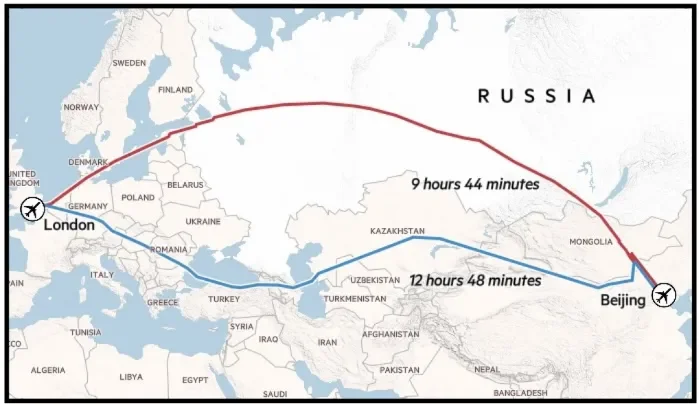
The distance between London and Shanghai is about 9,000 km, with a flight time of 13 hours.
Earlier, I mentioned the “ten thousand kilometre” distance between us, and it’s true—not just geographically. When I worked in Hainan years ago, I could clearly see how different Hainanese men and women were from those on the mainland. And between Eugene and me, our languages were different too. He speaks English with a strong Irish accent, despite having lived in both New York and London for many years; my mother tongue is Chinese—even after almost thirty years of speaking English, it isn’t quite the same as speaking one’s native language.
Still, we live in London, so we make it work.
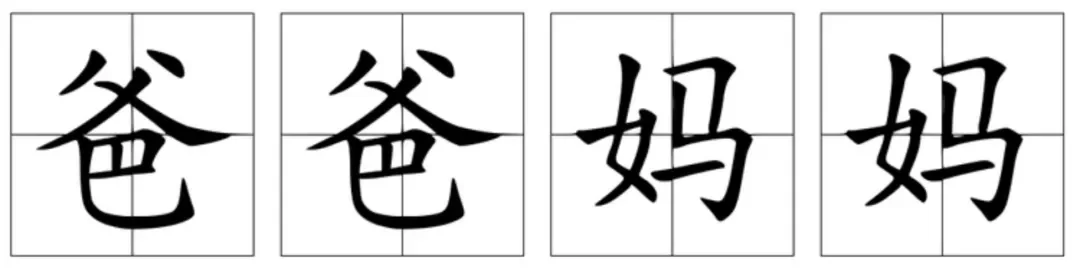
And then there are the cultural differences. In China, after marriage, we call our partner’s parents “Mum” and “Dad”. But in Ireland and the UK, people can simply address their parents by name. Eugene has always been thoughtful about this. When he goes to China, he calls my parents “Mum” and “Dad”, and he explained our custom to his own parents as well.
As a result, when I met my in-laws for the first time after our wedding, my mother-in-law said to me, “If you’d like to call us ‘Mum’ and ‘Dad’, we would be honoured.”
But those are still not the subject of today’s story.
My friend Wen Diya, former host of CCTV’s Oriental Horizon, recently published a book titled Everyone Must Grow Up on Their Own. One of her essays is called “Birthday Surprise”. She writes beautifully, and the book is selling very well. We share similar life experiences—we’re both from Shaanxi, came to the UK for our studies, and stayed on. Her husband Kim is British; she used to work for CCTV, whereas I used to be a financial journalist in Hainan.
Because of these parallels, her essay struck a deep chord in me. I told her I would write my own “Birthday Surprise” in response to hers.

Inspired by my dear friend Wen Diya, I wrote this essay as an echo to hers!
The thing about surprises is this: only when you truly understand someone can you create something that feels like a surprise—and not a shock.
And this is why I emphasised the distance between Eugene and me earlier.
My very first “birthday surprise” from him was before we got married. He handed me a small box, wrapped beautifully. It was his first gift to me, so of course I had expectations. I opened it—it was a watch. I don’t remember the brand, because I’ve simply never liked wearing watches. Even back in Hainan, during the era when people loved brand-name items, I never wore one. I just didn’t. The last time I wore a watch was probably in university, and never again afterwards.
He must have seen my hesitation, because he immediately handed me the receipt and said I could exchange it if I didn’t like it. I thanked him politely and explained that I just didn’t enjoy wearing watches. So, the first “surprise” wasn’t a surprise—but at least it wasn’t a shock.
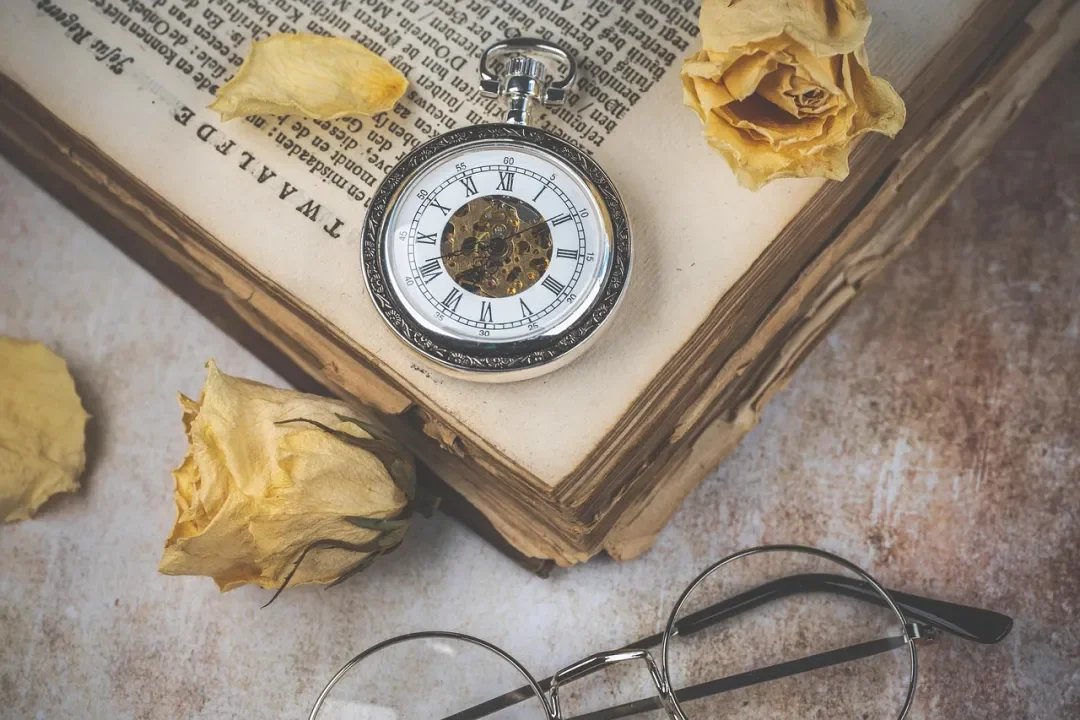
My “first birthday surprise” was a watch—safe and uneventful!
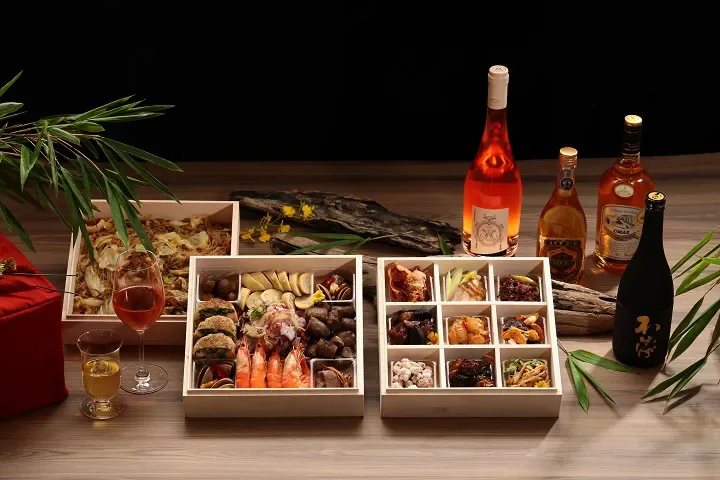
The following year, after we were married, I was at home with no expectation that he would remember my birthday. But when he came back from work, he handed me a bouquet of flowers. He saw the flicker of hesitation in my eyes, but I didn’t say anything—just thanked him, gave him a big hug, arranged the flowers in a vase, and headed out with him to the Japanese restaurant he had booked. The food was lovely, we had some sake, and we ended the evening happily.
He did not know that the bouquet he bought was plastic. That was what my one-second hesitation was about.
Many years later, during a casual conversation, he finally found out. Even after more than a decade, he apologised earnestly, insisting it had been unintentional.
He remembered clearly that he’d picked that bouquet because he thought it looked bright and beautiful—and the shop assistant had hesitated too. Now he finally understood why.
He spent that whole afternoon laughing and apologising, then asked, “Why didn’t you tell me? You could have just asked me why I bought plastic flowers!”
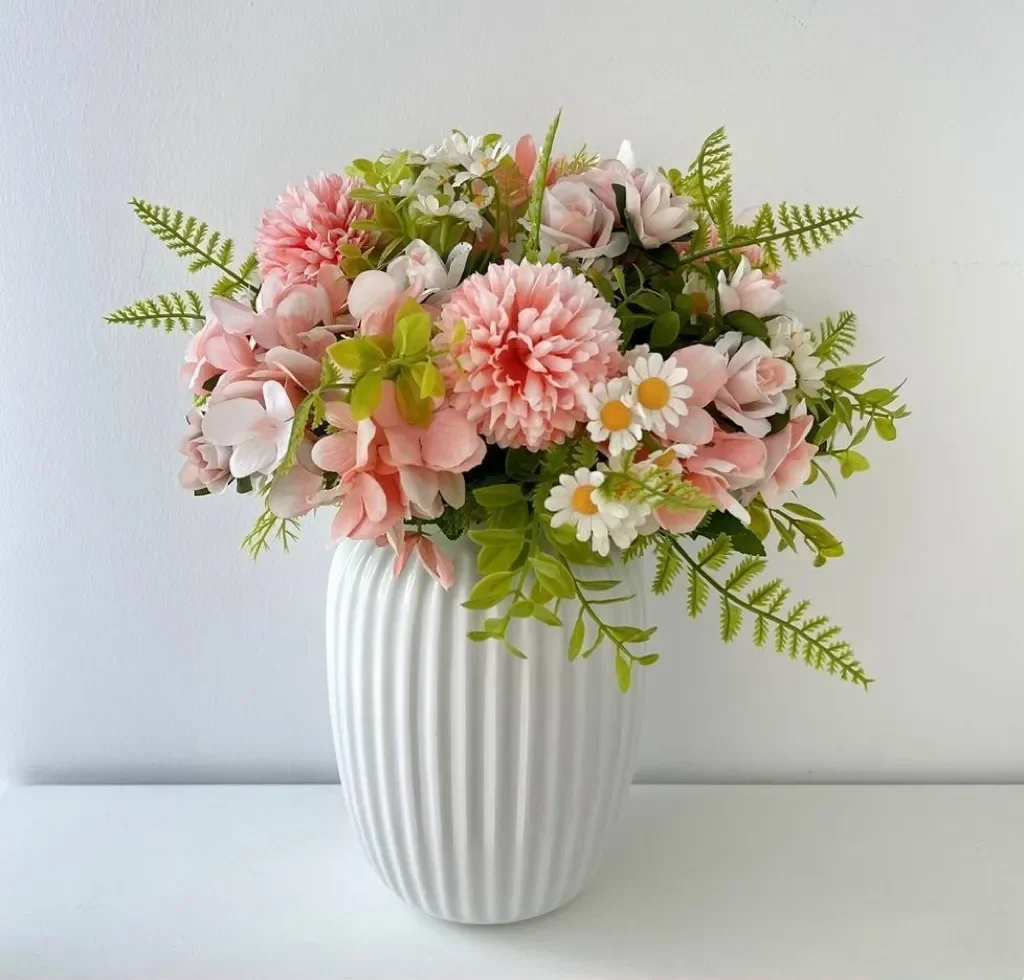
I told him honestly how I felt: I never expected him to remember my birthday in the first place. The flowers didn’t matter. What mattered was that he remembered my day, and that he planned a dinner for us. That was enough.
I do think the reason our marriage has lasted more than twenty years—and our child is now eighteen—is partly because I don’t fuss over these things. And partly because he really is a good man: responsible, family-oriented, and I know I am in his heart. Whenever something unpleasant happens, I simply chalk it up to cultural differences. It prevents a lot of disappointment.
A few years later, on another birthday, he came home carrying a silver case, smiling brightly as he handed it to me. I thought there would be another surprise. I opened it—and inside were two kitchen knives.
He explained that he remembered me mentioning once, while cooking, that our knives were getting dull. So he thought, This time I definitely can’t go wrong.
I honestly did not know how to respond. I told myself: deep breath… another deep breath… then thanked him for the gift. And of course, we still went out for dinner to celebrate.
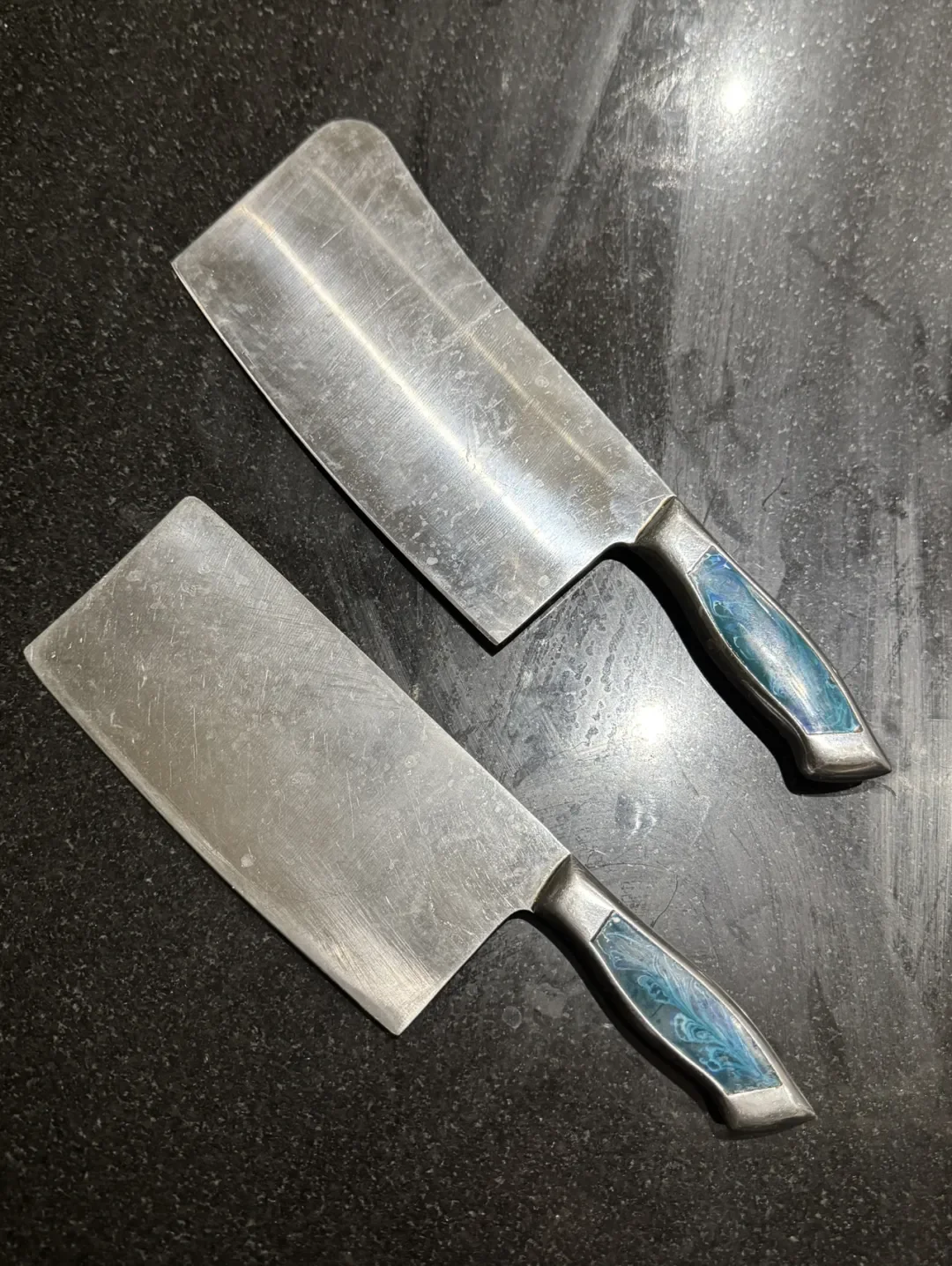
Yes, this was one of my birthday gifts. As you can tell, he is the definition of a practical, no-nonsense man.
The next day, over lunch with friends, I mentioned that my husband had given me kitchen knives for my birthday. My friend could not stop laughing. “Why didn’t you pull them out and chop him with them?” she joked.
I laughed too: “If chopping someone didn’t come with consequences, I definitely would have!”
All jokes aside, the truth is simple: he knew I needed them, so he bought them.
Of course, it’s not always him missing the mark with gifts—I’ve done it too. Over ten years ago, he said his phone wasn’t working well anymore, so I bought him the newest iPhone. He said it was too expensive, and he didn’t need all the functions. It would just be a waste. So in the years since, he has always bought his own phones—and never the latest model.
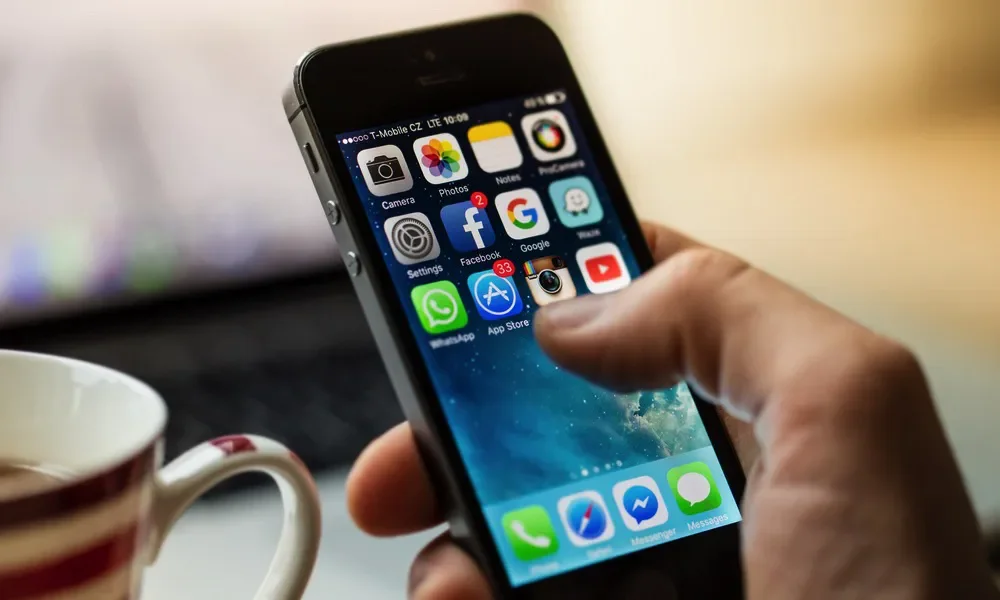
He doesn’t chase trends or show off; he values usefulness and restraint—qualities increasingly rare in a consumerist age.
Eugene is actually very easy to please. A good meal, or a dessert he loves, can make him genuinely happy. But for birthdays, those things don’t feel quite “grand” enough.
Once, when I truly had no idea what to get him, I bought two concert tickets. He came home early that day; we ate in Chinatown and grabbed a drink at a pub. He thought the day was over when I said, “Next stop: the Barbican Centre.”
He was surprised—and delighted. I used to go to concerts by myself, or occasionally with friends, and after we had our child I often took the child along. It had never occurred to me to ask if he wanted to join.
On the way home that night, he said how much he enjoyed doing something different—stepping out of our usual routines—which to him was what “enjoying life” really means. He thanked me again for arranging it.

The Barbican Centre is one of London’s major arts venues, known for its diverse music performances.
To my embarrassment, after so many years together, I somehow never realised he liked classical music. I always thought we had completely opposite tastes: he loves Red Hot Chili Peppers, an American band. Only later did I learn that he listened to them a lot when he was living in the US.
I teased him: “But you’re Irish! Ireland has so many famous bands—like U2!”
Since then, whenever I run out of gift ideas, we just go to concerts together. So although the “surprise” was from me, he ended up giving me the real surprise.
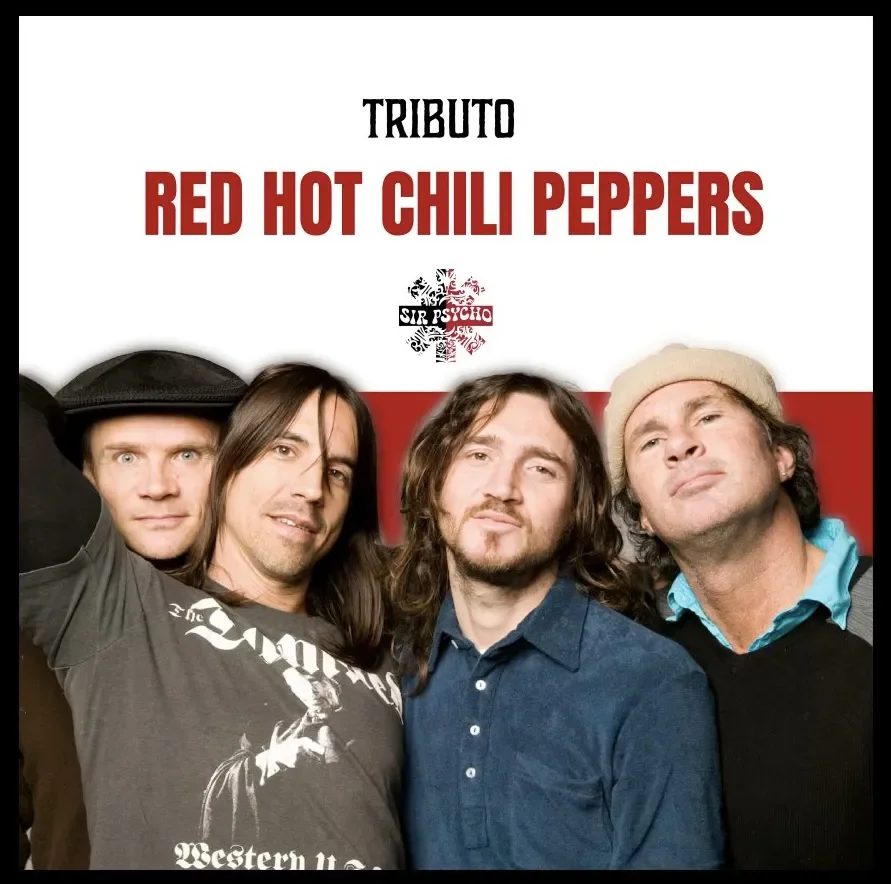
Red Hot Chili Peppers is a legendary American band founded in 1983, known for its unique blend of rock, funk and alternative styles.
Now, after more than twenty years of marriage, I’ve told him several times that he doesn’t need to buy me gifts anymore. Sometimes we even forget each other’s birthdays. But usually, I cook a few dishes he loves, or we go out for a family meal. Sometimes we even travel on the day.
No surprises, no shocks. Just life.